Weather fcst heads-up

Om Tuesday, 30th there was an excellent Deep Dive,
vldeo discussing the then uncertainties.
In the event the forecasts were good. Fairly obviously with a system as complex and severe as this there will be marked local differences in wind and weather. All in all, an impressive demonstration of the way in which physical forecasting models perform. Statistically, there are good arguments to press on and implement AI models. This situation is a clear reason for cation. It is right that ECMWF should issue AIFS output but equally clear that the Met Office, DWD etc should continue with physical models for the foreseeable future. They have clear responsibilities to give as much warning as possible of severe weather. ECMWF has no such requirement.

Also, it is high time that Zoidberg should stop trying to draw lessons from his aviation past. My memories and experience go back even further.
 
Also, it is high time that Zoidberg should stop trying to draw lessons from his aviation past. My memories and experience go back even further.
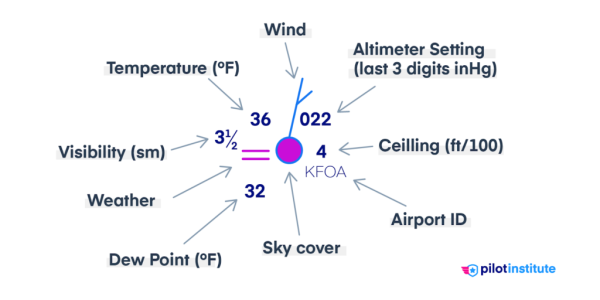
As an ex aviator, I can read and interpret synoptic charts but couldn't forecast anything more than a few days out.

I remember being taught weather circles but never really saw them being used in practise.

image-99-1024x512.png
 
As an ex aviator, I can read and interpret synoptic charts but couldn't forecast anything more than a few days out.

I remember being taught weather circles but never really saw them being used in practise.

View attachment 200259
Those relate back to when I, as.a forecaster would have such information plotted on charts covering variously, the UK, Westerb Europe, the Urals to the eastern Pacific, or at HQ Bomber Command, Vladivostok to the E Atlantic. I could look at a chart and see, quickly, what was happening. A synoptic view. Our forecasting ability was limited.
 
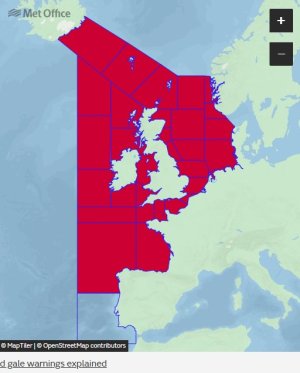
Only one area left to colour red for gales ....

From the 0600 hrs forecast this morning.

View attachment 200263
The shipping forecaster’s ideal situations are when he can write, “There are gale warning in all areas” or “There are no gale warnings in force.” It makes keeping to the 330 word limit that much easier.
 
Half a century ago there were no orbiting weather satellites, no met supercomputers, and next to nothing west of my RAF base in Cornwall to tell us what was whirling our way. Weather forecasters were avuncular types in cardigans, smoked pipes, and usually had an assortment of pencils in their pockets.

54831302984_e36594d190_o.jpg


The forecast for where we were going each day, and the prospects of us getting back, were briefed in our squadron ops room each morning at 8:00am. where, bleary-eyed, we'd assemble to await the Station Senior Forecaster.

"If he arrived in shirt-sleeves, we knew it would be sunny. If he arrived with an umbrella and overcoat, we knew it would be rainy. And if he didn't arrive at all, we knew it was foggy...."

His sources of useful data were limited, as the few Weather Ships in the Atlantic were being shut down, so he'd ask our Authorising Officer if any of us going off early could 'climb out to height' heading westwards, and radio back the cloud types/amounts, temperatures and wind info ( direction, speed ) at about 5000 feet intervals. This we were happy to do, all the way up to 45,000 feet - and he'd often get a 'fan' of real-time observed data right out beyond Ireland.
It permitted him to make much more reliable 'Terminal Airfield Forecasts' or TAFs for the rest of the day. Other forecasters further east swiftly cottoned on, and so would sometimes issue what our westerly base was offering, but delayed by a suitable hour or two.

We liked and respected our tame MetMan, with good reason. I had a particular reason for fostering a good relationship for, around that time, I was crew on one or other of the RAF's racing boats, entered into most of the RORC Series. I scarcely then knew one end of a boat from the other but, as a pro navigator in an age without electronic aids, I was useful on board as I could always get a reliable position fix. And.... as aircrew, I was able to request from my base met office a detailed wind and weather forecast for the weekend's race - which I would then discuss in some detail with the Senior Forecaster before I left on a Friday.

Which meant I had a better-then-average idea of what was coming our way in the night, halfway across the Channel, and when.

54831392520_f5ab709fc8_o.jpg
 
Last edited:
BBC News ..

"Storm Amy also set a new record for the deepest area of low pressure in the UK for October.

The earth's atmosphere exerts pressure on the surface and is measured in hectoPascals (hPa), also called millibars.

Storm Amy showed central pressure of 947.9hPa at Baltasound, Shetland. This exceeds the previous record of 950.9hPa in 1988.

In an area of low pressure the weather is often unsettled."

Who writes this crap?

Storm Amy hits UK with heavy rain and strong winds
 
Top