
PaulRainbow
Well-Known Member
If this stuff has built up in a diesel tank and remains there after sloshing about at sea is it really going to suddenly wash off in diesel ??
Yes, if it's asphaltene.
Last edited:

If this stuff has built up in a diesel tank and remains there after sloshing about at sea is it really going to suddenly wash off in diesel ??
If this stuff has built up in a diesel tank and remains there after sloshing about at sea is it really going to suddenly wash off in diesel ??
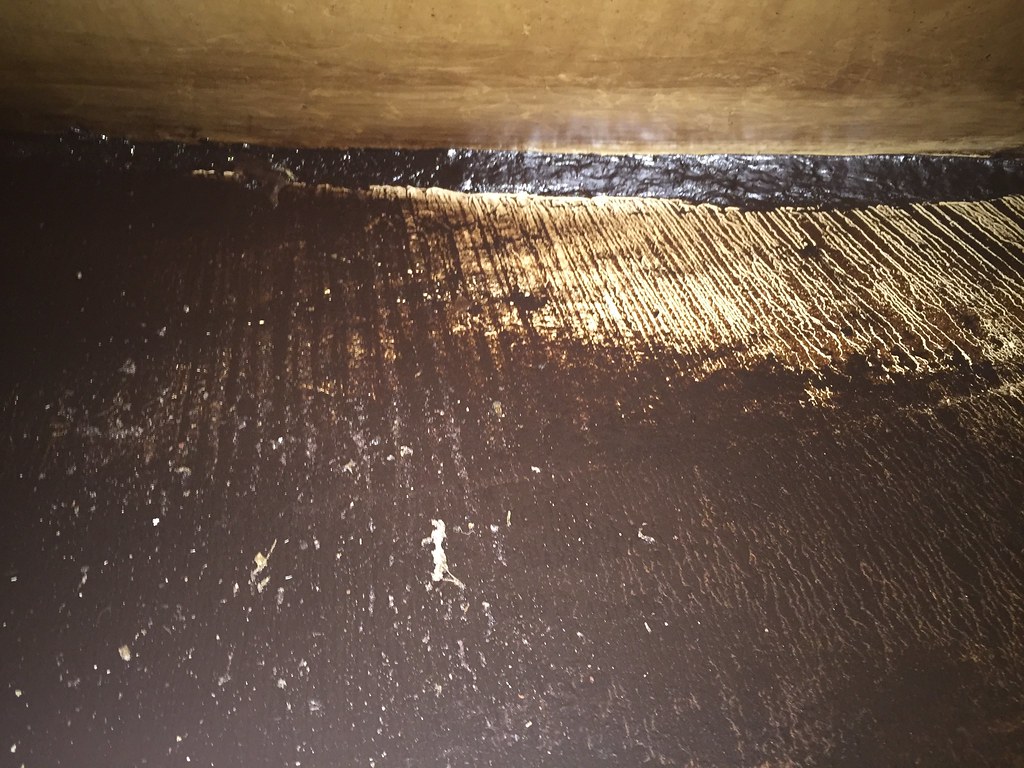 IMG_4994 by Rival Sailor, on Flickr
This is probably the stuff that is being referred to. It was in my tanks and was firmly applied to the surface but could be washed off. It was firm to poke a finger nail into but easily dissolved under finger pressure and probably body heat. I washed some of it off with diesel residue in the tank. It did not dissolve away but remained muddy with fine silt textured bits. I called in a contractor to clean both my tanks.

It's axiomatic that chemists cannot cope with circumlocution mixed with hyperbaton mixed with allegory. Don't worry yourself about not being able to work out difficult sentences. If you go back to your Janet and John books the process will become much clearer over time.
(I know that you would add a smiley icon as exculpation for having an unjustified go at someone, but I am not playing picture games. You were very rude to the OP).

I had major problems reading Janet and John, my apparent reading age was a year behind... Right up until my teachers expressed concern to my parents who thought that my being able to read dinosaur book with words half the width of a page might be a better indicator. Whaddya know, overnight my reading age went from a year behind to a few years ahead.

When it comes to cheap solvents, petrol normally needs to be tried?
Otherwise, try detergent or degreaser?
In the long run, avoid storing large quantities of fuel unless you have to.
And make sure there is no yellow metal (copper, brass, alloys) in the fuel system as they are said to catalyse the formation of 'TBS'.
Not disputing what you say, but is this a result of biofuel? I, probably like many here have had copper fuel lines for decades without any problems.
And a hundred million diesel cars use biofuel with no problems.
Not disputing what you say, but is this a result of biofuel? I, probably like many here have had copper fuel lines for decades without any problems.
And a hundred million diesel cars use biofuel with no problems.
ULSD fuel is apparently the biggest factor, but bio fuel plays a part too, as does contaminated fuel. Another factor, which doesn't affect many boats, is the very high pressures and heat in common rail systems.
My fuel lines are also copper and nearly 40 years old.
