
andyp
Well-Known Member
I know you are all going to say "it doesn't matter just twist the belt no more than 90 degrees in the middle of the longest span..."
But, as an engineer, faced with replacing the timing belt after xx years of avoiding the job, I am after some advice.
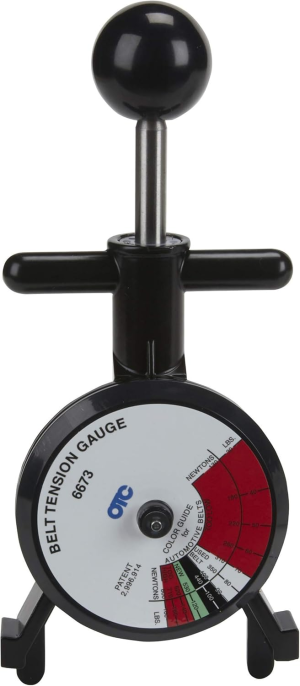
I have the Volvo workshop manual and the Haynes Maestro/Montego manual which states tension for a new belt should be 425-465 N and for a used belt 340-370 N. It also says to use a ball tension gauge like this one
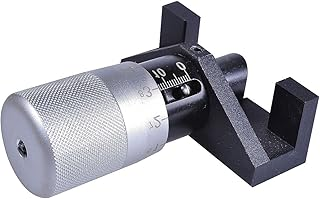
Not wanting to pay £120 (or £800 for a sonic vibration gauge!!), I ordered a force/deflection gauge like this one for £20.
So now I need a way of converting belt tension (in N) to force and deflection (in daN and mm) so I can use the look-up tables for my gauge.
There are some formulas online but they require a modulus constant from the belt manufacturer which again, I don't have.
Anyone got the magic numbers please, so I can at least pretend to be setting the tension with some degree of accuracy?
But, as an engineer, faced with replacing the timing belt after xx years of avoiding the job, I am after some advice.
I have the Volvo workshop manual and the Haynes Maestro/Montego manual which states tension for a new belt should be 425-465 N and for a used belt 340-370 N. It also says to use a ball tension gauge like this one
Not wanting to pay £120 (or £800 for a sonic vibration gauge!!), I ordered a force/deflection gauge like this one for £20.
So now I need a way of converting belt tension (in N) to force and deflection (in daN and mm) so I can use the look-up tables for my gauge.
There are some formulas online but they require a modulus constant from the belt manufacturer which again, I don't have.
Anyone got the magic numbers please, so I can at least pretend to be setting the tension with some degree of accuracy?

