
Volvo Penta MD22L/Perkins Prima 50 Timing Belt Tension Measurement

andyp

Well-Known Member
Joined
22 Oct 2009
Messages
88
Location
Gosport
Visit site
I know you are all going to say "it doesn't matter just twist the belt no more than 90 degrees in the middle of the longest span..."

But, as an engineer, faced with replacing the timing belt after xx years of avoiding the job, I am after some advice.

I have the Volvo workshop manual and the Haynes Maestro/Montego manual which states tension for a new belt should be 425-465 N and for a used belt 340-370 N. It also says to use a ball tension gauge like this one
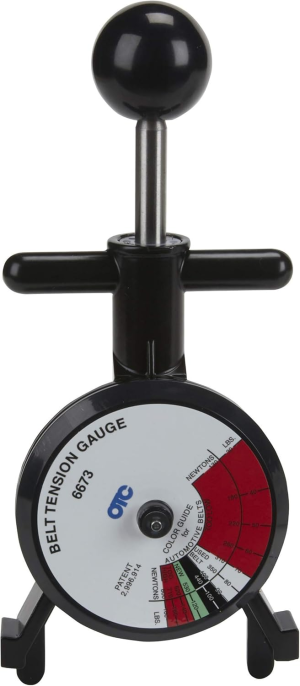
1742552342321.png
Not wanting to pay £120 (or £800 for a sonic vibration gauge!!), I ordered a force/deflection gauge like this one for £20.
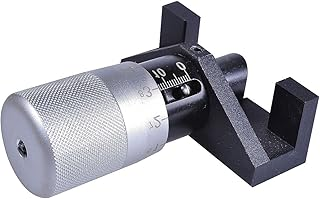
1742552449544.png
So now I need a way of converting belt tension (in N) to force and deflection (in daN and mm) so I can use the look-up tables for my gauge.
There are some formulas online but they require a modulus constant from the belt manufacturer which again, I don't have.

Anyone got the magic numbers please, so I can at least pretend to be setting the tension with some degree of accuracy?
 
I know you are all going to say "it doesn't matter just twist the belt no more than 90 degrees in the middle of the longest span..."

But, as an engineer, faced with replacing the timing belt after xx years of avoiding the job, I am after some advice.

I have the Volvo workshop manual and the Haynes Maestro/Montego manual which states tension for a new belt should be 425-465 N and for a used belt 340-370 N. It also says to use a ball tension gauge like this one
View attachment 191020
Not wanting to pay £120 (or £800 for a sonic vibration gauge!!), I ordered a force/deflection gauge like this one for £20.

View attachment 191021
So now I need a way of converting belt tension (in N) to force and deflection (in daN and mm) so I can use the look-up tables for my gauge.
There are some formulas online but they require a modulus constant from the belt manufacturer which again, I don't have.

Anyone got the magic numbers please, so I can at least pretend to be setting the tension with some degree of accuracy?
Prod it with forefinger to see if it deflects “a bit” then twist about 45 deg. 😂😂😂 I’ve just changed mine again after 10 years use! Dont forget it drives on the teeth, it doesnt depend on tension like a V belt
 
I know you are all going to say "it doesn't matter just twist the belt no more than 90 degrees in the middle of the longest span..."

But, as an engineer, faced with replacing the timing belt after xx years of avoiding the job, I am after some advice.

I have the Volvo workshop manual and the Haynes Maestro/Montego manual which states tension for a new belt should be 425-465 N and for a used belt 340-370 N. It also says to use a ball tension gauge like this one
View attachment 191020
Not wanting to pay £120 (or £800 for a sonic vibration gauge!!), I ordered a force/deflection gauge like this one for £20.

View attachment 191021
So now I need a way of converting belt tension (in N) to force and deflection (in daN and mm) so I can use the look-up tables for my gauge.
There are some formulas online but they require a modulus constant from the belt manufacturer which again, I don't have.

Anyone got the magic numbers please, so I can at least pretend to be setting the tension with some degree of accuracy?
Hi Andyp
Did you find out any solution? I'am in the same situation.
Br
Johan
 
When I did mine, I must have put too much tension in the belt, and it howled. I slackened it off a wee bit, and it's been fine. As Beneteau says, it's not like a Vee belt relying on friction. It's the driving teeth.
 
When I did mine, I must have put too much tension in the belt, and it howled. I slackened it off a wee bit, and it's been fine. As Beneteau says, it's not like a Vee belt relying on friction. It's the driving teeth.
Did you use the twist method? I have seen both 45° and 90° mentioned so I guess somewhere between should be fine?
 
Did you use the twist method? I have seen both 45° and 90° mentioned so I guess somewhere between should be fine?
90° seems a bit much, so 45° is probably more reasonable. From hard won experience, I would use the opportunity, when the timing belt is off, to change the coolant circulating pump.
 
  • Like
Reactions: HAK
I know you are all going to say "it doesn't matter just twist the belt no more than 90 degrees in the middle of the longest span..."

But, as an engineer, faced with replacing the timing belt after xx years of avoiding the job, I am after some advice.

I have the Volvo workshop manual and the Haynes Maestro/Montego manual which states tension for a new belt should be 425-465 N and for a used belt 340-370 N. It also says to use a ball tension gauge like this one
View attachment 191020
Not wanting to pay £120 (or £800 for a sonic vibration gauge!!), I ordered a force/deflection gauge like this one for £20.

View attachment 191021
So now I need a way of converting belt tension (in N) to force and deflection (in daN and mm) so I can use the look-up tables for my gauge.
There are some formulas online but they require a modulus constant from the belt manufacturer which again, I don't have.

Anyone got the magic numbers please, so I can at least pretend to be setting the tension with some degree of accuracy?
Latterly on my car I "tuned" the belt tension using the alternator output voltage at fast idle, IIRC to 14.2 volts. I suppose if ones alternator was duff this could result in excessive belt tension and subsequent bearing failure, but it seemed to work OK until the cops got the car.

Oh wait...No good for a timing belt of course, That required torquing a tension-setting bolt, which was impossible to get a torque wrench on, so I calibrated some bicycle inner tube with a bucket of water.

It was an old car, from a simpler time.
 
Last edited:
I know you are all going to say "it doesn't matter just twist the belt no more than 90 degrees in the middle of the longest span..."

But, as an engineer, faced with replacing the timing belt after xx years of avoiding the job, I am after some advice.

I have the Volvo workshop manual and the Haynes Maestro/Montego manual which states tension for a new belt should be 425-465 N and for a used belt 340-370 N. It also says to use a ball tension gauge like this one
View attachment 191020
Not wanting to pay £120 (or £800 for a sonic vibration gauge!!), I ordered a force/deflection gauge like this one for £20.

View attachment 191021
So now I need a way of converting belt tension (in N) to force and deflection (in daN and mm) so I can use the look-up tables for my gauge.
There are some formulas online but they require a modulus constant from the belt manufacturer which again, I don't have.

Anyone got the magic numbers please, so I can at least pretend to be setting the tension with some degree of accuracy?
About 45 degrees, not as much as 90.
 
  • Like
Reactions: HAK
Top