Volvo Penta 2003 water leaks at injectors

[185615]

...
Joined
7 Apr 2021
Messages
262
Visit site
Due to lockdown access to my boat restricted. I asked a neighbouring skipper to keep an eye on her all ok, ran the engine couple times a month.
He noticed water leaking up past the injectors following which a local engine man had a look and confirms water is passing the injectors.
His opinion is that raw water cooled engines have shorter lives than fresh watert cooled.
My first question is firstly what can be done to rectify the water showing at the injectors.
Secondly is his contention re shorte life span correct and if so is it possible to modify to fresh water following any repairs required.
 
The injectors sit in a copper tube that is swaged into the head. Common fault if you remove the injectors for servicing. Needs a Volvo tool to cut out old one and re-swage new. If the engineer was familiar with 2000 series he should have this knowledge. What is your location?
 
Can the replacing of the copper tube be done in situ or does the head need to come off.
Possible to do in situ, sometimes problematic requires head off. If you are searching for parts don't get confused, some Volvo and Renault trucks use this system but the tools and sleeves are different, make sure you search Volvo Penta. You may have to go to a VP dealer to have the swaging done, not many independent engineers had the tools due to cost. Marinepartseurope.com have excellent parts diagrams if you need to see what is involved.
 
IIRC, it can be done in situ. The sleeves seem to be getting rare, but ASAP appear to have them.

As for the shorter life span, Yes, I'd expect an engine with salt water running through it to corrode faster than one with fresh water and a corrosion limiter, but either should wear out before it rusts out, given a modicum of care. Would I prefer fresh water cooled? Yes, but mainly because it would give me nice hot water out of the tap. Would I change my raw water cooled job? (I have one) No.
 
Thank you for the link will check them out.
IIRC, it can be done in situ. The sleeves seem to be getting rare, but ASAP appear to have them.

As for the shorter life span, Yes, I'd expect an engine with salt water running through it to corrode faster than one with fresh water and a corrosion limiter, but either should wear out before it rusts out, given a modicum of care. Would I prefer fresh water cooled? Yes, but mainly because it would give me nice hot water out of the tap. Would I change my raw water cooled job? (I have one) No.
As I am new to the VP2003 that is very reasurring thank you, will visit ASAP, always found them a good source for parts.
As to replacing the sleeves, are they a press fit, or how are they swaged into the head.
 
Thank you for the link will check them out.

As I am new to the VP2003 that is very reasurring thank you, will visit ASAP, always found them a good source for parts.
As to replacing the sleeves, are they a press fit, or how are they swaged into the head.
You have already been told, they are not a press fit, they are swaged into the head, the required tool expands the soft copper of the sleeve to seal against the head.
 
As to replacing the sleeves, are they a press fit, or how are they swaged into the head.

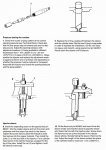
The real answer is a bit of both! The sleeve is pressed in through an O-ring which sits in the cylinder head. The bottom of the sleeve is then swaged to hold the sleeve in place. The water leak on your engine suggests the O-ring seal has failed. The attached page from the workshop manual shows you the process, and shows the special tools required. Your best course of action would probably be to take the cylinder head off and take it to a Volvo Penta dealer to get new sleeves fitted. VP dealers have the sleeves and O-rings you need. Although ASAP do have some injector sleeves, I don't think they have the sleeves for your engine.

injector.jpg
 
The real answer is a bit of both! The sleeve is pressed in through an O-ring which sits in the cylinder head. The bottom of the sleeve is then swaged to hold the sleeve in place. The water leak on your engine suggests the O-ring seal has failed. The attached page from the workshop manual shows you the process, and shows the special tools required. Your best course of action would probably be to take the cylinder head off and take it to a Volvo Penta dealer to get new sleeves fitted. VP dealers have the sleeves and O-rings you need. Although ASAP do have some injector sleeves, I don't think they have the sleeves for your engine.

View attachment 114938
 
I wold agree that it is best taken to dealer
check if engine number is required for sleeves
drain Coolant before starting
it’s a good chance to clean water spaces whilst head is of and perhaps do general check
if disturbing water pipes loosen both ends do not bend the pipes and renew end seals
extra money spent at this time may well prove wise later
 
If the top of the injector pocket is leaking I would ask the question why. This is normally due to some one trying to remove a stuck injector and because they are jacking against the head they also move the copper injector pocket. There is a correct tool for this which puts a slotted plate between the injector body and sleeve and this causes the jacking force to react against the sleeve and so not move it. This can be replicated by slotted piece of steel and long screwdrivers etc ;)

I would be concerned that if the top is leaking then the lower end of the sleeve might alsio be leaking into the bore. It would be worth removing the head to inspect and pressure test the water space.
The sleeves are expanded into place using tube expanders and Volvo service centres usually have the tools, However a similar process is used elsewhere in engineering and it may be possible to obtain the correct size expanders elsewhere, even sometimes on these forums . The swage type tool is not suitable for this job only the roller type should be used.
 
I agree, whilst I am an engineer,looking at the procedure and the tools required, common sense does dictate the best route is as you recommend removing the head and taking to a dealer. for insert replacement.
Whilst this does require attention, how urgent should this leak be considered, as I intend moving ASAP from where I am to only some 25 miles away, using the engine. It does not appear to effect the performance of the engine, as it appears no water is going past the injectors/copper seals into the cylinders.
 
If the top of the injector pocket is leaking I would ask the question why. This is normally due to some one trying to remove a stuck injector and because they are jacking against the head they also move the copper injector pocket. There is a correct tool for this which puts a slotted plate between the injector body and sleeve and this causes the jacking force to react against the sleeve and so not move it. This can be replicated by slotted piece of steel and long screwdrivers etc ;)

I would be concerned that if the top is leaking then the lower end of the sleeve might alsio be leaking into the bore. It would be worth removing the head to inspect and pressure test the water space.
The sleeves are expanded into place using tube expanders and Volvo service centres usually have the tools, However a similar process is used elsewhere in engineering and it may be possible to obtain the correct size expanders elsewhere, even sometimes on these forums . The swage type tool is not suitable for this job only the roller type should be used.
Quite what the PO got up to I cannot say, but the possibilty you outlined could well be the case. This engine is new to my previous experience which was with a Perkins 4108, so all and any advice and comments re VP2003 most welcome.
I have similar concerns regarding leaks into the bores, but as my reply to pvb the engine is running well, but of course does not nessasarily mean water isnt entering the bores. Your comments as to which tool should be used further reinforces advice to take the head to a dealer for insert repacement. Many thanks.
 
I wold agree that it is best taken to dealer
check if engine number is required for sleeves
drain Coolant before starting
it’s a good chance to clean water spaces whilst head is of and perhaps do general check
if disturbing water pipes loosen both ends do not bend the pipes and renew end seals
extra money spent at this time may well prove wise later
Removing the head is as you say a good opportunity to check and clean other areas, recommending doing so is always good advice, I have found that penny wise is usually pound foolish.
 
Top