vas
Well-Known Member
morning all,
I vaguely recall discussing these issues before and various ppl contributing, noalex (IIRC) mentioning something about a substantial alteration of charging profile by Victron in a firmware sometime last year. I do have all devices in my system updated to latest firmware btw.
anyway, I've setup a raspberry pi3B+ with it's 7in touch screen running Victron OS (Venus) and wired my BMV700 and the MPPT30/100 on it. Not done the Multi inverter/charger but tbh I'm not using the boat right now so no big deal.
I've also temp fitted a wifi router and I'm "stealing" internet from two local places in port and as a result I have the raspberry sending it's logs to Victron cloud (VRM). There you can get lots of data on battery state (voltage/current from the battery monitor) as well as MPPT data (solar panel voltage and current). You also get a combined W consumed value (MPPT - BMV Amps).
About to complete the third month of full lockdown here you can imagine I have plenty of time to do nothing which I cannot stand. So ended up setting up another raspberry pi connected to the NMEA2000 bus and taking all sorts of values from there. This together with the Victron derived data gives a good overview of what's happening on board when I'm at home (admittedly less than 10min walk away but not allowed to visit for more than 2h and in theory only once a day...)
Enough intro!
have the thing logging at 1min intervals and checking visualisations with grafana.
There I first noticed two things (which are the point of the post!)
Bulk voltage was set as per Trojan manual at 29.6V
However MPPT was pumping 30.05V or around there!
checked settings to find that OK, there's a compensation for battery temp reducing bulk voltage by a set value for every 1C above 25C (I think). Didn't realise that when temps go down (was probably around 5-8C in the e/r at the time) V compensation goes up accordingly
just to be safe (and make sure I don't burn any other device onboard, I dropped bulk to 29, so now it only reaches up to 29.4-29.5 on a v.cold day, today fe is 29.45, yesterday was sunnier was 29.3
So first Q, is that OK/normal? is it acceptable to bulk charge them at 30+?
Mind batteries are doing bugger all atm, there's a fridge that turns on for half an hour once or twice a day (should probably leave the door open and it wont cycle at all ) the raspberry and an alarm/domotic system. Overall shunt reports a 0.4A consumption constantly throughout the day plus 2.0-2.5A when the fridge is on.
The other issue is that the last couple of days with clear skies and the Jan sun "shining" I do get the system to bulk charge at this 29.something for almost 2.5h daily.
Second Q, is that OK? seems excessive to me, no?
Actually having the batteries at 99% SOC at 8am when the solar start sort of working, means the 29.something starts at 10am till around 12:30 then hovers at float 27V till the sun sets then down to 25.5V and in the morning it's at 25.2V to start the new cycle.
Not complaining, just wondering if that's the acceptable/proper behaviour for this setup. Mind Trojans are not in a good state although only 3yo (and it's me to blame but I'll leave that for now) and I now regularly water them (got the watering kit fitted...)
cheers
V.
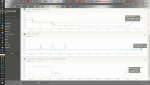
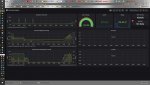
PS a couple of pics showing a typical day graph (grabbed five mins ago):
first from Victron VRM (just need a venus running device like a GX)
and next from grafana (raspberrypi-signalk-influxdb-grafana - that's the route of data to get there...)
I vaguely recall discussing these issues before and various ppl contributing, noalex (IIRC) mentioning something about a substantial alteration of charging profile by Victron in a firmware sometime last year. I do have all devices in my system updated to latest firmware btw.
anyway, I've setup a raspberry pi3B+ with it's 7in touch screen running Victron OS (Venus) and wired my BMV700 and the MPPT30/100 on it. Not done the Multi inverter/charger but tbh I'm not using the boat right now so no big deal.
I've also temp fitted a wifi router and I'm "stealing" internet from two local places in port and as a result I have the raspberry sending it's logs to Victron cloud (VRM). There you can get lots of data on battery state (voltage/current from the battery monitor) as well as MPPT data (solar panel voltage and current). You also get a combined W consumed value (MPPT - BMV Amps).
About to complete the third month of full lockdown here you can imagine I have plenty of time to do nothing which I cannot stand. So ended up setting up another raspberry pi connected to the NMEA2000 bus and taking all sorts of values from there. This together with the Victron derived data gives a good overview of what's happening on board when I'm at home (admittedly less than 10min walk away but not allowed to visit for more than 2h and in theory only once a day...)
Enough intro!
have the thing logging at 1min intervals and checking visualisations with grafana.
There I first noticed two things (which are the point of the post!)
Bulk voltage was set as per Trojan manual at 29.6V
However MPPT was pumping 30.05V or around there!
checked settings to find that OK, there's a compensation for battery temp reducing bulk voltage by a set value for every 1C above 25C (I think). Didn't realise that when temps go down (was probably around 5-8C in the e/r at the time) V compensation goes up accordingly
just to be safe (and make sure I don't burn any other device onboard, I dropped bulk to 29, so now it only reaches up to 29.4-29.5 on a v.cold day, today fe is 29.45, yesterday was sunnier was 29.3
So first Q, is that OK/normal? is it acceptable to bulk charge them at 30+?
Mind batteries are doing bugger all atm, there's a fridge that turns on for half an hour once or twice a day (should probably leave the door open and it wont cycle at all
) the raspberry and an alarm/domotic system. Overall shunt reports a 0.4A consumption constantly throughout the day plus 2.0-2.5A when the fridge is on.The other issue is that the last couple of days with clear skies and the Jan sun "shining" I do get the system to bulk charge at this 29.something for almost 2.5h daily.
Second Q, is that OK? seems excessive to me, no?
Actually having the batteries at 99% SOC at 8am when the solar start sort of working, means the 29.something starts at 10am till around 12:30 then hovers at float 27V till the sun sets then down to 25.5V and in the morning it's at 25.2V to start the new cycle.
Not complaining, just wondering if that's the acceptable/proper behaviour for this setup. Mind Trojans are not in a good state although only 3yo (and it's me to blame but I'll leave that for now) and I now regularly water them (got the watering kit fitted...)
cheers
V.
PS a couple of pics showing a typical day graph (grabbed five mins ago):
first from Victron VRM (just need a venus running device like a GX)
and next from grafana (raspberrypi-signalk-influxdb-grafana - that's the route of data to get there...)