D
DogWatch
Guest
I have these fitted to my engines

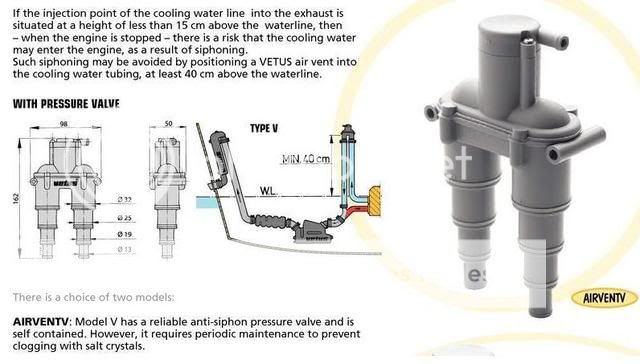
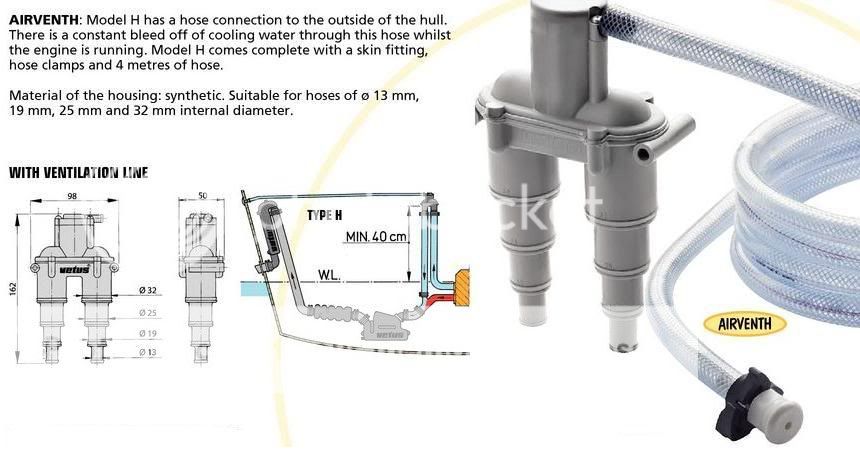
We were motoring on Tuesday and I happened to notice the port engine valve had water pouring from the pipe attached to the top of the valve. When I say pouring, I mean coming out of the outlet on the side of the boat. The starboard engine was only spitting as it always has. This pouring is new to me, but I must admit it was only by chance I noticed it, so it may not have changed at all.
When I dropped the revs, the outlet went back to spitting. I was running the engine a little harder than I normally do, approx 2900rpm. The exhaust was still running wet, I did not notice a lack of water, though having a stream of water leaving through the A-S-V would surely indicate a lack of water at the exhaust.
Is this a faulty valve? (by christ the price has gone up since I bought mine)
Can these valves be serviced?
As it appears to run normally in all other aspects, should I just monitor and ignore?
and finally, is the valve directional? I can't get to the valve myself so asked No.1 crew to feel/look for some kind of directional arrow, she couldn't find any markings on the valve. When this engine was put back a couple of years ago after some work there was a change, if left for any period the exhaust was starting dry, it now takes a few seconds to fill with water, not long enough to cause a worry. I had also moved the water inlet filter and changed pipe-work, so put it down to that, but could the engineer have put the A-S-V back to front (though I don't know how as I think due to my fitting this would have crossed the pipes).
Thoughts?
EDIT>> for clarity, under the waterline 1GM10, water filter just above the water line, vetus anti-syphon valve, vetus water lock, gooseneck (made with exhaust hose not dedicated device) approx 12" above exhaust outlet, exhaust approx 3" above water during normal operation.
We were motoring on Tuesday and I happened to notice the port engine valve had water pouring from the pipe attached to the top of the valve. When I say pouring, I mean coming out of the outlet on the side of the boat. The starboard engine was only spitting as it always has. This pouring is new to me, but I must admit it was only by chance I noticed it, so it may not have changed at all.
When I dropped the revs, the outlet went back to spitting. I was running the engine a little harder than I normally do, approx 2900rpm. The exhaust was still running wet, I did not notice a lack of water, though having a stream of water leaving through the A-S-V would surely indicate a lack of water at the exhaust.
Is this a faulty valve? (by christ the price has gone up since I bought mine)
Can these valves be serviced?
As it appears to run normally in all other aspects, should I just monitor and ignore?
and finally, is the valve directional? I can't get to the valve myself so asked No.1 crew to feel/look for some kind of directional arrow, she couldn't find any markings on the valve. When this engine was put back a couple of years ago after some work there was a change, if left for any period the exhaust was starting dry, it now takes a few seconds to fill with water, not long enough to cause a worry. I had also moved the water inlet filter and changed pipe-work, so put it down to that, but could the engineer have put the A-S-V back to front (though I don't know how as I think due to my fitting this would have crossed the pipes).
Thoughts?
EDIT>> for clarity, under the waterline 1GM10, water filter just above the water line, vetus anti-syphon valve, vetus water lock, gooseneck (made with exhaust hose not dedicated device) approx 12" above exhaust outlet, exhaust approx 3" above water during normal operation.
Last edited: