Very early Sunseeker refurbishment - Photos and a few questions.

Feneris

Well-Known Member
Joined
5 Apr 2012
Messages
72
Visit site
Here's one of the photos of the boat, from the ebay advert, which encouraged me to buy her.

2011-09-05200223.jpg


It's a Sunseeker, believed to be a 'one off' S23, made to be 19ft. The engine is an a Volvo AQ170B with a 280 sterndrive. This puts the year of manufacture around 1972. It's my first boat. I bought it, unseen, after a long chat with the owner. Now I know a bit more about boats I've realised how lucky I was to get a good one!

The engine had a rebuild done on it a few / 5 years previously. The boats interior was in need of refurbishment. The fluted vinyl has become very brittle and was starting to fall apart.

2012-04-03090905.jpg


I removed the vinyl, the ply it was mounted on was rotten, and held on with steel bolts (angle grinder to remove). It delaminated all over as I pulled it off.

2012-04-03090916.jpg


2012-04-03094737.jpg


Most of the wood in the boat is in really good condition and repairs are cosmetic rather than structural. The fibreglass seems sound throughout and all fixings into it are absolutely solid.

2012-04-04212415.jpg


The wiring was made up of decades worth of electrical tape, mods and updates.

2012-04-07162604.jpg


I removed all wiring, and have rewired with marine grade cable and a minimum number of good quality connections.

I've remade the marine ply sides that the fluted vinyl is mounted on, and ordered the vinyl from Hawke house.

2012-04-11200808.jpg


The cuddy cabin was wall to wall shag pile. It was filthy and falling apart; I removed it in clumps and the rest with a scraper. I've still got a lot of glue on the fibreglass which is slow to get off. I've ordered a 'glue remover' for my angle grinder (hawke house again), it's a soft disk which should remove glue and not damage the glass, I'll give it a go next week. I'm waiting on a couple of interior carpet samples to decide which to use. I'd be happy with shagpile again! I carpeted my VW van with carpet from megavanmats, and may use this again. It costs about £100 inc high temp spray contact adhesive.

On the mechanical side I've had a few probs. Removing the thrust washer from the prop shaft took over a day, see other thread. Also, when I drained the oil, it looks like there has been an ingress of water into the sterndrive.

2012-04-05222855.jpg


Both the bellows had water in them, and small holes. I'm hoping this is where the water got in. I'm yet to seek advice on what to do about the sterndrive. I've had to take the top gearbox off to get the drive shaft bellows off (I couldn't remove the screws holding the pivot pins in, so split the gearbox instead).

There's a lot of play in the steering mechanism.

2012-04-13102501.jpg


Does anyone recognise this mechanism, can I get a new cable / service kit for it??

My main question for now - is the fibreglass hull made from epoxy or polyester resin? Is there a way of telling without gluing samples to it? As I understand it, if the hull is polyester, I should used the same again on any glass work, and epoxy if it's an epoxy hull. Is this right??

Also there was a leak from somewhere into the cabin. I've removed the hatch to re-tape it. Before I re-carpet the cabin I'd like to seal everywhere I can, around the fixings, that go through to the outside. What's the best glue/sealer etc to do this before I cover it up??

Cheers for any advice, and I'll keep updating progress over the next week or 2.
 
The resin used when the boat was built will be polyester. There should be no holes in the large bellows (UJ in there) though there should be a small hole in the small bellows (exhaust bellows)

The ol does look as if water has got in. If the large bellows had a hole in thats probably where it got in. The oil in those outdrives is the same as you'd use in the engine. Don't go spending shed loads on "outdrive" oil.

I'd also check the bearings in the bell housing. They'll probably have got a bit damp too. Have you got a little brass greaser on the back of it. I changed mine for a grease nipple. A lot easier to get grease into the bearings.

When I had my Tremlett I changed the Push/Pull mono cable for a hydraulic system. Not as expensive as you'd thing and almost zero play at the wheel and a lot more feedback.

Most of the spares for the engine you'll get at any motor spares place, though it is getting a bit long in the tooth now. The carbs and cooling is all Vilevo marine stuff. Best place I found for spares of that sort was Coastal Rides.

I nearly bought an S20 but ended up getting the Tremlett. Better hull IMHO, especially for the short sharp solent chop.

I do miss it now and then, but fuel costs etc etc for boat and getting to it were getting stupid. Only reason I got it was wife doesn't do sailing.

Good luck with it, looks nice
 
Good job!

Second the advice to post on the Mobo forum - just like its parent magazine, this forum officially covers both sail and power, but in practice leans strongly towards sail. The mobo forum will have more specialist advice about engines and sterndrives, though we all know about replacing rotting ply etc :)

Sikaflex is the stuff to seal leaking deck fittings. As I'm sure you know, take them off and replace onto a bed of the stuff, leaving the final tightening of the bolts for a few days to let it cure into a gasket first. Just squirting it round the outside will do nothing.

Something that jumps out at me is that auto fire extinguisher. The ones I've seen like that are designed to be mounted the other way up, hanging from the deckhead, and will do nothing lying on their backs like yours. Maybe yours has a dip tube inside so is actually the right way up, but definitely check.

Good luck with the rest of the project!

Pete
 
Really interesting, and though I'm not a fast boat fan some of these early boats have an appeal which makes tham well worth restoring, especially to a high standard like this.

Re:
My main question for now - is the fibreglass hull made from epoxy or polyester resin? Is there a way of telling without gluing samples to it? As I understand it, if the hull is polyester, I should used the same again on any glass work, and epoxy if it's an epoxy hull. Is this right??
Your hull will almost certainly be polyester. Whatever it is though, any repairs should really be done with epoxy resin along with a suitable (ie compatible with epoxy) reinforcing cloth.

However, epoxy is more expensive than polyester resin, so if you have extensive repair work to do, it is possible to use the following method:
Grind out the damaged area, and clean the surrounding surface back to expose the glass reinforcing fibres. Clean with acetone. Use an epoxy mix and light woven glass mat to cover the whole of the repair. When this epoxy is just starting to cure complete the repair with the conventional polyester/csm method. This way, you can be sure that there is a strong bond to the existing grp, which you can't be certain off just using polyester alone.

I would only bother with the above for largish and important structural repairs though. Small structural repairs I would do with just epoxy. If you're repairing a locker lid inside the cabin then just use polyester/csm. Any repairs to the topsides can be cosmetically finished with a conventional polyester gel coat repair kit (which has some sort of wax additive to help the gel coat cure).

Someone else will probably come along and disagree with me now! West Systems have some excellent tutorials on their web site showing a number of different techniques. Two really useful tips I picked up from here a long time ago are using digital scales for accurate weighing of epoxy resin and hardener, and using meths for cleaning up (cheaper than epoxy solvent). I'm not a H and S freak, but it's worth being careful with epoxy as it can trigger off annoying skin complaints if you're unlucky.
 
Apologies in advance, for a totally gratuitous enquiry...but how much did you agree to pay, for an unseen 40 y/o speedboat?!

I always loved the early 'eighties 'Portofino' Sunseekers, 25 and 28 footers. Much prettier than most modern small cruisers, which look so bulky...too busy trying to fit accommodation aboard.

Instinct (not knowledge) suggests I warn you to wear a mask before grinding off old carpet-adhesive in the enclosed cabin.

Best of luck with the project. She'll be a real looker when she's refurbished, I hope you'll post pictures.
 
Hi

Seeing this post brought back so many memories, I had a 1980 S23 Daycab, had her for 18 years and travelled many miles along the south coast, mine had twin 140's linked to 280 outdrives.

I carried out many alterations including upholstery throughout the whole boat. Due to me maybe pushing the boat a bit more than probably designed for, after all the Sunseeker catalogue (I have a copy of a original SS catalogue) stated the occasional weekender, not 3 weeks down to the Channel Islands! I had to 'beef up' the build quality, requiring to re-attach several bulkheads and to strengthen the insides ajacent to the spray rails. For all of this I used West Systems from Poole Fibreglass Centre.

If you require any help to your questions please do not hesitate to contact me.

Best of luck.
 
Thanks for all the replies and advice. I'll put up more photo's as the work progresses in the next few days.

I got her for £1600 on ebay in the autumn, that was the starting and only bid. Everything seems very solid in it, and the glass seems sound throughout, all fittings are still solid. The place I'm looking at fibreglass work is in the cabin. The cabin floor is 'plastic'. I'm not sure what it's made of, but some kind of plastic. At the sides of the cabin, up against the hull, it is stuck to the hull and also has a layer of glass over the join. The fibreglass has come unstuck from the plastic, so it moves slightly when you sit on it. I can try and rebond it but I think making an improved support underneath it would help. Access is very limited though, I'll post pictures when I've got some.

I was wearing a mask just to scrape the cabin carpet out, the foam backing is old and powdery, horrible stuff.

I'll have a look at the extinguisher, it's still got it's sticker on the side so that should say. I may replace it anyway, there is some missing paint and corrosion on the top of it, I don't want it to burst anyway!

I've now ordered the fluted vinyl, also some piping from Kayospruce, and foam from an online supplier. The ply backing has had it's first coat of sadolin preservative.

The cover that came with it, is clearly quite old, heavy plastic and had some big tears in it. I used my industrial sewing machine to do some temporary repairs, prior to making a new canvas one. It was a nightmare to handle and get into place to sew, but I can now put the boat back outside and keep it dry.
 
auo030-sunseeker-sovereign-17-large.jpg


Here is another classic SS ( soveriegn 17), gives you a standard of restoration to aim for
Robert Braithwiate the helmsman built yours , The chap in the back is Daniel Craig AKA J Bond
Might be worth contacting the factory . very helpful .
Mine was the smallest at the time a 37 ft portofino circa 2003 Range spanned 37ft ----37 M then . Great Boats +" provenance"
Like a classic Ferrari i think you have latched on to something here?
In the late 70,s you could pick up a Dino for 7K , now worth upwards of 100K restored.
Keep us all posted please .
 
Thankyou the the advice and encouragement. Still making steady progress although nothing worth posting photos of yet.

I've got a fibreglass repair to do in the cabin. A friend who works in aircraft composite repair came round for a look and gave me advice on how to proceed.

The cabin floor isn't plastic as I though, but fibreglass with a finish on top. It curves up the sides against the hull. Problem is the layer of glass above it, against the hull, has delaminated from the finish on the floor. If you put weight on the floor it moves downwards against the hull. My intention is to sand back the surface a little (to clean it), then apply a band of csm to the top. I cleaned the floor with the sanding attachment, I won't take it back to the glass mat, just remove the surface of the gelcoat finish.

2012-04-19222203.jpg


2012-04-19222215.jpg


Deeper down in the bow of the hull there is a further problem. The lowest level of horizontal structure has delaminated from the sides of the hull, where the glass from the hull overlaps going downwards. It has delaminated all the way round, from the bow to the bulkhead at the back of the cabin. The delaminated band is about 2 1/2 inches high. I removed a piece on the side, it's about 1/8th inch thick. My intention, unless advised otherwise, is to remove the entire delaminated band and apply csm with polyester resin over the top, at least a few inches either side.

(The square hole in the floor has been made by a previous owner, any ideas why??)

2012-04-19222258.jpg


hulldelam.jpg
 
I think you ought to ask yourself why it has delaminated in the first place. More than likely because it was put together with polyester resin, which doesn't stick well either to wood, or to previously laid and cured polyester.
Grind it all back to expose the glass fibres in the lay-up, and repair using epoxy and woven glass tape. Most csm generally available has a binder that isn't suitable for epoxy, hence the reason for choosing woven glass cloth.

If you want to add bulk to the repair, or it is a very large area, then layup some polyester resin and csm on top of the not-fully-cured epoxy, as I suggested above. Personally, I would just keep it simple and use epoxy.
 
Hi

As I have already mentioned your post brought back many memories of my old SS.

The defects you have shown are exactly the same that I had, as mentioned on the previous post by srp, the way I repaired was to grind back to remove gel coat then rebuilt using West Systems epoxy and mat. In total I used around 20Kg of epoxy.

Don't be put off by all of this, it is repairable, just keep friends with your aircraft composite repair mate!

Keep the photo's coming especially once the repairs get underway.
 
Angle grinder

see in one photo you have an angle grinder with grinding disc.
Do you have a rubber backed disc for sand paper. I have and find it more valuable than the grinding disc. I can get a huge variety of sand paper grades and the will really cut into material in a controlled manner. The high speed of the grinder seems to keep the sand paper free of clogging. I would recommend you get one if you don't have one. Inf act get another grinder it is easier/quicker than changing pads. good luck olewill
 
Feneris, i did almost the same as you, purchasing my first boat - a Sunseeker / Poole Powerboats S20 on Ebay earlier this month! They must be coming back into fashion... here she is:


Untitled by lwwalton, on Flickr

Untitled by lwwalton, on FlickrI am currently having fun trying to find out about these - not much material on the web at the moment.

The sales blurb said she was built in 1989 but i am beginning to think this is wrong and she could even be of 1979 vintage.

Running a Penta AQ131 onto a 290 Duoprop (apparently fitted about 4 years ago). Doesn't like cold starts but seem to be able to get her running within a minute. Rather stiff throttle so need to have a look at that.

Needs a new top coat of paint. Leaky cabin hatch from the top so will sort this when i remove it to paint the foredeck. Otherwise in pretty good nick - first restoration job has been the rear steps.

Best of luck with your restoration and i look forward to learning from what you encounter!
 
more photos

the back end showing filled in holes for the steps:


Untitled by lwwalton, on Flickr

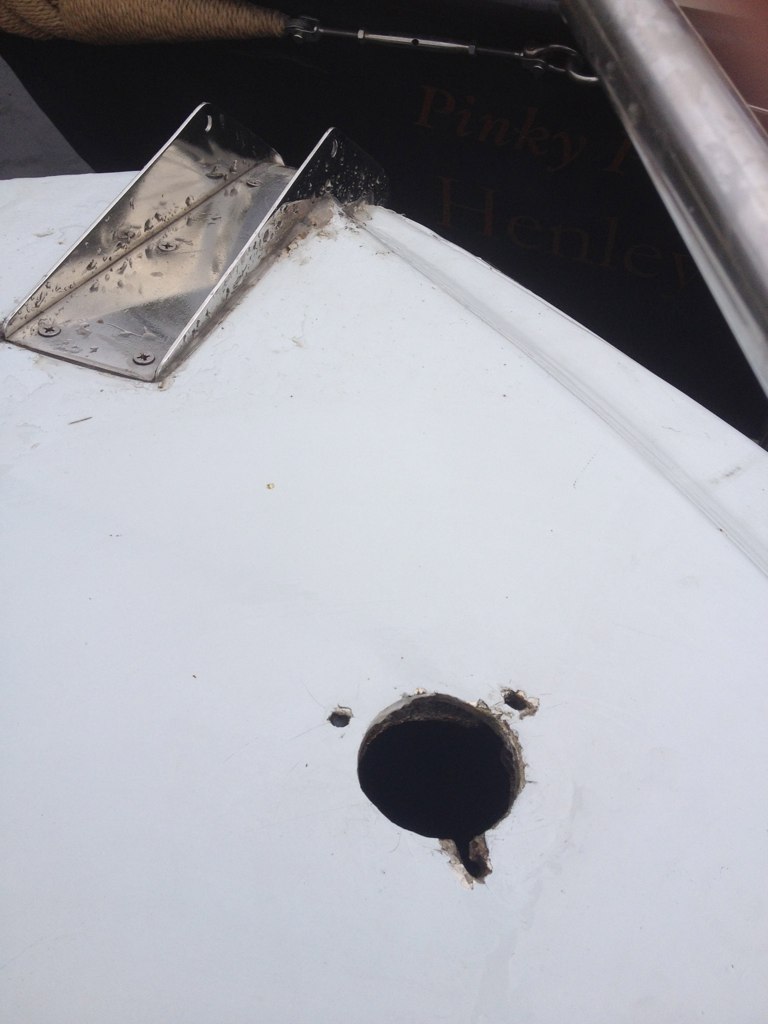
the (currently gaffer taped) hole for the anchor pipe:


Untitled by lwwalton, on Flickr

bow rail - a little rust leaching out - guessing from the fixing bolts. I haven't investigated how to get to these.


Untitled by lwwalton, on Flickr

Canvas needs a little TLC:


Untitled by lwwalton, on Flickr

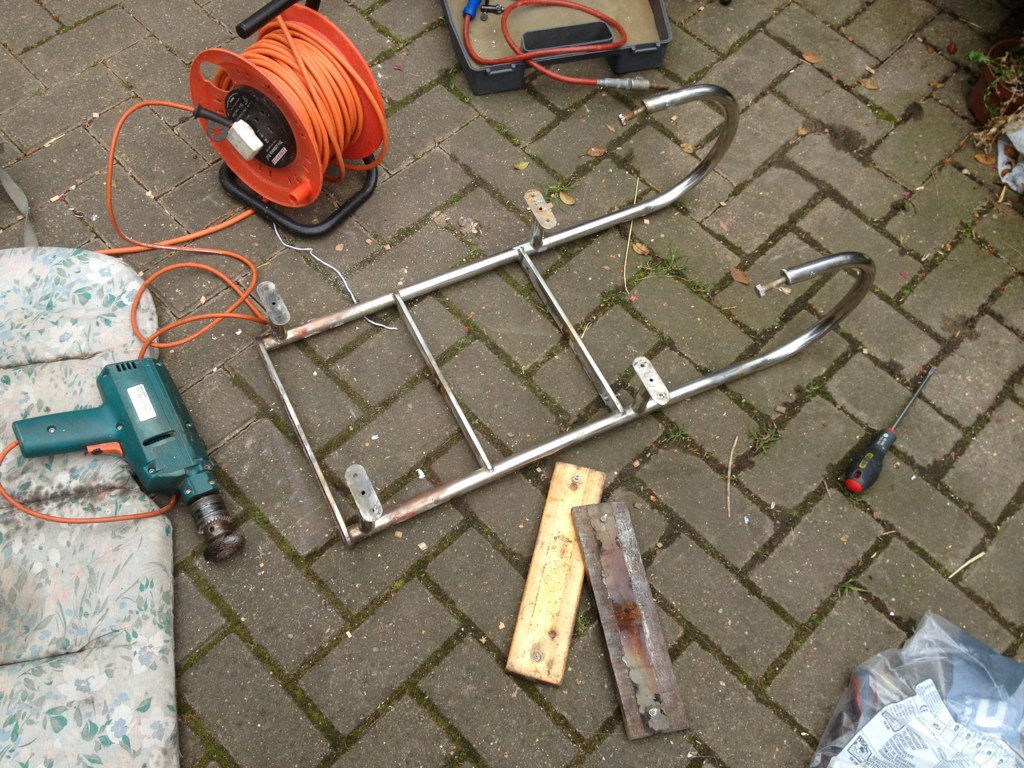
Steps before clean and retread:


Untitled by lwwalton, on Flickr
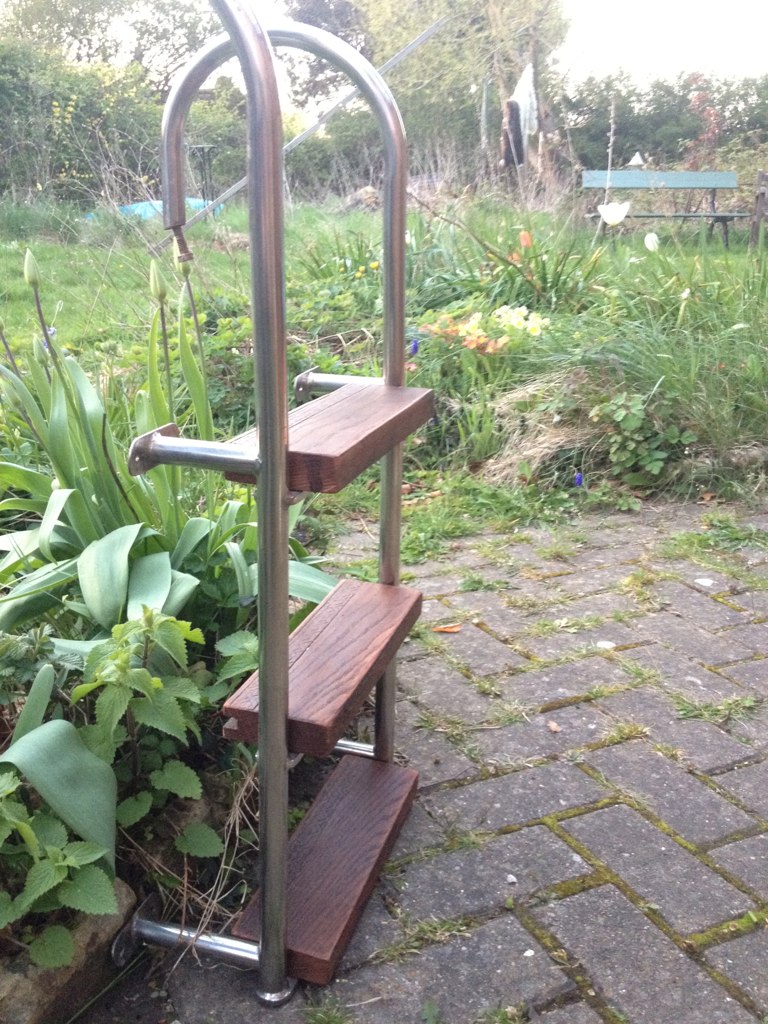
Steps after (with oak steps):


Untitled by lwwalton, on Flickr
 
It's really good to see someones elses boat, it looks good, but you'll find there's a lot of bits to tidy up. I'm really enjoying the 'tidying up' on mine, I feel far more 'ownership' of the boat now.

I glassed in the cabin seat where it had become delaminated. I used a strip of 450 weight CSM along the length and polyester. I've been reading about all the advantages of epoxy, but in this case I was advised that the polyester would be fine and a lot cheaper.

2012-04-20230000-1.jpg


I lifted the floor of the cuddy cabin, and underneath was a puddle in the bilge. The original floor has been cut out at some point, I guess access to do something. The upper floor isn't bonded to it, I'll use SS bolts to join them and make it a little more sturdy.

2012-04-24211951.jpg


The earlier mentioned problem of delamination will be fixed with expoy and polyester csm on top. I've been advised to drill holes through the delaminated layer, every 2", and use a syringe to inject expoy through the holes. The aim is to try and rebond the delaminated strip, rather than remove it, and then glass over the top. This time, with epoxy, tape, and then csm with poly over the top.

2012-04-19222258.jpg


Down the back of the boat, I trial fitted the new sides, before they are covered. To fix the bolts to the wood, I cut a hex slot in the wood for each bolt head, pressed the bolt through, with the head into the hole to hold it from rotating, and glassed over the top.

2012-04-24212016.jpg
 
I've started on the repair in the cockpit. I drilled holes every 2" and injected epoxy in, probably using 1/2 kg of epoxy, then thickened. There is clearly delamination, not only from what I can see, but from the floor (where it goes upwards against the side of the hull) and the inside surface of the hull. I found this out from resin running down into the bilge. The only way to truely sort this would be to fully remove the upper and lower floor from the boat. The bulkhead, dividing cockpit from cabin would need to come out too. This won't be happening! I'll lay cloth on top, on the side and floor, with epoxy. The suggestions above, about laying csm with polyester, ontop of the 'still tacky' epoxy, I don't understand. Elsewhere I've read that one shouldn't do that, and CSM who supplied the resins and glass, said that the epoxy will stop the polyester from hardening. I know there's a lot of epoxy vs polyester debate, I can't find good infomation on it, and till then will just use epoxy (for this repair).

2012-04-27202425.jpg


Elsewhere, I've made some plywood cable supports and epoxied + glassed them into the engine bay. I wanted to improve on the wires 'laying around' and tidy it up a bit.

2012-04-25193842.jpg


First coat of varnish has gone on, Hempel Classic. Many more to go!

2012-04-27155139.jpg


I've got the fluted vinyl, (Hawke house) however there's a problem. I ordered, and the receipt confirms, 7.5m. I got 6.96m. Even if I'd ordered 7m I would have been very irked by the missing 4 cm, as I'd measured exactly what I needed. I can't start on the vinyl today, as hawke house advise you to check what you've received before cutting, as it's yours at that point. It's not even a case of being sent 0.54m, as the dimensions of the pieces I'm making aren't that short. Will have to call them up on Monday.
 
I've got a question about finishing off the fluted vinyl, behind the panel I've attached it to. Below is a photo of the front and back of one of my panels. The fluted vinyl (vinyl, wadding, then backing material) seems very open and any water will ingress between the vinyl and backing material and then stay there. The back of these panels are up against the sides of the boat, so shouldn't get wet, but of course water will always find a way in. Previously, there was nothing sealing the vinyl. I can put a strip of tape (waterproof etc) along the lengths, but within a year or two it will inevitably become unstuck and be next to useless.

Should I just leave it, or do something??

2012-05-07111210.jpg


Untitled.jpg
 
I've done a lot of work on her since the last post, but don't have that many pictures. Digging deeper into problems highlights more work.

Firstly:

2012-05-11223639.jpg


2012-05-11223706.jpg


Apparently, the correct way to repair a crack all the way through is to stuff it with filler and anti foul over the top!!! Or at least that's what seems to have been done previously. There is further stress cracking emminating from the ends of the 2" long crack.

Boat had to be lifted off front rollers. On grinding back:

2012-05-15235554.jpg


I went all the way through the hull at the crack. White lines are where I scraped down to see how deep they were. There was flaky glass and black areas. I had to remove a large area of glass to make the repair. I was able to get to the inside, but only just.

2012-05-16201542.jpg


I added 3 - 4 layers of glass on the outside, filled it and shaped it, finishing with topcoat. No pic of that yet.

I've also done a repair in the bilge and repainted.

2012-05-18093030.jpg


The tilt mechanism has also never worked properly. The mechanism, which I couldn't remove, seems to work freely but the motor had no power. On dissassembly, the brushes are u/s.

2012-05-22191535.jpg


Brushes for a 12v motor, from ebay, are typically around £5. Of course, these "very special marine ones......", £38 +VAT + delivery! Such nonsense for the same part. I've ordered some brsuhes off ebay and will dremel down to size,
 
Top