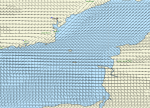
Ventusky weather app

franksingleton

Well-Known Member
Joined
27 Oct 2002
Messages
3,964
Location
UK when not sailing
weather.mailasail.com
At http://www.ybw.com/forums/showthread.php?504084-Weather-21-07-18&p=6499383#post6499383, Old Bumbulum pointed me to
another weather app that I had not seen before. It is certainly worth taking a look. Ventusky, https://www.ventusky.com/, can be used on a browser but I find it easier as a tablet app, https://www.ventusky.com/app, £3.99, with Apple and Google Play/Android versions. The presentation is in streamline form, similar to https://www.windy.com/. Both, like MeteoConsult I believe, are based in the Czech Republic. Like most apps and similar services, it provides GFS global model data worldwide with the widest number of elements and parameters. However, there are a number of features that make Ventusky stand out from the pack.

• It provides the DWD ICON global model 4 times a day with output at hourly intervals, although only for 3 days ahead. As far as I know it is the only app that gives ICON hourly data.

• It is the only source that I know that provides regional data from the ICON-EU model updated every 3 hours. Therefore, it will always be the most up to date NWP model output for Europe. In that way it is superior to any other data source known to me.

• A particularly useful facility is that it shows analyses for the previous week so that you can look back and see how what you observed compares with the NWP starting point. It lets you see how weather patterns have evolved.

• It provides the Canadian GEM NWP output as a fall-back in the (rare) event of GFS computer or communications failure. This is not a big deal.

• For those crossing the pond it has the US HRRR forecast (High Resolution Rapid Refresh). This is updated hourly.

As with other global GRIB displays, Windy.com and Meteo Earth, http://www.meteoearth.com/mobile/en.html, I have to wonder at the data download size. I am not sure that I would use this when roaming. Maybe somebody more expert than I am could take a look at Ventusky and Windy downloads.

As a personal comment, I find it galling that the UK Met Office, probably the world leading national weather service as far as NWP is concerned provides a service to sailors inferior to several others – Germany, Netherlands, USA, etc.
 
I have downloaded Android app. Looks nice and user friendly. However one cannot download a GRIB and then use it offline. This has been confirmed by their support

TS
 
Last edited:
I have downloaded Android app. Looks nice and user friendly. However one cannot download a GRIB and then use it offline. This has been confirmed by their support

TS

That is a problem common to many GRIB apps, Windy.com, Windfinder, Windguru, XCWeather, Passageweather, among others. I am sure you would not want to download the whole global data set, I do not know how a selective download could be organised.

There is no perfect GRIB service. All have pros and cons.XYGrib lets you download ICON global data with data at 3-hourly intervals but only 12 hourly . Windyc.om also only updates ICON-EU 12-hourly. Saildocs, zyGrib, XYGrib, Weathertrack, PocketGrib, iGrib, SailGrib all save GRIBs automatically. Most other services do not. I have the free cut-down Predictwind app but I do not think that saves data. As ever it is a matter of choosing whichever suits your purpose. Personally, I use XYGrib or Saildocs on my laptop and PocketGrib on the iPad. If I use Sildocs on the iPad, I have a choice of several viewers including iNavX.
 
That is a problem common to many GRIB apps, Windy.com, Windfinder, Windguru, XCWeather, Passageweather, among others. I am sure you would not want to download the whole global data set, I do not know how a selective download could be organised.

There is no perfect GRIB service. All have pros and cons.XYGrib lets you download ICON global data with data at 3-hourly intervals but only 12 hourly . Windyc.om also only updates ICON-EU 12-hourly. Saildocs, zyGrib, XYGrib, Weathertrack, PocketGrib, iGrib, SailGrib all save GRIBs automatically. Most other services do not. I have the free cut-down Predictwind app but I do not think that saves data. As ever it is a matter of choosing whichever suits your purpose. Personally, I use XYGrib or Saildocs on my laptop and PocketGrib on the iPad. If I use Sildocs on the iPad, I have a choice of several viewers including iNavX.

I have been using SailGrib WR (which stands for weather routing) on my Android phone. It is configurable as to which source of grib file it uses. I find that OpenSkiron is more reliable than others. The weather routing in for Adriatic and Greece is surprisingly helpful. Once downloaded, I can use the gribs when offline

TS
 
I have been using SailGrib WR (which stands for weather routing) on my Android phone. It is configurable as to which source of grib file it uses. I find that OpenSkiron is more reliable than others. The weather routing in for Adriatic and Greece is surprisingly helpful. Once downloaded, I can use the gribs when offline

TS

Thanks for the info. I do not have Android so only know about Sailgrib from contact with them and reading the app details. It has always seemed a good service. Which Open Skiron forecast do you use? Their own GRIB files or ICON-EU? The latter should be better as it uses a good detailed analysis while, I believe, Open Sjkiron interpolates from the GFS 25km output. It can have no westher detail although, like other models, it will have good topographical input. Also, my understanding is that ICON-EU is a more advanced than the model used by Open Skiron.

Mind you, how much that really matters in terms of usefulness is debatable. Small weather details have short lifetimes. It takes at least 5 hours before a forecast can be produced and disseminated starting from a GFS analysis and forecast. Even ICON-Eu, closely integrated with the global ICON takes about 4 hours, I think, to produce from the base data time. That is near the lifetime of weather detail a few 10s of km in size.

Detailed analyses are needed for National Weather services that have to give short term warnings of severe weather. But, of course, they run even those models as ensembles.

If you find Open Skiron fine, then good. I cannot guarantee that you would find a theoretically better forecast more useful. Others will prefer other models. The unpredictability of weather on all, especially small scales has always to be recognised.
 
When one goes into Sailgrib to request a GROB source you get a choice as follows:
SailGrib
Saildocs
Great Circle
GMN
Open WRF (Europe HR)
Open Skiron (Med HR
Weathernco (pre-defined HR)

Then when I choose OpenSkiron I get the list of OpenSkiron GRIB 0.1deg, every 3 hours for 5 days. I then choose an area such as Adriatic. The file is updated once a day.

So, I cannot get Icon-EU it seems. I will email the developer to see if ICON can be added and will feed back

TS
 
When one goes into Sailgrib to request a GROB source you get a choice as follows:
SailGrib
Saildocs
Great Circle
GMN
Open WRF (Europe HR)
Open Skiron (Med HR
Weathernco (pre-defined HR)

Then when I choose OpenSkiron I get the list of OpenSkiron GRIB 0.1deg, every 3 hours for 5 days. I then choose an area such as Adriatic. The file is updated once a day.

So, I cannot get Icon-EU it seems. I will email the developer to see if ICON can be added and will feed back

TS

Thank you again. I only have a nodding acquaintance with some of these options. I assume that when you select Sailgrib, you get the GFS. Saildocs will also be GFS but received via email rather than direct download. Great Circle is a Squid product. I am not sure whether it is GFS or ECMWF based, I thought the latter. GMN, I believe, uses winds from WW3. Those are, again I call on my memory, winds from the GFS model but using a different algorithm to derive the “10 metre” wind from the bottom level of the model ie from winds at a height corresponding to a pressure 0.998 x surface pressure. Models are terrain following. Open WRF and Open Skiron are both good, standard models such as ETA, WRF NMM/NEMS. Like most such services they do not use detailed data input.

Ventusky and Windy.com apart, for ICONI only know about ICON-EU from http://openskiron.org/en/icon-gribs I cannot open this with any of the apps on my iPad. If you can, please let me know. It will open on my laptop with XYGrib. Mind you, bearing in mind the problems with predicting small detail and the grid size of global models, then the GFS or ICON (global) are probably as good as anything for cruising.
 
This is the reply from the SailGrib developer
I have checked this. They are in grib2 format that the app cannot read...

I will try to integrate them this winter.


I then asked the developer of OpenSKiron about seeing the ICON grib files, His reply is as follows
Unfortunately we are not going back to GRIB 1. Everything is moving forwards with GRIB2. XyGrib is also providing GRIB 2 files via the OpenGribs.org Grib server. In addition we will be adding DWD COSMO Gribs for Calais to Copenhagen at 2.2km resolution. These too will be in GRIB 2 format.

Henri will be moving SailGrib up to GRIB 2 format at some point. In the meantime you can use qtVlm and openCPN for viewing GRIB 2 files on Android and also XyGrib on all desktop operating systems.


Since I am now familiar with routing in Sailgrib, I think that I will stick with the program and wait for it to catch up!


TudorSailor
 
This is the reply from the SailGrib developer
I have checked this. They are in grib2 format that the app cannot read...

I will try to integrate them this winter.


I then asked the developer of OpenSKiron about seeing the ICON grib files, His reply is as follows
Unfortunately we are not going back to GRIB 1. Everything is moving forwards with GRIB2. XyGrib is also providing GRIB 2 files via the OpenGribs.org Grib server. In addition we will be adding DWD COSMO Gribs for Calais to Copenhagen at 2.2km resolution. These too will be in GRIB 2 format.

Henri will be moving SailGrib up to GRIB 2 format at some point. In the meantime you can use qtVlm and openCPN for viewing GRIB 2 files on Android and also XyGrib on all desktop operating systems.


Since I am now familiar with routing in Sailgrib, I think that I will stick with the program and wait for it to catch up!


TudorSailor

Thanks, yet again. You are sensible to stick with the service that you are comfortable with. There is not a great deal to choose between models given the noise in the weather. There are always swings and roundabouts. All models use the same equations. In general terms, global models with shorter grid lengths will do better than those with longer grid lengths. With the same grid length, models with more levels - finer vertical grid lengths, will do better than those with fewer levels. Models which extend higher up will do better than those with lower ceilings. Then, of course there is the quality of the analysis - a problem as difficult as the modelling per se. ECMWF with 10 km grid, 130 levels and 80 km ceiling and starting nearly 3 hours later has the best results. The UK UM, 10 km grid, 70 levels, ceiling 80 km comes next. Several models with grids around 13 km come next, then Russia with a 22 km grid.
 
Last edited:
just get squid. choice of overlayable models, my favourite models arome hd and ocean ibi currents.
cheap as chips for europe.
grib files available for my plotter and other apps. mobile version very good too, but data hungry if yuo dont take care.
 
just get squid. choice of overlayable models, my favourite models arome hd and ocean ibi currents.
cheap as chips for europe.
grib files available for my plotter and other apps. mobile version very good too, but data hungry if yuo dont take care.

I would recommend anyone not to use any GRIB service whether on repayment or free. If you like the presentation and the access mechanisms, then go with it. My interventions on the topic are, more often than not, to emphasise that you will not get any better information meteorologically.

Some give the maximum amount of available information from particular sources, GFS, ICON, ECMWF etc. Others give less. Passageweather and XCWeather give much less information than, say, PocketGrib, XYGrib, Ventusky etc. Depending on how you use the information, lack of detail does not necessarily mean that they are less useful.

My main beef about some of those supplying information commercially is that they make unsustainable and unjustifiable claims about accuracy and added value. You get the same information meteorologically, so why pay?

Related to the above, I see many detailed models run with no detailed data input. Exceptions are those run by national weather services although, as I have said, I am a little cynical about the value of such detailed models to us in practice. Take them as indicative rather than definitive predictions. We are seeing a welcome increase in the availability of “official” detailed model output. We already have KNMI HARMONIE giving forecasts on a 2.5 km grid from the Dover Strait to the IJsselmeer, see https://www.euroszeilen.utwente.nl/weer/grib/. We now have the DWD COSMO on a 2 km grid in a vector wind format from http://openskiron.org/en/cosmo-gribs covering the Dover Strait to the S Baltic, Bornholm from http://openskiron.org/en/cosmo-gribs. As well as the usual elements and parameters, this includes reflectivity. Essentially, this is what the weather radar will see. High values are where thunder and lightning are possible. An advance on CAPE which shows lightning potential rather than a more specific prediction.

Like many other GRIB services, these are free to the end user.
 
Last edited:
The difference with squid is it's simple ability (at least on the PC version) to overlay multiple grib sources for interpretation by the user.
I find when planning it's the best user interface available, although it's routing results from their servers are not as good as Adrena say. (But they are free.)
It's not just about the models, it's the access and ease of getting them.
To just press a button and download all the chosen info (including observational current) is amazing.
Apps such as XC (which I refer to all the time for ease of use on the phone) are based on land forecasts. To see the projected and mostly correct wind patterns over water are intoxicating.

I would add the Volvo Ocean race (among others) uses Squid as the grib choice, while using others for routing.
 
The difference with squid is it's simple ability (at least on the PC version) to overlay multiple grib sources for interpretation by the user.
I find when planning it's the best user interface available, although it's routing results from their servers are not as good as Adrena say. (But they are free.)
It's not just about the models, it's the access and ease of getting them.
To just press a button and download all the chosen info (including observational current) is amazing.
Apps such as XC (which I refer to all the time for ease of use on the phone) are based on land forecasts. To see the projected and mostly correct wind patterns over water are intoxicating.

I would add the Volvo Ocean race (among others) uses Squid as the grib choice, while using others for routing.

The thread start with Frank pointing out that few weather programs include the new ICON. Once cannot get this on Squid
I tried the Free Squid mobile on my Android phone. It gives the choice of
GFS 25Km
GFS 56K
GFS 112Km
Meteo-France 56Km Arpege
GEM
You only get the full list of weather models if you subscribe at a cost of €5.99 a week. I am happy with paying £35 for SailGribWR and using its routing, but there again I am not crossing an ocean, I am day sailing in the Eastern Med
Tudorsailor
 
I think you need to try the PC version to fully appreciate the power of Squid. If whats wanted is a quick indicator of the weather in a particular (land) location, then XC will give you that, up to 2 days or perhaps more.
If you want more understanding and local information, then routing programmes and their interpretation of topographical influences, both on wind and tide, are the way to go. The more you use them the more you understand, although that's not relevant for everybody of course.
i spend more time, when I can, navigating and tactal then helming - but thats my choice.

Model conparison is a very powerful tool when interpreted with skill. (Something I continue to be educated each time i use it.)
Within Squid one has a number of ensembles available, in addition to the models themselves.

From Squid website:
#Consistently accepting the forecast from a single model is not a recipe for an accurate forecast. A better approach is to compare the forecasts from two or three models and look for consistency in the forecasts. Known as model consensus, you can have higher confidence in the forecast when the models are generally in agreement.#

Todays XC for Cardiff and Weston
Cardiff 17:00 SW 7 kt to 9 kt
Weston17:00 SW 9 kt to 9 kt
Flatholm is reportin 3 gusting 6, so I'll be interested to see what really happens.


Arome hd gives the same forecast on land as XC, but wind speeds double that in the channel.
I think meteorologically its quite important. That could be the difference between a sea state of Ok, to I'll stay in the bar, thanks.
And I'm finding it consistently accurate.
 
Last edited:
Consistently accepting the forecast from a single model is not a recipe for an accurate forecast. A better approach is to compare the forecasts from two or three models and look for consistency in the forecasts. Known as model consensus, you can have higher confidence in the forecast when the models are generally in agreement.

Sorry, but that is just not true. Take a look at http://weather.mailasail.com/w/uploads/Franks-Weather/GFS Ensemble.png. That is an ensemble of only 20 members using one model but just varying the analysis slightly while maintaining consistency with observations. Look at the T+36 line. 4 0r 5 members at random could all be over 30 km/hr. The outcome could be nearer 25 which was the GFS deterministic forecast. ECMWF uses a 50 member ensemble in which they vary both the analysis and the model formulation. This, more effectively, simulates different models coupled with analysis uncertainties. A small sample, 4, 5, 6 members could all be similar but equally poor as forecasts. They could well vary from one to another. What would you gain from that?

The people who run Squid, like those that run PredictWind, seem to have little understanding of the uncertainties inherent in model forecasts. A sensible way of looking at model uncertainty is to look at ensembles in a statistical sense as per the FNMOC https://www.fnmoc.navy.mil/wxmap_cgi/index.html#ensemble or the NOAA OPC page https://www.opc.ncep.noaa.gov/windprob.shtml.
 
Last edited:
Again I think you are unfamiliar with the power of the programme.
Comparing like with like, i.e. the typical sailor with XC and perhaps one other model, his minor ensemble outcome over two days is likely to be more accurate. Of course when using squid in anger, the ECMWF ensemble will be that much more reliable. (And costly)

I think you must agree to differ with the squid (great circle) experts.
As providers for major international races, used constantly by the top navigators in racing, they have a reputation to uphold and contiuously improve.
To say nothing of the revenue they can command.
 
And I'm finding it consistently accurate.

How do you know? It's a lot of work and very time consuming to log the forecasts then get actuals to compare with.

Human bias and local effects make looking at the anemometer unfortunately very unreliable.

Below GFS against actuals from a local airport, windspeed & gust.

AFfF1f4.png


Also for display Opencpn must be up near the top of the pack, not aware of other platforms which can display sat image over grib over synoptic >

I7O6eAp.png
 
I think youll find squid does.
Accurate as in I just spent three weeks away, doing my own forecasts while cruising. I don't do speculation.
Not 100% I agree, but enough for me to know if I could sail or had to motor in the right direction.
One time the current model let me down dramatically, not really part of this discussion.

I think youre missing the point - land based forecasts are highly modified when sailing away from land.
 
Top