VAKE Organic Antifreeze or alternative available in UK?

Anti-freeze is something that is easily achieved with organic compounds.

I suspect that anti-corrosion, which is why many/most of us use an antifreeze, is something entirely different.

Can this product achieve the same levels of anti-corrosion as conventional antifreeze? If not, then run a mile.

Richard
 
Anti-freeze is something that is easily achieved with organic compounds.

I suspect that anti-corrosion, which is why many/most of us use an antifreeze, is something entirely different.

Can this product achieve the same levels of anti-corrosion as conventional antifreeze? If not, then run a mile.

Richard

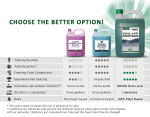
It's recommended (by the maker!) for engines...

Vake_Comparisson_EN.png
Or is this just marketing hype?
 
I have been using VAKE to protect the raw water circuit over winter for the last couple of years. Works fine.
Whether it could also be used in the closed fresh water circuit (or in a directly cooled engine) is another matter. I do not. Would like to see engine manufacturers approval first.
 
Sadly I haven't managed to source any VAKE yet in either the UK or the Netherlands (where I had hoped that I might find it routinely stocked). Having again just looked into other so called 'non toxic' antifreezes, I've come across the following article which summarises the differences between conventional antifreezes (ethylene glycol and propylene glycol) very well, I thought:

Antifreeze: ethylene glycol vs. propylene glycol | Practical Sailor

Sadly it looks like ethylene glycol will be going in my raw water system again this year...
 
... I'm not interested in MEG or MPG antifreezes. TIA!

Why?

  • Glycols are easily recycled with very little waste. I have designed and built the plants.
  • Acid formation inhibition is not corrosion protection. Not at all.
  • The inhibitors in conventional engine coolants are primarily organic acids, such as azalic acid, which are plant based, making their claims nonsensical.
  • There is no environmental or mammal exposure unless you dump them. So don't. Why would you?
  • EG and PG are complelty biodegradeable and have very low marine toxicty. The US Fish and Game Department list them as harmless. Look in the SDSs. No chronic effects. They are ONLY toxic to humans and other mammals. Not fish. Google the SDSs for EG and PG.
You are being sold on non-problems. Green washing. Glycerine was touted as "green" for a while. Who knows what they are selling, if they won't tell.

But the main things is that VAKE has not been forthcoming with technical information. I wouldn't use it for free without them listing the required ISO and ASTM certifications. It is not obvious it is suitable for use in any engine. Without certifications, that sort of product has zero value to me.
 
Last edited:
Why?

  • Glycols are easily recycled with very little waste. I have designed and built the plants.
  • Acid formation inhibition is not corrosion protection. Not at all.
  • The inhibitors in conventional engine coolants are primarily organic acids, such as azalic acid, which are plant based, making their claims nonsensical.
  • There is no environmental or mammal exposure unless you dump them. So don't. Why would you?
  • EG and PG are complelty biodegradeable and have very low marine toxicty. The US Fish and Game Department list them as harmless. Look in the SDSs. No chronic effects. They are ONLY toxic to humans and other mammals. Not fish. Google the SDSs for EG and PG.
You are being sold on non-problems. Green washing. Glycerine was touted as "green" for a while. Who knows what they are selling, if they won't tell.

But the main things is that VAKE has not been forthcoming with technical information. I wouldn't use it for free without them listing the required ISO and ASTM certifications. It is not obvious it is suitable for use in any engine. Without certifications, that sort of product has zero value to me.

Why? Because I didn't want this thread to descend into a debate about whether or not conventual antifreeze is harmful to aquatic life/the environment as this has been done to death many times before. I, like many others, try to use as few chemicals as possible (which seems to be easier on land than it is on the boat where I've amassed all manner of gunks and potions despite my best efforts!) and recycling isn't always easy or even realistically possible, especially if abroad (where recycling facilities are often superior to the UK but can be difficult to access without language and a car).

I'm at present faced with the dilemma of whether or not to start my engine, winterised since Oct 2020 due to covid, only to run it up to temperature and then rewinterise it. This goes something against the grain when it comes to wastage and chemical use, but my gut feeling is that starting the engine, rather than leaving it 18 months winterised, would probably be better for the engine...?
 
No. Just leave it as it is. I left a Nanni for 9 years in a well protected dry situation. Changed the oil and filter and it started first time..

On the other hand I leave my current boat (and all my previous boats) in the water all year round and have never "winterised" them - really not necessary in the UK except maybe in the far north. Run the engine in gear about once a month for 20 minutes or so and change oil in the spring. If boat is stored ashore, just empty the raw water circuit and leave - no need to put any antifreeze or coolant in the raw water system. change the freshwater system maybe every 2 or 3 years if it loses its effectiveness. So if you plan well there should never be any reason for antifreeze to go into the sea.
 
No mention of whether it is suitable for older technology engines. The commonly available OAT and HOAT antifreezes are not suitable for systems using older materials mixes such as copper and brass in radiators and are generally aimed at aluminium cast engines.

A very strange claim on their web site.

DID YOU KNOW THAT?
Just a glass of ethylene glycol is fatal for an adult.

I have never been tempted to drink a glass of it, nor of petrol, diesel, drain cleaner, Dettol, or many other easily available products.
 
I have never been tempted to drink a glass of it, nor of petrol, diesel, drain cleaner, Dettol, or many other easily available products.
If you can, without any bad side effects, substitute a standard product which is highly poisonous with something that is plant based, bio degradable and non toxic - why wouldn’t you?
 
If you can, without any bad side effects, substitute a standard product which is highly poisonous with something that is plant based, bio degradable and non toxic - why wouldn’t you?
If there's a non-toxic product that meets all the relevant standards, why a) do you compare your product with a toxic one that is not widely used and b) prefer a product that doesn't advertise compliance with ANY standards to one that does?

Having read this discussion, I wouldn't touch VAKE with a barge-pole - I don't know what it might do to my engine. However, mine is raw water cooled, so thankfully it isn't an issue.

I'm as keen on protecting the environment as the next person, but this stuff strikes me as green-washing. After all, you can achieve frost protection ALONE by adding salt to the water - but it won't do your engine any good unless it's designed for raw-water cooling!
 
If there's a non-toxic product that meets all the relevant standards, why a) do you compare your product with a toxic one that is not widely used and b) prefer a product that doesn't advertise compliance with ANY standards to one that does?
The OP wants to, as I understand it, use VAKE to winterize the raw water circuit of his engine. The wording suggests to me that he has a fresh water cooled engine, that is with a heat exchanger (like myself).
I am not familiar with the relevant standards for anti freeze for engines, but would be very surprised if they were not aimed at being used as cooling cooling liquid in the engine block, that is being subject to heating etc.
Winterizing the raw water circuit of a fresh water cooled engine is really not the same thing. Therefore meeting the above standards seems rather over the top.
As far as I know, VAKE is based on glycerine. If I’m not mistaken the same stuff that sometimes comes with impellers for lubrication. Cannot be very harmful for the various components found in raw water circuits.
 
Why? Because I didn't want this thread to descend into a debate about whether or not conventual antifreeze is harmful to aquatic life/the environment as this has been done to death many times before. I, like many others, try to use as few chemicals as possible (which seems to be easier on land than it is on the boat where I've amassed all manner of gunks and potions despite my best efforts!) and recycling isn't always easy or even realistically possible, especially if abroad (where recycling facilities are often superior to the UK but can be difficult to access without language and a car).

I'm at present faced with the dilemma of whether or not to start my engine, winterised since Oct 2020 due to covid, only to run it up to temperature and then rewinterise it. This goes something against the grain when it comes to wastage and chemical use, but my gut feeling is that starting the engine, rather than leaving it 18 months winterised, would probably be better for the engine...?

VAKE has not revealed any composition information. Thus we do not know if ANY of their claims are true.

You also ignored that fact that azalic acid, for example, is the primary inhibitor in some formulas. You have created a chemical strawman by grouping all "chemicals" together.

If you want this conversation to go somewhere useful, post the list of ingredients.

As for starting the engine, the engine-side (probably glycol) will not need changed. You can use ethanol on the seawater side. You could also use glycerine, an ingredient in some "green" AF. I can't recall any brands with UK distribution. The primary source of the glycerine is the biodiesel industry. There have been attempts to make AF based on glycerine, but it cannot meet all of the physical requirements for engine use (too viscous).

Another green option is to blow the system dry. This is tricky, but it can be done. The greenest option and perhaps the one you will pursue if you are serious.

Good luck.
 
The OP wants to, as I understand it, use VAKE to winterize the raw water circuit of his engine. The wording suggests to me that he has a fresh water cooled engine, that is with a heat exchanger (like myself).
I am not familiar with the relevant standards for anti freeze for engines, but would be very surprised if they were not aimed at being used as cooling cooling liquid in the engine block, that is being subject to heating etc.
Winterizing the raw water circuit of a fresh water cooled engine is really not the same thing. Therefore meeting the above standards seems rather over the top.
As far as I know, VAKE is based on glycerine. If I’m not mistaken the same stuff that sometimes comes with impellers for lubrication. Cannot be very harmful for the various components found in raw water circuits.
The point is that you don't KNOW what VAKE contains, and they make some very vague and off-the-point claims that don't actually say anything about its suitability. Claims about it being plant-based sound very nice until you consider that some of the nastiest poisons around are plant-based (e.g. Strychnine, Ricin), and at least one common garden plant (rhubarb) secretes oxalic acid in quantities that would be harmful to metals and poisonous to humans! There are standards; they are there to protect both engines and people. Further, VAKE ignore the point that many perfectly usual anti-freezes that DO meet the relevant standards are non-toxic and not actually harmful to the environment. Yes, there are cheap types that are poisonous and environmentally unfriendly, but I hope we'd all avoid those anyway.

I actually don't see the point of using anti-freeze in a raw-water circuit; if the boat is out of the water, surely it will be drained down anyway, and if not, the salt water will protect it from freezing, presuming there is an appropriate anode in the circuit. If the water around the boat stays liquid, the water in the engine circuit will, too!
 
... As far as I know, VAKE is based on glycerine. If I’m not mistaken the same stuff that sometimes comes with impellers for lubrication. Cannot be very harmful for the various components found in raw water circuits.

Please post any info you have.

On the raw water side that could be fine. The acid formation claim is non-sense if that is that case; glycerine is very closely related to glycols and has similar corrosion behavior. The primary reason it cannot be used in closed loop engine systems is viscosity; if there is enough to provide freeze and boil protection, it does not circulate well enough.

If it based on glycerine, it would be refreshing for them to simply say so. I find it impossible to trust a company that accuses others of using "secret" (yes, they use quotes, an adolescent writing habit) chemicals, and then does not revealing any of their ingredients. They may be green (unknown) but they are not open or truthful.
 
The point is that you don't KNOW what VAKE contains, and they make some very vague and off-the-point claims that don't actually say anything about its suitability. Claims about it being plant-based sound very nice until you consider that some of the nastiest poisons around are plant-based (e.g. Strychnine, Ricin), and at least one common garden plant (rhubarb) secretes oxalic acid in quantities that would be harmful to metals and poisonous to humans! There are standards; they are there to protect both engines and people. Further, VAKE ignore the point that many perfectly usual anti-freezes that DO meet the relevant standards are non-toxic and not actually harmful to the environment. Yes, there are cheap types that are poisonous and environmentally unfriendly, but I hope we'd all avoid those anyway.

I actually don't see the point of using anti-freeze in a raw-water circuit; if the boat is out of the water, surely it will be drained down anyway, and if not, the salt water will protect it from freezing, presuming there is an appropriate anode in the circuit. If the water around the boat stays liquid, the water in the engine circuit will, too!

So, because there happens to be some poisonous plants, all plant based products should be avoided!!!?

I'm in the Netherlands afloat. It can get very cold here and I'm not prepared to take the risk of leaving the raw water system un-winterised.

Which 'environmentally-friendly' conventional antifreeze would you recommend, out of interested?
 
So, because there happens to be some poisonous plants, all plant based products should be avoided!!!?

I'm in the Netherlands afloat. It can get very cold here and I'm not prepared to take the risk of leaving the raw water system un-winterised.

Which 'environmentally-friendly' conventional antifreeze would you recommend, out of interested?
Both statements are equally unhelpful, which is the point I was making. Saying something is plant-based as if it was a guarantee of being harmless is just as illogical as saying that all plant-based things are poisonous. In the same bracket is the statement that "all chemicals are dangerous". Most aren't; everything is made of them!

I didn't say environmentally friendly, I said not harmful to the environment. There's a difference. @thinwater gave a reasoned list above. As I don't use antifreeze, I don't have specific knowledge.

Finally, I too leave my boat afloat during the winter; a boat afloat cannot experience temperatures below that of the surrounding water. As long as it's afloat, it can't experience freezing. The only time I've experienced a problem with water freezing on my boat was when it was ashore and therefore exposed to much lower temperatures - the air temperature can be and often is much lower than the water temperature. But the temperature of the interior of a boat that is afloat will remain close to that of the water it's floating in. I will mention that I used to keep my boat on the Clyde in a marina that regularly had a skin of ice on it.
 
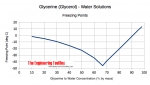
BTW, SDS information basically refutes that gylcerine is less toxic to mammals or fish than PG. They are basically the same. Increasingly, PG can and is being made from glycerine. The primary advangage is that PG is less viscus, which begins to matter at concentrations about ~ 25%.

Glycerine LD50 rat 12,600 ppm
PG LD50 rat 20,000 ppm

Glycerine LC50 fat head minnows 50,000 ppm
PG LC50 "" "" '' 50,000 ppm

Use reduction and recycling, of course, are best.

The reason I am a bit of a stickler on engine coolants is that damaging and engine will have greater overall impact on the environment than a few gallons of PG, since you must build a new engine. I am believer in making things last. On the seawater side, obviously, it matters far less.

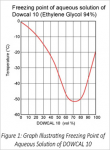
Also, just so you know, you need to use more glycerine than EG. PG is about like glycerine. This hardly matters in England, because it does not actually get cold. However, if you had enough glycerine to get boil over protection, the engine will likely be damaged by local overheating because the mix is too viscous. This is why NO vehicle coolant use glycerine.

I translated some sites that confirm that VAKE is basically glycerine. You can, of course, buy that locally. Corrosion inhibitors are not too hard to figure out, but I'm not going down that rabbit hole.
1630338085734.png

1630338164983.png
 
Last edited:
Top