Mctavish
Well-Known Member
Thank you. I'll look that up. It's more pushing than towing!There was an article in PBO issue 572 (04/14) called Towing by Tender which describes the process. I have it scanned but I don't know if I'm allowed to post it.

Thank you. I'll look that up. It's more pushing than towing!There was an article in PBO issue 572 (04/14) called Towing by Tender which describes the process. I have it scanned but I don't know if I'm allowed to post it.
removable bracket - that's what I want!Another possibility on a yacht with low freeboard is to have the outboard on a removable bracket clamped alongside the cockpit.
http://www.pearsonariel.org/discussion/showthread.php?2462-Alternative-Mount-for-Outboard

I very much enjoy rowing and crewed in an eight so I've done a bit of strenuous rowing! I like the idea of oars as it's a simple mechanism.I once rowed our Achilles 24 from just east of Gilkicker point into Gosport. There was no wind, and the tide was just running with us. It was a standard dinghy oar through a loop of line around the sheet winch as a rowlock. I stood and " push rowed" it. A tether holding the inboard end of the oar down helped enormously. It was strenuous but not exhausting. I saw an Achilles 24 many years ago with a much longer oar, perhaps 10 feet, stowed on deck.
Our motor then was a 4hp Mariner, with the standard shaft length. It worked fine going forwards, but in reverse, water used to come up the well into the cockpit.

SeajetMcTavish,
I have an Anderson 22 with a well for the outboard, and have tried exactly what you're asking...
I was surprised - a 4 hp engine has pushed the boat across the Channel in calms several times, but the tender's Mariner 2hp ( all 2-strokes ) barely moved the boat even in a calm.
I decided to do as the French did when there were punitive taxes on engines, so fitted a sculling rowlock position on the transom - mind it would need a long sweep to use it at all effectively.
I certainly wouldn't disfigure a boat with a transom bracket ' just in case ', it's also a magnet for getting knobbled by shore lines and vulnerable in every way - but if needs must in particular engine breakdown & calm circumstances I quite fancy the side clamped Plan B mentioned above - I wonder if a portable vice and a bit of 4 X 2 would work.
I'm not worried, exactly. If I can't sail, I use the engine. If there is a problem with the engine, then what are the alternatives?I think you are overthinking this. You have an outboard in a well which is just what you need. If it breaks down you can sail or if there is no wind use the dingy to tow. Why worry further?
I'm not worried, exactly. If I can't sail, I use the engine. If there is a problem with the engine, then what are the alternatives?
What ways can you move the boat - which actually work - when the mainsail is being repaired and you're tootling about with the engine and there's an issue with the engine. Is it worth bothering to take the tender along? Those are questions, not overthinking!
Thanks. I'll take at least two crew, one to sit in the dinghy and one to film.Further to post 11, this is the general method in action:
The boat shown has three times your displacement. Using 2.5hp would give the GibSea perhaps up to 2kts in flat water.
You could water ski.
fwiw, personal test: in flat water, my rubber dinghy with its 4hp outboard, tied to the side of my 40 footer, can propel it at 2kt. It takes a couple of minutes to achieve "full speed"
I'm not worried, exactly. If I can't sail, I use the engine. If there is a problem with the engine, then what are the alternatives?
What ways can you move the boat - which actually work - when the mainsail is being repaired and you're tootling about with the engine and there's an issue with the engine. Is it worth bothering to take the tender along? Those are questions, not overthinking!

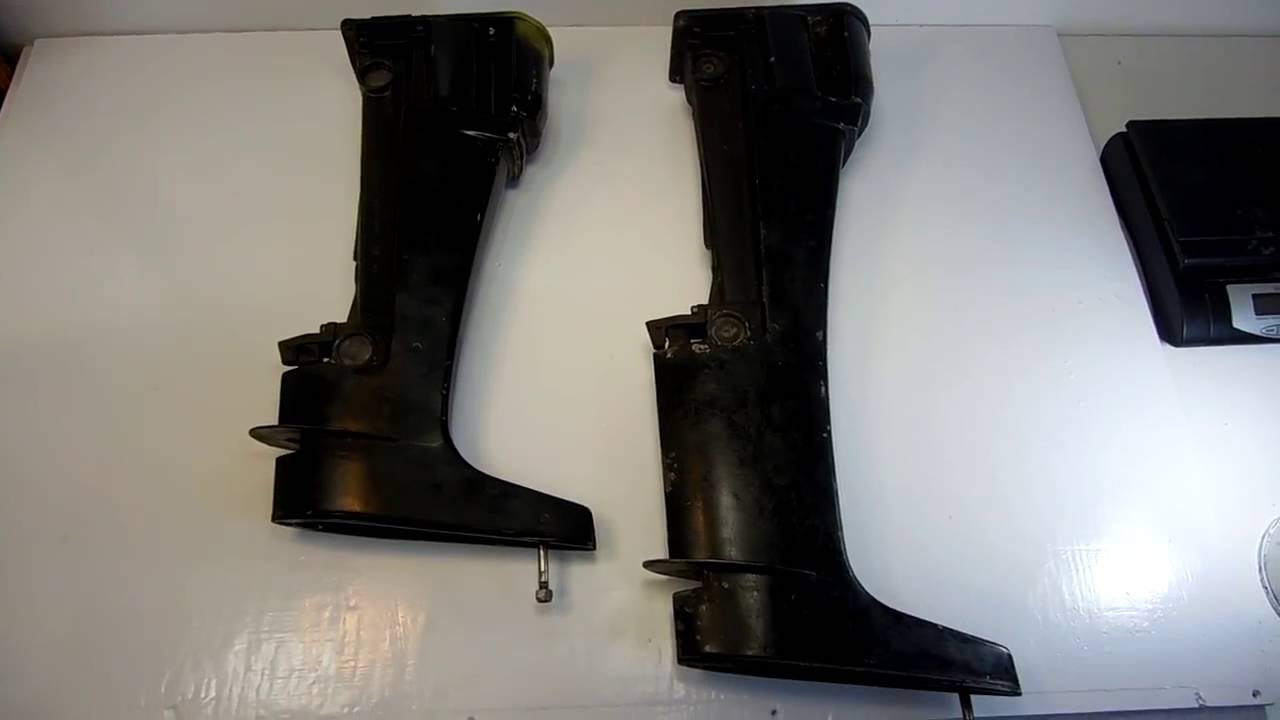

One thing to consider about long shaft engines is, will they fit in the cockpit locker ?
On my Anderson a standard shaft engine stows in the port cockpit locker - which is a good idea either by Oliver Lee's design or pure luck as it's relatively in line with the well and means one can leave the autopilot connected to starboard.
On the A22 and I'm sure the Achilles, the idea is to stow the engine as soon as in clear water then fit the fairing plug to give a drag-free hull; when the engine is out of the well, before the fairing plug is fitted there is a surprising amount of turbulence and noise, but in all my time with the boat I've never experienced the flooding when going astern or the engine choking on exhaust fumes some people describe on other boats.
The well fairing plug is nigh on essential to make the most out of the boat, it gives over 1 knot speed advantage as well as the quiet; some people misguidedly have whacking great 8-9hp 4 strokes they have to leave in the well as they need Robocop to lift them; this ruins the whole boat, as I often say it's like flying a Spitfire with the wheels down - I'm sure this applies to the Achilles too.
I and friends have found well maintained Mariner 5hp two-strokes are the ultimate engine for now, when I tried four strokes I thought ' OK what joker has bolted this to the floor then ?! '
I'm quite serious when I say a lot of thought is going into electric drive for the A22, bypassing four strokes.

One thing to consider about long shaft engines is, will they fit in the cockpit locker ?
On my Anderson a standard shaft engine stows in the port cockpit locker - which is a good idea either by Oliver Lee's design or pure luck as it's relatively in line with the well and means one can leave the autopilot connected to starboard.
On the A22 and I'm sure the Achilles, the idea is to stow the engine as soon as in clear water then fit the fairing plug to give a drag-free hull; when the engine is out of the well, before the fairing plug is fitted there is a surprising amount of turbulence and noise, but in all my time with the boat I've never experienced the flooding when going astern or the engine choking on exhaust fumes some people describe on other boats.
The well fairing plug is nigh on essential to make the most out of the boat, it gives over 1 knot speed advantage as well as the quiet; some people misguidedly have whacking great 8-9hp 4 strokes they have to leave in the well as they need Robocop to lift them; this ruins the whole boat, as I often say it's like flying a Spitfire with the wheels down - I'm sure this applies to the Achilles too.
I and friends have found well maintained Mariner 5hp two-strokes are the ultimate engine for now, when I tried four strokes I thought ' OK what joker has bolted this to the floor then ?! '
I'm quite serious when I say a lot of thought is going into electric drive for the A22, bypassing four strokes.
