Unusual Tillerpilot connector plug question.

My TP10 came without a plug as has been mentioned by others. I fitted a Bulgin like this - https://cpc.farnell.com/bulgin/px0736-p/plug-sealed-free-2-way/dp/CN08567?st=bulgin plugs
If you are going to store it in any damp conditions its worth also buying a blank cap which will protect the terminals against corrosion. The TP10 only requires a two pin plug. Of course you would need to fit the corresponding female fitting rather than the one you have. The fittings mentioned in #20 look good and quite a lot cheaper.
 
Last edited:
How do you wire these kinds of sockets? I cant remember what I did with the metal one when it went in, (2 years ago) and looking at a spare I have I am scratching my head, Im sure I didnt solder it.
The wires are secured in the terminals with grubscrews. Very small and easily dropped! No soldering needed.

The plastic block in which the terminals are held can be slid out of the metal case when the grubscrews in the side of the case are removed.
 
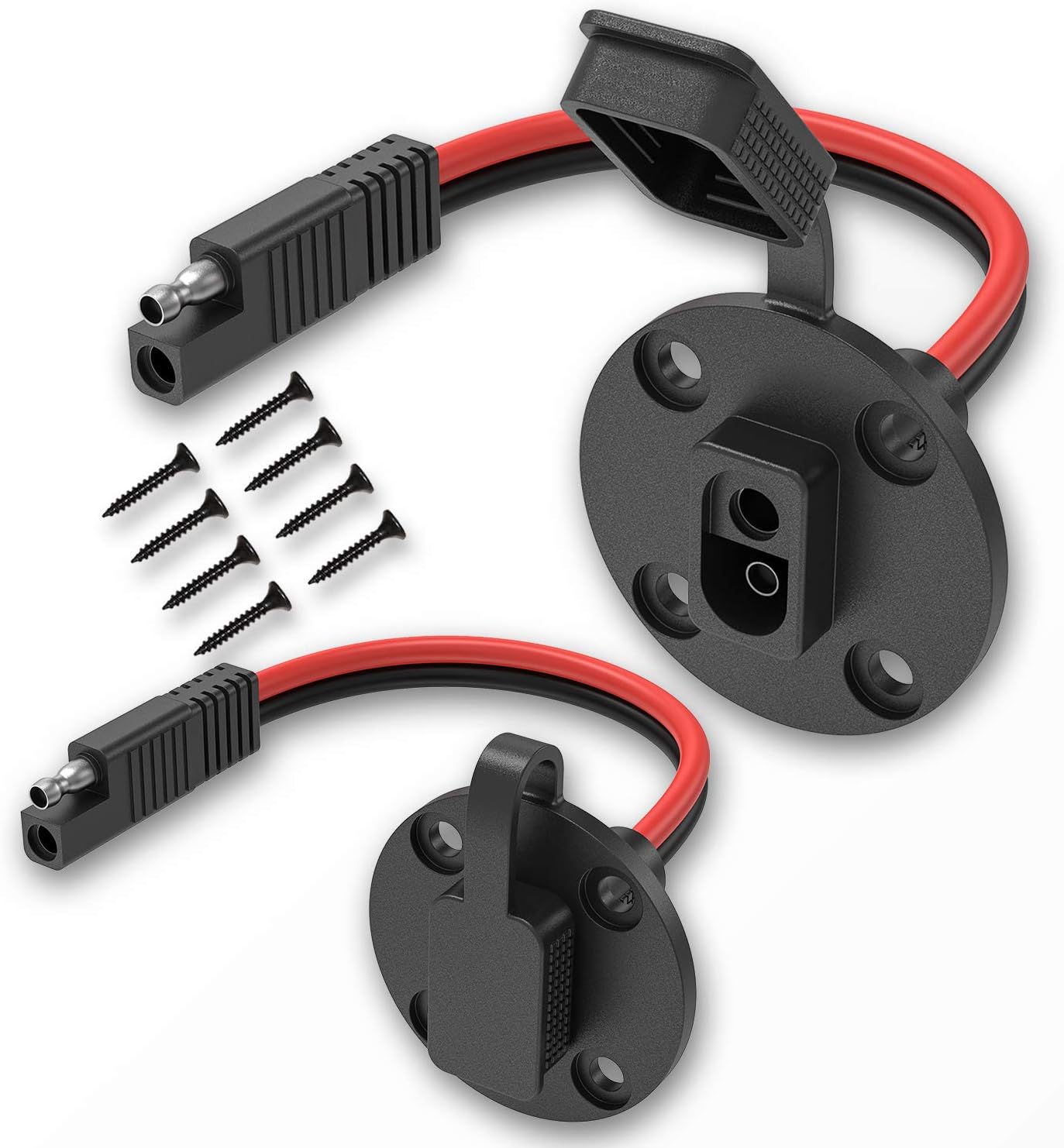
I've gone to SAE 2-pin connectors for all of the 12V on my boat. I did the same on my Stiletto 30 years ago and was happy. Cheap and very available, in the US at least. Lots of accessories too. Also avaialble in 4-pin. About $4-6 for a plug/socket set. Grease for long life. Very rugged.

FYI, the third pin is for remotes and wind instrument driven installations. Neat, but not always worth the extra cost.

71+kDv3LcYL._AC_SL1500_.jpg
 
I've gone to SAE 2-pin connectors for all of the 12V on my boat. I did the same on my Stiletto 30 years ago and was happy. Cheap and very available, in the US at least. Lots of accessories too. Also avaialble in 4-pin. About $4-6 for a plug/socket set. Grease for long life. Very rugged.

FYI, the third pin is for remotes and wind instrument driven installations. Neat, but not always worth the extra cost.

71+kDv3LcYL._AC_SL1500_.jpg
They look neat. I guess the terminals are crimped to the wire?
 
They look neat. I guess the terminals are crimped to the wire?

Crimped or soldered, and then covered with adhesive lined heat shrink.

ABYC says no solder-only, but on the plug side it is not "installed," and soldering makes for a more streamlined connection. The below deck part I crimp.

Note that SAE cords leave one pin exposed (unless capped), so that should be always be the ground.

In the US, at least, these were traditionally used for charging motorbikes and trailer wire connections. Cheap as chips here, and available in every corner parts store. You can by prefabricated extensions, cords with fuses or switches, and converters to cig lighters or DIN plugs.
 
Top