
Unexpected peculiarity of Fortress anchor

jdc

Well-Known Member
Joined
1 Dec 2007
Messages
2,066
Location
Falmouth
Visit site
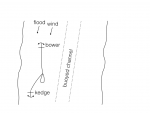
I recently anchored in a river with strong (3 - 4kts) tides and a constant wind of about F4 to 5 so we had wind over tide 50% of the time. I thus (I thought I was being clever) laid a second anchor in a bahamian moor. This is shown in fig 1.
flood1.png

3m LT, 6m HT, 45m scope on Bower, 35m scope of kedge.

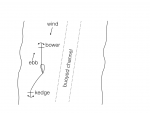
Come the ebb, it did indeed keep us nicely in place and cut down sheering around. Unfortunately nothing to be done about the chain scratching the bows but ho-hum, that's a different story. Fig 2.
ebb1.png

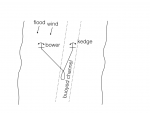
All well for a few days, so I hired a car and went away for a day. On my return the boat was not where I'd left it but had moved into the ship channel to my embarrasment and consternation. Fig 3.
flood2.png

The kedge, a Fortress, had managed to move, of it's own accord, some 70m while the bower remained in place yet the boat had moved nowhere near where the kedge had ended up (I'd left the GPS plotter on, which showed that the wind had always been stronger than tide so we'd remained upstream of the bower).

I relaid it all, digging both anchors in really hard with the engine, but it did exactly the same the next day. The solution was to lie to only one anchor - the bower - and to a shorter scope! Is it likely that the Fortress went for a fly, like a kite, all by itself? Anyone else experienced this?
 
Last edited:
Not really enough information to try and start understanding any peculiarity properly.

What's the boat ? Mobo/raggie

What's the model of the anchor ?

Size and length of chain and/or warp ?

Nature of the river bed where you were moored (rock, sand, mud) ?

Charted depth at original mooring ?


Out of interest, why did you choose to lay the bower (presumably biggest anchor ?) downstream, and the kedge upstream ?
 
Last edited:
I have a Fortress as a Kedge. That is spooky.
I never use two anchors together as I have always been concerned about them ending up in a tangled mess.
If it is used on its own will it still do that trick? If so, it is moving to the garage.
 
Sorry, but you have been miss informed.

If the winds are forecast to be over 30 knots we would commonly lay two anchors in a 'V' one of which might be a Fortress. However when this necessity arises the winds will be in a reliably forecast direction and the wind might predictably veer through 90 degrees. Wind speeds are commonly wrong, wind direction is commonly correct. The 90 degree veer would be accommodated in how we 'lay' the 'V'. Whether we need to take these precautionary measures, of setting a second anchor, we have not tested - we simply think it cautious, it has not failed - its part of what we do. But having had a forecast 25 knot become 55 knot - we think caution is sensible

I would use a Fortress as a, or the, primary if we were anchoring in mud.


I have read of people's experiences in having their Fortress trip - which influences how we use it.

I think some people buy their Fortress as a 'storm' anchor to be used, possibly with other anchors, as an anchor of 'last resort'. I also detect, possibly erroneously, that Fortress might over specify. Finally I wonder if people, obsessed by anchor weight, buy heavier Fortress than necessary.

I find that it is very difficult to deeply set our Fortress, commonly under power set we continue to see the crown and stock - whereas our other two anchors we can bury and they disappear (when we compare in the same seabed (accepting seabeds vary metre by metre).

After a strong wind event we do find that our Fortress, contrary to reports of ease of tripping, is so deeply set it is difficult to retrieve.

We find the idea that people have tripping issues in conflict with a deeply set fortress that cannot be retrieved.

I thus wonder if the idea of ease of tripping is because the anchor might be oversized and thus not deeply set or not deeply set in the first place.

I look at our FX 23 and I would say its fluke area is about 30% bigger than either the Spade or Excel, which might account for the difficulty we have in setting - we have 2 x 20hp engines with 3 bladed folding props. It might also account for the difficulty in retreiving - that large fluke area.

I would like to test a Fx 16 or an FX 11 - but do not have the stomach to buy them. However I am to test the FX 23 against the FX 37 to quantify how the difference in size affects set and tripping ability

I don't consider a 3-4 knot tide nor a F4/5 very strong.

We have a 38' x 7t cat with a 6.67m beam (now why is the length in feet and the beam in metres (and the weight in metric tonnes?). We use 8kg anchors, Excel (No4), Spade (A80) and Fortress (FX 23). The Excel and Spade are the same physical size as their 15kg steel equivalents. We had been using 8mm chain but now use 6mm chain. Our rode is all chain but we have used 10m x 11mm climbing rope each side as a bridle though have recently extended this to 14m each side.

We have never had any of these anchors drag or trip. We anchor in, what people in Oz would consider, isolated places subject to some of the worst weather Australia has to offer.

Depths will vary but typically will be 5m, we have only 2m tides and in our preferred cruising grounds - 30cm tides. Most anchorages are sand but they vary. We would not use the Fortress in anchorages with stones and cobbles on the seabed (we have a few) and would avoid thick weed (and worse kelp) like the plague. We do anchor in clays and mud.

Possibly you can quantify your anchors and how you set them.


Jonathan

Edit We have found our Fortress totally and dependably reliable. We would recommend it to be part of anyone's anchor wardrobe - though have not quite decided on what size is best. I wonder if having 2, one big one small, is an answer but finaically it seems to be a non starter! - but maybe that is what I might conclude when I have finished my testing. But we do not consider any anchor perfect - which is why we might use one, or 2 from 3. I confess we have never tried a Bahamian moor - never had the need. close edit
 
Last edited:
Unfortunately nothing to be done about the chain scratching the bows but ho-hum, that's a different story.

How about hitching the kedge warp to the bower chain, and then letting out chain until the join is around, or even below, the waterline? Then you're always riding to the chain even if half the time the load is then transferred to the warp.

Pete
 
It has been reported on many occasions that the Fortress may have problems when the tide or wind turn. I have experienced this twice, both in very light wind, no tide, but I would imagine that wind balanced against tide might result in similar conditions. The theoretical problem of using a 'flat' anchor in changing conditions is that the rode dragging across the seabed can slide between the flukes and shank, which of course will trip it. I do not know whether this happened in my two cases but they convinced me not to rely on my FX16 as my only anchor.

I use it frequently in fork mooring and find it to be superb. This year, due to my poor estimation of distance when laying it out as a second anchor, we finished up with a scope of only 3:1 in gale force winds. The Fortress held us perfectly in these less than ideal conditions. However, the wind direction was constant throughout the 2-3 days that we remained at anchor in this way.
 
I use a Bahamian Moor once every year, when I leave my boat on her anchors for a month in the Outer Hebrides. I do go to some bother with the laying of the anchors, but have complete confidence, and have never had any problem. My rodes are connected to each other below keel level.

We do not know the size of the OP's boat or anchors, so it is difficult to say what may have gone wrong. The tripping of an anchor, at the change of tide, should not happen with a Bahamian Moor. That is the whole point of the method. By restricting the angle of pull on the anchor, it cannot be capsized and tripped.

Irrespective of the tide, which exerts surprising little load on an anchor, there was something seriously wrong when an anchor dragged in F4-5. One can only surmise that the anchor, if of appropriate size, did not get a proper grip, probably due to some anomalous ground conditions, and was not thoroughly set.
 
Irrespective of the tide, which exerts surprising little load on an anchor, there was something seriously wrong when an anchor dragged in F4-5. One can only surmise that the anchor, if of appropriate size, did not get a proper grip, probably due to some anomalous ground conditions, and was not thoroughly set.

He does say it was OK for a few days, which seems to rule out poor initial set. I guess that you make certain that there is no slack in either of the rodes but if there was it might be an explanation of the OP's problems.
 
How about hitching the kedge warp to the bower chain, and then letting out chain until the join is around, or even below, the waterline? Then you're always riding to the chain even if half the time the load is then transferred to the warp.

Pete

That's what I did (always do). The wind over-rides the current every time (as on would expect if the hull is reasonably clean).
 
Somemore data (some actualy included in the original post):

Boat 12.8m heavy monohull sailing boat
Bower scope 45m, all chain
Kedge mixed chain for 20m and rope for the rest. Total after, hauling tight, 35m
Deep and soft mud
Bower type irrelevant (it didn't drag) but for the record 25kg Delta
Fortress model FX23, without mud palms.

Like Neeves I've always had excellent experiences with the Fortress, icluding using it in Bahamian moor configuration.

However some misreading of my post (did the diagrams not work?): the Fortress didn't drag or get tripped exactly but moved from full scope one way to full scope 180 degrees away. The boat didn't get near to being vertically over where it ended up, so the anchor was either towed by a passing submarine (unlikely in an Amazonian basin river), moved by submerged debris (highly possible but then it seems a coincidence that it did it again the next day) or just went for a wander all by itself.

And as stated F5 and 4kts tide isn't high forces at all, besides there would have been very low force exerted on the kedge at the time it moved as the wind was always beating the tide.

Good point made that it's more sensible to use the bower against the presumed srtonger ebb, but then again the wind's force was aligned to be in the direction of the flood.
 
He does say it was OK for a few days, which seems to rule out poor initial set. I guess that you make certain that there is no slack in either of the rodes but if there was it might be an explanation of the OP's problems.

If you ever rig a Bahamian Moor, make sure that there [/U] IS[/U]slack in the rodes, otherwise when/ if the wind comes from the side, there will be a grossly exaggerated load on them and the anchors.
 
In a fast flowing river, water carried debris is very possible, and may well have tangled with the rode. What makes you think that it happened twice?
 
However some misreading of my post (did the diagrams not work?): the Fortress didn't drag or get tripped exactly but moved from full scope one way to full scope 180 degrees away. The boat didn't get near to being vertically over where it ended up, so the anchor was either towed by a passing submarine (unlikely in an Amazonian basin river), moved by submerged debris (highly possible but then it seems a coincidence that it did it again the next day) or just went for a wander all by itself.

It seems perfectly possible that the Fortress could have dragged on the ebb and ended up as in your diagram. As I wrote previously, my experiences of Fortress dragging occurred in reversal of the boat in light wind and no tide, which could pretty much be simulated in your wind against tide conditions.
 
Anchored in deep soft mud but the Fortress had no mud palms?

The Fortress pulled out maybe because it wsnt far in, maybe because it didnt have mud palms, maybe because some passing ship with a big bow wave gave it a sideways pull, maybe because a big tidal flow eroded the soft mud over the blades that werent far dug in. After all, if the flow really was 4kn you likely wouldnt get the same initial dig in on the Fortress or the continuous dig in that Neeves refers to.

Either way it came out and then it flew under tide flow. That is obviously more of an issue with a lightweight anchor with flat "wings" on it.

My bet is that if you reversed the anchors ie made the Fortress the main one, it would dig in really hard and give no problem.
 
I have anchored on a Bahamian moor many times using a danforth type as one of the anchors and have never experienced any issues similar to the one the OP describes. Minor dragging yes but not what the OP describes.

Providing the danforth type is set well and the angle of pull does not change in my experience they stay put. I rely on my large Fortress in these situations.

I wonder if some came in and anchored over the OPs anchor snagging it. The current then reversed and the newcomer dragged taking the ops anchor with them. They dragged past the OPS boat and came to rest with the OPs second anchor on the other side. They then sorted themselves out leaving the OPs second anchor to reset in its new position.
 
Must say that I have no experience of Amazonian rivers, but in my neck of the woods, anywhere with a current approaching 4 knots doesn't have soft mud. We only get really soft mud where there's little current.
 
It seems to me from what I read here that there are all kinds of logical explanations as to what might have happened. I certainly cannot see a Fortress 'flying' with that much chain on it. My Fortress can stay onboard as the kedge for another 20 years.
 
If you ever rig a Bahamian Moor, make sure that there [/U] IS[/U]slack in the rodes, otherwise when/ if the wind comes from the side, there will be a grossly exaggerated load on them and the anchors.

I don't agree - I think that a well dug in anchor which doesn't have to turn can take a lot more force without dragging than one which has to turn 360 degrees with wind and/or tide changes. The snatch loads caused by having slack and allowing the boat to build up speed, combined with the bigger angle change for the dug in anchor sounds counter productive to me. Although I very rarely moor with two anchors we frequently anchor back to a wall with short lines or woodland/rocks with a long line and often have a cross wind. Only by winching in the long line and keeping the chain taut (combined with a snubber) can you stop the boat veering. So far this feels much safe than allowing any slack.
 
I don't agree - I think that a well dug in anchor which doesn't have to turn can take a lot more force without dragging than one which has to turn 360 degrees with wind and/or tide changes. The snatch loads caused by having slack and allowing the boat to build up speed, combined with the bigger angle change for the dug in anchor sounds counter productive to me. Although I very rarely moor with two anchors we frequently anchor back to a wall with short lines or woodland/rocks with a long line and often have a cross wind. Only by winching in the long line and keeping the chain taut (combined with a snubber) can you stop the boat veering. So far this feels much safe than allowing any slack.

A Bahamian Moor obviously does not allow the anchor to experience a 360° change in direction of pull. Where are you getting "building up speed" and "snatch loads". Sorry, but I think maybe you need to do some research about that type of anchoring. It is totally different from anchoring stern to a wall.
 
Top