Ultrasonic Wind Indicators?

Joined
3 Apr 2024
Messages
23
Visit site
Any opinions on ultrasonic wind indicators?

Seen a Calypso 0183 unit for about £400.

Looking to replace ancient Stowe unit (still giving wind speed after approx 40 years) so I can connect to autohelm to steer to wind.

Thank you.
 
Don't have direct experience of that but have just fitted a NASA system which is around half the price and you get a display as well. Gives 0183 output
 
A friend is Captain on a large motorboat. They have a Garmin ultrasonic that is useless in his opinion. We both wingfoil and when anchored next to each other, he is for ever asking us what the true wind speed is😬
 
We also have a LCJ Capteurs CV7 and it has been excellent. It outputs NMEA 0183, but they sell a converter for NMEA 2000 systems like ours.

In Australia, there are places where conventional wind sensors have a short life (not that we are anywhere near Australia at the moment :) ).

Garmin ultrasonic that is useless in his opinion.
I didn’t know Garmin produced one.
 
We also have the CV7, and have been running it happily for the past five seasons.

Once in Finland I had to go up and evict a spider that had decided to make a nest next to one of the ultrasonic sensors -- we got good wind data on one tack, and random on the other.

But that's been the only reliability issue. A traditional mechanical one wasn't an option, as back home crows are into eating those. Just like they eat the regular windex indicators as well. Ultrasonic doesn't have that problem.
 
We also have a LCJ Capteurs CV7 and it has been excellent. It outputs NMEA 0183, but they sell a converter for NMEA 2000 systems like ours.

In Australia, there are places where conventional wind sensors have a short life (not that we are anywhere near Australia at the moment :) ).


I didn’t know Garmin produced one.
I assumed it was a Garmin device. The boat is all Garmin instruments but it is possible its not a Garmin
 
I've had two CV-7's, the current one the higher refresh rate racing model.

It's a good sensor, pretty accurate and very reliable.

I'm likely to replace it or supplement it with a mechanical wind sensor, however, as the CV-7 is not easy to calibrate with the B&G H5000, since it responds to heel differently. Probably one from A+T based on the old B&G 213.
 
Probably one from A+T based on the old B&G 213.
The A+T transducers are the gold standard at the moment (but conventional rather than ultrasonic).

They are based on the B&G 213, but I gather they are significantly improved. We had a B&G 213 on our previous yacht, which was accurate (for our purposes), but the circuit board was not reliable and expensive to replace. As the A+T uses its own circuit board, so hopefully they have solved this issue.
 
The A+T transducers are the gold standard at the moment (but conventional rather than ultrasonic).

They are based on the B&G 213, but I gather they are significantly improved. We had a B&G 213 on our previous yacht, which was accurate (for our purposes), but the circuit board was not reliable and expensive to replace. As the A+T uses its own circuit board, so hopefully they have solved this issue.
The A+T has a stellar reputation, and besides that, they are local to me, so I can drop by and talk to the guys there.

Its analogue, completely undamped output is exactly what you want for the H5000 sailing computer.

I will keep the CV-7 up there for backup and comparison.
 
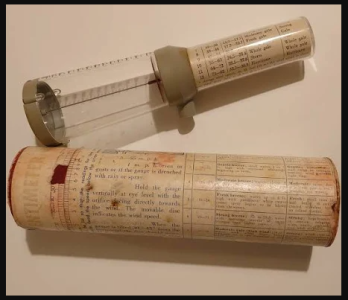
Ventimeter

1758059815390.png

Doesn't interface with anything but if looked after will last forever

You always find them on ebay... I got one in as new condition
 
I looked at those. I think someone on here said they have a good reputation and are popular with racers, and I think their site seemed good too. But in the end I went with the LCJ Capteurs CV7.

I hated having no speed through the water because the paddlewheel was clogged, so I'm going to get an ultrasonic or magnetic speed transducer. When I saw the CV7 got good reviews I didn't see any reason not to do the same thing at the top of the mast.
 
We've also got a CV7, and it lasted 10 years before going out of calibration. Capteurs were most helpful, and we went through several cycles of data logging and firmware uprades before we gave up; they then sold me a discount replacement.

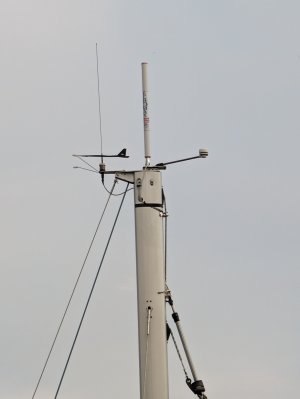
Changing the instrument was a pita; swinging around at the top of the mast trying to solder tiny wires... Anyway, I would buy another one rather than a whirylgig thingummy, as the starlings are very agressive round our way.
 

Attachments

  • 230708_1904 mast.jpg
    230708_1904 mast.jpg
    876.7 KB · Views: 10
Top