
Two stroke oil

wombat88

Well-Known Member
Joined
1 Oct 2014
Messages
1,279
Visit site
Have I got this right?

We are encouraged not to use ordinary two stroke oil (as used in mowers etc) in our outboards because water cooled two strokes run cooler than air cooled types.

Therefore, for our water cooled outboards we are advised to use oils to the TCW3 or TCW2 standards.

So...if one had an air cooled two stroke outboard the above oils are not necessary and 'ordinary' two stroke oil will be fine.

Yes? No? Doesn't matter?
 
So...if one had an air cooled two stroke outboard the above oils are not necessary and 'ordinary' two stroke oil will be fine.

Yes? No? Doesn't matter?

Whatever is recommended in the owners manual.

Very possibly air cooled outboards, apart from the little Hondas which don't count all predate TCW certification and I think you may find the recommendation is merely for a 2 stroke outboard engine oil. That is what the owners manual for my VP51 says
 
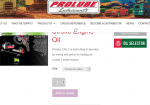
Screenshot_2019-09-05 Air Cooled 2 Stroke Engine Oil.png

APPLICATION

Designed for air-cooled 2 stroke motors in outdoor power equipment including lawn mowers, brushcutters, chain saw motors, moderate duty motorcycles and air-cooled marine outboard motors. Mix with petrol fuel as per equipment manufacturer’s recommendations.

It is not recommended for high performance water-cooled marine outboard motors (use Promarine TCW-3 Outboard Engine Oil).

https://prolube.com.au/shop/power-e...equipment-oil/air-cooled-2-stroke-engine-oil/
 
Have I got this right?

We are encouraged not to use ordinary two stroke oil (as used in mowers etc) in our outboards because water cooled two strokes run cooler than air cooled types.

Therefore, for our water cooled outboards we are advised to use oils to the TCW3 or TCW2 standards.

So...if one had an air cooled two stroke outboard the above oils are not necessary and 'ordinary' two stroke oil will be fine.

Yes? No? Doesn't matter?
We're encouraged to use low emission two stroke oils.
It's a good idea to use a modern clean burning oil to minimise ring gumming, build up in the exhaust.
It's a good idea to use a quality oil to prolong engine life.

Modern outboards tend to have higher compression and higher temperatures in the cylinder.
Some info here:
https://www.nmma.org/certification/oil/tc-w3
If you've got a cheap old low tech outboard, you can probably use any reasonable 2T oil and you won't shorten its life.
If you've got a high tech outboard, you could probably use any well-spec'd 2T oil, intended for performance bike engines, they would probably whizz through the TCW3 spec, it's just nobody is going to pay for the lab tests to stick a marine label on a oil marketed to motocross enthusiasts.

I think it's a bit catch 22.
If you don't run hundreds of engine hours a year, your engine will probably die of corrosion or get stolen well before you wear it out, so using top spec oil won't make any difference. But in that case you're only using half a litre of 2T oil a year anyway, so the cost is minimal.
If you're thrashing a big outboard for extended periods many times a year, the best oil will make it last longer, but you may notice the cost. But it pales into insignificance compared to the petrol cost.

What air cooled 2T outboards are there? Ancient things? intended to be run at 25:1 or something?
Cheap chinese jobs, again intended to run very oily?
I would ssupect with a cheaply built engine, its design life might be not many hours (how many hours does the typical DIY person's mower do in a year?), so might be improved by better oil.
Some engines might live longer cleaner lives using less oil of a higher quality.
 
Sorry, forgot to mention that the engine is a little JLO (Rockwell) from the '60s/'70s. A German engine with a Bing carb that seems to have had all sorts of applications. No manual but I understand 25:1. I do not know JLO's reputation.

It is in a Warrenjet outboard that, if it works, will be used intermittently at best.

Looks like oil choice doesn't really matter too much so I will have a go at starting it soon and we shall see.
 
Sorry, forgot to mention that the engine is a little JLO (Rockwell) from the '60s/'70s. A German engine with a Bing carb that seems to have had all sorts of applications. No manual but I understand 25:1. I do not know JLO's reputation.

It is in a Warrenjet outboard that, if it works, will be used intermittently at best.

Looks like oil choice doesn't really matter too much so I will have a go at starting it soon and we shall see.

I'd probably use a bit of the synthetic racing bike 2T oil I've got on the shelf.
 
If the engine dates from the 60's or early 70's, I"d use a mineral 2T oil. It's really old hat but exactly what the engine was designed to run on. Synthetics were developed for high performance motorcycle strokers like the TZR Suzukis or Apprilia 125 & 250 GP Bikes. The technology developed in these engines found their way into stuff like the Rc & RD Yamahas but these were designed to use high performance synthetics in "lean" mixes and finally in metered feeds into the crankcases. I don't think they are appropriate for old school 2-strokes running on "Petroil" . Using a modern synthetic @ 25:1 will be wasting money. My current Tohatsu 3.5 stroker runs 50:1 standard 2T oil. I bought it new, just before the EEC Ban, and it's never faltered.
 
Thanks for the link to the JLO manuals and thanks for all the info. I will report progress hopefully from a garage full of smoke and clattering elderly machinery!
 
Top