Turbo conversion

Nick Sweden

New Member
Joined
25 Jul 2020
Messages
2
Visit site
Hey you all.
Just converted my aifo 6033 M14 with a turbo. Diesel pump turned up a bit, engine runs perfect.
Anyone who knows how much boost the aifos with stock turbo installs are running? For example the srm33's or the 27's ?
Anyone who knows if the internals are the same? According to the books I can't find any difference ( rods, pistons and so on)
Running 20 psi now and it runs strong and nice.
Let me know if there's any knowledge in the subject out there.
Best regards, Nick
 
I know nothing about your Iveco engine but I’m happy to talk in general about turbo engines.

It sounds as though you have mounted a turbo on a naturally aspirated Diesel engine and done no modifications other than “turning up the fuel pump”

Generally, a naturally aspirated engine will have a higher compression ratio compared to a turbo engine. This is because the turbo boost pressure ratio will effectively multiply the CR, hence more Brake Mean Effective Pressure / power output.

Your 20psi boost equates to a pressure ratio of about 2.3. That’s pretty high and when multiplied by engine compression ratio will give a lot of air/oxygen for combustion.

Unless the base engine is exceptionally strong it sounds like a short term recipe for high power and a mid to longer term recipe for a blown engine.
 
Thanks for the input.
Well, all the 8061 series ( both boosted and N/A) engines has the same 17:1 compression ratio, and as far as the shop manual says, same internals
Question was only if someone sits on information on boost levels .
Thanks. / Nick
 
I know nothing about your Iveco engine but I’m happy to talk in general about turbo engines.

It sounds as though you have mounted a turbo on a naturally aspirated Diesel engine and done no modifications other than “turning up the fuel pump”

Generally, a naturally aspirated engine will have a higher compression ratio compared to a turbo engine. This is because the turbo boost pressure ratio will effectively multiply the CR, hence more Brake Mean Effective Pressure / power output.

Your 20psi boost equates to a pressure ratio of about 2.3. That’s pretty high and when multiplied by engine compression ratio will give a lot of air/oxygen for combustion.

Unless the base engine is exceptionally strong it sounds like a short term recipe for high power and a mid to longer term recipe for a blown engine.
My MD22 has a lower compression ration when blown. By about 0.5, but the Turbo also has little squirters under neath the pistons to squirt cooling lube on to the underside of the pistons
 
Turbo also has little squirters under neath the pistons to squirt cooling lube on to the underside of the pistons

The "squirters " under the piston to cool the piston crown normally come from the crank shaft when a hole in the con rod lines up with the oil feed hole in the conrod crank journal
 
The "squirters " under the piston to cool the piston crown normally come from the crank shaft when a hole in the con rod lines up with the oil feed hole in the conrod crank journal

Most turbo engiens will have seperate squirters fed from the main oil gallery, and their purpose is not so much to lube but to cool the underside of the piston crown.
 
Most turbo engiens will have seperate squirters fed from the main oil gallery, and their purpose is not so much to lube but to cool the underside of the piston crown.

It not just turbo engines and the cooling of the underside of the piston can like any design there are many different ways to perform the same function. Yes there can be a separate squirters fed from the main oil gallery and can water cooled pistons. Oil can flow through the piston.

There are many ways to kill the cat. its the easiest and cheapest that the designer look for that will perform the required function.

Its been posted before that and" Engineer can do for a sixpence what everyone else needs a pound."
 
My MD22 has a lower compression ration when blown. By about 0.5, but the Turbo also has little squirters under neath the pistons to squirt cooling lube on to the underside of the pistons
Both make perfect sense, Stu, as you well know with your experience.

Most engine makers have a basic engine and offer variants with differing power characteristics versus duty cycle durability. Leisure Marine duty cycle assumes no more than 100 hours per year. A work boat application, >5000 hours per year, of the same basic engine will have a very much lower power rating. Albeit sharing some components, these two engines would be very different in many details.

Second order becomes economics of scale. There's no point over-engineering one or other end of the range if the volumes justify additional homologation costs.
 
Boost sounds a bit high, would expect it to be around 1 bar of boost under load but don't have the exact spec.
What would concern me is that you are using the original non turbo injection pump. Simply turning the fuel up a bit isn't the answer. That pump which I think should be a DPS won't have a turbo boost valve fitted, so all you would be doing is blowing a lot of air into the engine without the corresponding increase of diesel. You need the injection pump fitted from a turbo engine.
 
The "squirters " under the piston to cool the piston crown normally come from the crank shaft when a hole in the con rod lines up with the oil feed hole in the conrod crank journal
The squirters are banjo bolts thru a banjo union and a bit of bent pipe to aim the oil. The main oil gallery in the crankcase is drilled and threaded to provide the feed See here Volvo Penta Exploded view / schematic Cylinder Block and Flywheel Housing MD22A, MD22A-A, MD22L-A, TMD22A, TMD22-A, MD22L - MarinePartsEurope.com turbo is 8 and none 7
 
Hi.
I got aifo SRM33 6 cylinders.
I've measured after turbo about 1,25 bar when max speed, about 2400 rpm, missing about 300 rpm.
Anyone know if the pressure is ok or missing some?
I've sensor alarm om the pressure. I'm not sure, but believe the sensor only gives alarm for high pressure. Should replace the sensor?
 
8061SRM33 also here 6.7lt turbocharged. 1.5bar WOT @2700rpm
VDO sensor and gauge on a blank on the manifold.
are blades OK, is the exhaust side alright with rust?
are you using the stock tiny cast iron elbow? blocks badly doubt it would affect boost though!
Relatively easy to remove the turbo, maybe a rebuilt is due, or o-rings missing/messed up on the fancy horn shaped pipe from turbo to inlet manifold.
 
8061SRM33 also here 6.7lt turbocharged. 1.5bar WOT @2700rpm
VDO sensor and gauge on a blank on the manifold.
are blades OK, is the exhaust side alright with rust?
are you using the stock tiny cast iron elbow? blocks badly doubt it would affect boost though!
Relatively easy to remove the turbo, maybe a rebuilt is due, or o-rings missing/messed up on the fancy horn shaped pipe from turbo to inlet manifold.

Thanks for your reply.
Well, then I know the sensor alarm is not to high. Do you know if there is a lower alarm as well?

The exhaust stoff is new,one year old. One one engine I changed turbo once about 4 years ago (old one)

The rest of it I have to Come back with ?
 
I measured the pressure because I got an alarm when reaching about 2150 rpm.

I've orderen one new sensor and will it try it out.
 
not quite sure I'm following you tbh. what alarm are you talking about? what does your engine dash look like?
cannot be a low alarm, they're mechanical engines, if there's a boost alarm it will have to be overpressure only.
are your buzzi wastegates functioning? Mine are both dead, locked solid (due to seawater coming down from the tiny elbow) and at 800+ a piece I'm not about to replace them anytime soon.
 
I'm not sure how to write it i english..
There is a charge alarm when en engines reach about 2150 rpm, and the sensor might be damaged(?).
I believe absolute it's a sensor for overpressure, thanks.
So I will try to change one sensor first, cheepest and most easy ?

I've got a price for New wastegate, about 1200 € so I will wait with that.

Very glad for your response ?
 
1200! god went further up in price :eek:

look, have you got the workshop manual and some other PDFs that are floating around? Have you identified the overboost sensor somewhere? could you post a pic?
a "charge" alarm would most likely be alternator related as in current charge?
is it a light coming up in the dash or the buzzer starts buzzing?
how do you measure the boost of your engines?

Finally, since you seem to also have 2 engines, I'd not bother buying a sensor just like that, I'd swap it over from the other engine and see if the alarm swaps sides and goes with the sensor you've changed over.

a few pictures would help!

V.
 
I got a manual, but I can't find anything about pressure.

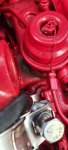
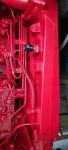
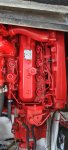
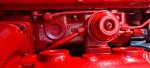
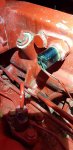
See attachment. You can there see the black sensor and the wastegate.
Trygd to switch sensors between the engines and it got even worse. From alarm on only the one I got on both. ?

In this place there is a few good things to see
FPT Iveco Motorer | 8061 SRM 33.10 reservedeler | Frydenbø Industri

The alarm is both a buzzer and a light.
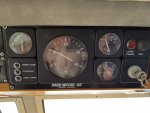
One picture is shopping the panel.
 

Attachments

  • FB_IMG_1651918462106.jpg
    FB_IMG_1651918462106.jpg
    137.8 KB · Views: 10
  • FB_IMG_1651918466753.jpg
    FB_IMG_1651918466753.jpg
    184.9 KB · Views: 10
  • FB_IMG_1651918470389.jpg
    FB_IMG_1651918470389.jpg
    243.6 KB · Views: 11
  • FB_IMG_1651918475539.jpg
    FB_IMG_1651918475539.jpg
    58.2 KB · Views: 11
  • FB_IMG_1651918887443.jpg
    FB_IMG_1651918887443.jpg
    64.8 KB · Views: 10
Top