'Tronic gadgets

I always think anchor alarms on chart plotters a waste of space. It would mean leaving the nav equipment turned on all night eating the batteries and you probably wouldn't hear the alarm from your bunk anyway.

I use the Anchor Pro app on my phone with it next to my bed.
 
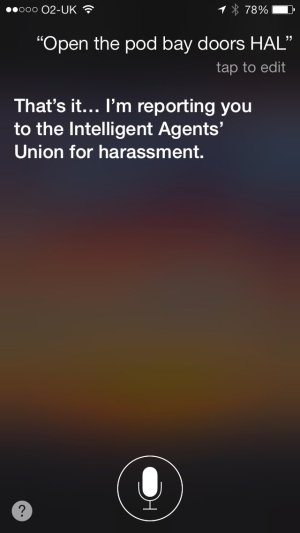
I note from this Telegraph article that those clever-clogs have updated their voice-controlled Alexa bot to a much more sohisticated version, Alexa+, which can now 'engage' with rather chummy British colloquialisms and banter ( a bit like in here? )

Can we now look forward to lovers of 'tronic gadgets on board arranging for Alexa+ to advise loudly e.g. when it's time to reef or that the anchor seems to be dragging?

Our friend Wonkywinch will, no doubt, be fitting Bluetooth-enabled load sensors onto his control lines and have Alexa+ whisper in his ear that he ought to trim the jib sheets a tad....

;)
 
@wonkywinch A couple of days ago I downloaded OpenCPN onto my MacBook Air. I have managed to get Antares charts showing, but need to get a source for UK charts. Not really looked into it yet. The Polar Plugin, does that record polar data automatically for a boat from boat data wind and speed through water?

@zoidberg My want gadget is a night scope. I bought it on here a while back, ITT Night Vision Monocular, £70 IIRC, and it has proved invaluable. For years I sailed about maintaining my night vision but this device has reduced the risk associated with ruined night vision. I think it has migrated to the need list. Solar is on the want list.
After a worrying time leaving a port in the dark...I also wanted night vision....I have had them in the past (the green tint ones) but they were always telescopic....and while that is fine out to sea....in a port it is the last thing you want....also I was only prepared to spend next to nothing. Anyhow, technology has moved on and they are now grey tint and you can dial them down to no magnification. I’ve tested them at night onboard....but haven’t had to leave in the dark....so I don’t know if picking up a small device and probably switch it on every time will be better than a torch or not....but everything is another arrow in your quiver....so better than not having it. It’s also remarkably cheap....and if successful, I might invest in a better one
 
After a worrying time leaving a port in the dark...I also wanted night vision....I have had them in the past (the green tint ones) but they were always telescopic....and while that is fine out to sea....in a port it is the last thing you want....also I was only prepared to spend next to nothing. Anyhow, technology has moved on and they are now grey tint and you can dial them down to no magnification. I’ve tested them at night onboard....but haven’t had to leave in the dark....so I don’t know if picking up a small device and probably switch it on every time will be better than a torch or not....but everything is another arrow in your quiver....so better than not having it. It’s also remarkably cheap....and if successful, I might invest in a better one

Mine is green tint. It has a focus feature which works well and you do need to adjust it. It’s super clear and easily distinguishes objects from each other in the gloom. On a moon lit night it is exceptional, on a black night, it’s very good. It would significantly increase the chance of a night time MOB recovery. A friend’s son works in development of AI and night vision, for commercial search and rescue. There is a lot of pressure to crossover to military for people target acquisition and kill, he is not happy with that and being asked to develop such capability. New devices are quite amazing and incorporate heat as well.
 
Mine is green tint. It has a focus feature which works well and you do need to adjust it. It’s super clear and easily distinguishes objects from each other in the gloom. On a moon lit night it is exceptional, on a black night, it’s very good. It would significantly increase the chance of a night time MOB recovery. A friend’s son works in development of AI and night vision, for commercial search and rescue. There is a lot of pressure to crossover to military for people target acquisition and kill, he is not happy with that and being asked to develop such capability. New devices are quite amazing and incorporate heat as well.
Thermal imaging is the future
 
Mine is green tint. It has a focus feature which works well and you do need to adjust it. It’s super clear and easily distinguishes objects from each other in the gloom. On a moon lit night it is exceptional, on a black night, it’s very good. It would significantly increase the chance of a night time MOB recovery. A friend’s son works in development of AI and night vision, for commercial search and rescue. There is a lot of pressure to crossover to military for people target acquisition and kill, he is not happy with that and being asked to develop such capability. New devices are quite amazing and incorporate heat as well.
I remember the PNG goggles we had back in the ‘80s. Was like having a dustbin on your head.
 
Thermal imaging is the future
Fine along as the target has a thermal signature that defines it against background. Has to be combined with light intensity amplification and that is where AI can do the clever bit of making the shapes out of the blurs. The things we used back in the ‘80s used camera tubes with silicon intensifiers which whited out very easily and left you blinded if you looked at something bright.
 
Fine along as the target has a thermal signature that defines it against background. Has to be combined with light intensity amplification and that is where AI can do the clever bit of making the shapes out of the blurs. The things we used back in the ‘80s used camera tubes with silicon intensifiers which whited out very easily and left you blinded if you looked at something bright.
Are you crazy ? You don’t mention AI on these pages...or none them will use it 🤣
 
A long time ago I had the chance to play with a Russian thermal image sight that had been fitted to SVD (Dragunova) sniper rifle. It whined and ate batteries and ideally it should have been fitted with wheels it was that heavy. It had been liberated by some Mujahideen and knocked about a bit, but it still worked, to a degree.
 
45 years ago I was the 'test pilot' for an 'underwater vehicle head up display and control mechanism' with a (very) major defence contractor. This involved the pilot (me) wearing a crash helmet with a 1" monitor fitted as an eye piece, and the other eye blanked out. The whole unit was attached to an angle poise lamp contraption on the crash helmet, so that when I turned my head, the ROV turned appropriately; when I looked downwards, the ROV camera tilted appropriately. I still had the handcontroller to manoeuvre the ROV, with the usual 'info' on screen for me, and really, it was fairly easy to do, albeit more tiring.
However, this is the diving industry, so I'm flying the ROV in the company test tank, entirely cutoff visually from anything outside of my crash helmet monitor, and I hear the door opening to come into the control shack. Who knows who they are, what are they going to do to me??? Unless you've worked for a diving company, you'd maybe not fully appreciate the sensation
 
I don’t know about night vision stuff, having relied on 7x50s, but on the optical front I found stabilised binoculars invaluable. I bought a pair of Canon 10x40s for something over £200 in 2000 and they are still in good condition but the prices are more than double I believe. Someone made the good point earlier that a camera with a stabilised image and zoom could serve some of the same function, though not all.
 
Top