Tripping electricals

All_at_Sea

Well-Known Member
Joined
3 Aug 2005
Messages
1,396
Location
Hampshire
Visit site
Hello

I have a 240v circuit that is also served by an inverter, so the sockets are either 240v mains or inverted (if that's the word?). The mains side trips as soon as the switch is turned on, l have just replaced some old wires in the switch but l think it maybe the water immersion heater which isn't on the socket circuits. How do l test the immersion for a fault. I have a 240/12v tester but what exactly am l testing? (ie which wires and on what setting on the tester?)

Thanks
 
You do well to suspect the immersion element, a common source of earth leakage causing RCD trips, as any test will mean disconnecting it then just disconnect (A/C off) , isolate the conductors and see if it still trips when you switch back on.
 
It wasn't clear from your posting which switch you are turning on that causes something to trip.

Is it a switch to provide mains power through to the sockets.. or the mains supply to the boat (which could be powering inverter, battery charger and sockets amongst other things).

As David 2452 says - Possibly easiest to find the issue by isolating parts of the circuit.. or isolating all of it and reconnecting part by part.

I'm intrigued as to why you suspect the immersion element after having replaced a few switch wires. Why did you set about replacing switch wires?

Also - once all back to normal.. Have you tested sockets for correct earthing and that the live and neutral are the correct polarity.. Could be worthwhile getting one of the small 3-light indication testers if not.
 
Hello

I have a 240v circuit that is also served by an inverter, so the sockets are either 240v mains or inverted (if that's the word?). The mains side trips as soon as the switch is turned on, l have just replaced some old wires in the switch but l think it maybe the water immersion heater which isn't on the socket circuits. How do l test the immersion for a fault. I have a 240/12v tester but what exactly am l testing? (ie which wires and on what setting on the tester?)

Thanks

Probably Davids suggestion is the most sensible way forward, if you are unsure about safely disconnecting, and reconnecting, the immersion heater the best advice you can be given is to get help from an electrician .

To test it you need to be able to test the insulation resistance between the element and earth.

Your tester may or may not be suitable for that ........ What is it exactly? .... In any case while you are disconnecting it to test it you might just as well do what david suggests
 
Last edited:
I am assuming the sockets are ok as the inverter, when on doesn't trip anything and the only other difference on the mains side is the immersion, so l am assuming this is the problem. I don't have anything else on the mains circuit.

I'll isolate it tomorrow and try the switch again. The switch l am talking about is the one that turns on the sockets to mains power, which includes the immersion circuit.
 
I am assuming the sockets are ok as the inverter, when on doesn't trip anything and the only other difference on the mains side is the immersion, so l am assuming this is the problem. I don't have anything else on the mains circuit.

I'll isolate it tomorrow and try the switch again. The switch l am talking about is the one that turns on the sockets to mains power, which includes the immersion circuit.

The RCD may not be sensing a fault when on the inverter supply, in which case your situation could be potentially dangerous when using the inverter supply. I would suggest the advice given to get an electrician involved is probably very wise.

However, the fact you have just replaced some wires suggests a possible mis-connection. Has this wiring be replaced as part of your fault finding process after the tripping fault has occurred, or has the fault occurred since this wiring was replaced - your post isn't clear on this point.
 
An emersion heater common fault is loss of insulation between the metal body of the element and the wire within. It can be tested toa degree by disconnecting all wires to the element and checking resistance from each terminal to the body of the tank or element. Now a digital multimeter tests at about 3 volts so may or may not show up an insulation fault. The best test is using a "megger" here there is several hunderd volts applied to tthe insulation so any break downm at higher voltage will show up. Certainly if your DVM shows low ressitance you have a bad element. If it does not show low resistance you may or may not have a bad element.

RCD works by closely comparing the current in the active wire to the current in the neutral wire. Any discrepancy ie by 10 milliamps or so is leakage to earth ie not coming back via the neutral wire, this is assumed to be a fault or a person receiving a shock. So it operates to disconnect. It is possible in your wire replacements that the neutral wire has not been returned through the RCD. This would definitely operate the RCD. This wiring error may or may not show up on inverter. So check your wiring carefully. good luck olewill
 
Be very careful with any system where both mains and an inverter can be connected to the same appliances. Many inverters have their neutral and earth linked. If the mains input is reversed (line & neutral swapped over) when connected you can then have the live line connected to earth via the inverter even if it is not switched on. That will trip the mains RCD. I am just about to put in a new inverter to drive the boat fridge. I intend putting in a switch that will switch all three (L, N & E) wires to the fridge compressor between either mains or inverter.
 
That is how a "transfer switch" should operate.

Diagram worth many words

generator-transfer-switch.gif
 
That is how a "transfer switch" should operate.

Diagram worth many words

generator-transfer-switch.gif

That is exactly what I plan. I have a three pole double throw switch with a centre off position to do that. Similar to this http://www.ebay.co.uk/itm/9-pin-3PD...trial_Tools_Generators_ET&hash=item20e882e188

I wanted a rotary on-off-on switch but cannot find one that has enough contacts. One that I bought that was supposed to be centre off actually has three pairs of contacts that were on in sequence; quite useless as it would have switched line and neutral but would not have switched the earth.
 
Last edited:
Thanks all, it as the immersion heater, l isolated it and no tripping!

I have since discovered that the sockets can only be powered either by the inverter or the mains but never both as one cable moves between inverter and output socket thereby doing the same job as a switch. although a bit manual!

Just got to drain the system now and get a new heater element, do l need to buy an Isotherm one or will any do?
 
Just got to drain the system now and get a new heater element, do l need to buy an Isotherm one or will any do?

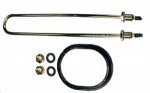
Check the boss size a there are two thread sizes, 1 1/4" BSPP & 2 1/4" BSPP. you will need to get a low wattage one even if it is the larger "domestic" size thread as the usually available 3kw takes up too much of your normally available 16a. Also the Webasto Isotemp basic & slim models have an odd element which you may have difficulty sourcing elsewhere.

557734db490d22989050ccb344229145.image.300x185.jpg
 
Last edited:
Thanks all, it as the immersion heater, l isolated it and no tripping!

I have since discovered that the sockets can only be powered either by the inverter or the mains but never both as one cable moves between inverter and output socket thereby doing the same job as a switch. although a bit manual!

Just got to drain the system now and get a new heater element, do l need to buy an Isotherm one or will any do?

So the power to all sockets goes through a single 13 amp plug? Not good practice and easy to overload if you have a kettle and something else on at the same time.
 
So the power to all sockets goes through a single 13 amp plug? Not good practice and easy to overload if you have a kettle and something else on at the same time.

Perfectly safe, though, as the fuse in the plug will simply blow if you try to put too much through it.

Pete
 
Perfectly safe, though, as the fuse in the plug will simply blow if you try to put too much through it.

Pete

True, and safe if the OP has checked the fuse. If the plug arrangement pre dates his ownership then he should check it, just to make sure that nobody has "solved" a blowing fuse by bypassing it.
 
Top