Treadmaster: costs, sizes, adhesives and alternatives

Greenheart

Well-Known Member
Joined
29 Dec 2010
Messages
10,384
Visit site
A few rambling thoughts before I finally open my wallet. I'm definitely not asking for advice on how to remove old Treadmaster.

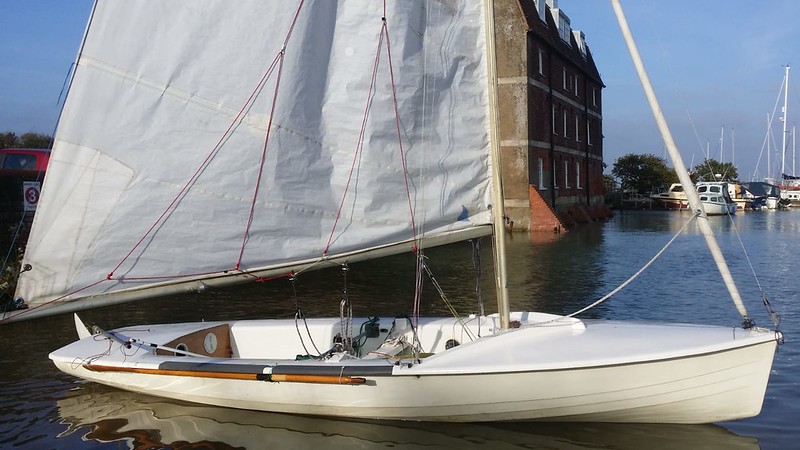
Five years ago, I used two six-foot strips, four inches wide, of ProGrip non-slip on my gunwales to make trapezing more sure-footed.

The ProGrip was okay, but in the last 18 months the edges have come unstuck.

Partly from vanity (I want the non-slip to be white, and ProGrip isn't available in white) and partly for permanence, I want to use Treadmaster.

The cost is discouraging. I could buy a pair of 22-inch x 5-inch self-adhesive strips, cut them longways to make narrow, 44-inch gunwale coverings...

...and also a pair in the half-size, also split longways, so each gunwale would have something approaching the same length that the ProGrip covers.

That makes (give or take) £30, without delivery, and without supplementary adhesive...while for less than £70, I could order a full 4ft x 3ft sheet, of which I'd only need about a quarter for this current job. But then I'd probably have the remainder of the stuff unused and still good as new, long after I'm gone.

Treadmaster's recommended two-pack adhesive is a jaw-dropping price. Has anybody tried using ordinary contact adhesive?

And has anybody found any kind of substitute to Treadmaster with remotely similar performance, but which isn't the same price?
 
I needed to replace damaged Treadmaster to my cockpit floor. Genuine Treadmaster was very expensive and no longer did the green colour so I bought some fake lookalike from a boatshow. Complete waste of money, it lasted one season, then went like blotting paper. It would have been better to spend the money and do the job properly once.
 
I fitted a Treadmaster look a like using a Sikaflex like sealant/glue The glue worked very well but in the South African sun it has now disintegrated to such an extent that it needs replacing.
 
I spoke to Treadmaster technical this last week to ask why their contact adhesive is no longer listed - leaving just the 2 part resin available from them .
They are reformulating their contact version ,so currently unavailable.However they do recommend BOSTIK 2402 if a contact is required.This appears to be the bees knees if expensive .Cheapest I found £35 / litre.
Your gunwhale application is pretty demanding .Other contacts might do the job . If Sikaflex, then 292 is a possibility and has good grab. Ordinary resins would no doubt do it convincingly but require more wrangling to avoid run -off and eventually require hacking off again.
 
Thanks for these replies.

I suppose if there was a better, more cost-effective solution, people re-surfacing whole decks would have discovered it. My particular non-slip purpose is very small so I can bite the bullet.

Just wondering if anybody had used Treadmaster's own self-adhesive patches, which I'm planning to get? I don't suppose these employ the two-part adhesive, but as a Treadmaster product, is the glue sticky enough?

The smallness of my gunwale project really doesn't justify spending another £30 on Treadmaster two-pack glue, but the curve of my gunwales may challenge the self-adhesive if these patches were only meant to be used on flat steps...

...I suppose the issue becomes, whether the 'self-adhesive' that Treadmaster puts on its patches, will stick to whatever supplementary adhesive I use to ensure the patch will hold to the gunwale.
 
I used the self adhesive patches on my mobo a good few years back and it worked fine BUT it wasn’t a very demanding place, just on the gunwale tops for boarding. However, if you did need to say replace every other season, it might be more cost effective than buying a large(ish) quantity of adhesive which won’t be much use for anything else...
 
Have you thought about masking off the area and painting non slip? seem to remember (long time ago!) that is what I had on my Osprey. £25 tine will last a lifetime.
 
Yes there is an alternative to treadmaster that looks exactly the same as their diamond stuff but is less than half the price.
It's epdm rubber. Pretty indestructible stuff.
I applied it to my boat as was fed up painting the decks time after time.
I bought it from coruba who manufacture it. They don't offer an adhesive but pointed me to a bonding company who they deal with and they supplied a two pack contact adhesive.
They also explained that the biggest failing is due to the user not applying enough pressure when bonding.
I bought the dark gray and it's been down for 5 years now without any drama.
It has faded a little but I'm happy with a light grey.

https://www.coruba.co.uk/epdm-rhombus-rubber-matting.html[000006].jpg
 
Have you thought about masking off the area and painting non slip? seem to remember (long time ago!) that is what I had on my Osprey. £25 tin will last a lifetime.

Thanks Mr T, that might be effective - and certainly economical.

Several years back I bought non-slip 'pellets' that can be added to paint, which certainly roughen surfaces, though whether the result is anywhere near as good as the rubbery tackiness of Treadmaster, I don't know.

I assume the nitrile constituent in Treadmaster is probably the best non-slip one can find, as well as the reason for its cost.

I'm not proud of the fact that it's largely a question of colour. The grey ProGrip was quite good enough, and is the dinghy-sailor's standard, but I'd prefer it in white.

45222047815_d6d8fc8300_c.jpg


Yes there is an alternative to treadmaster...it's epdm rubber. Pretty indestructible stuff. I bought it from Coruba who manufacture it. They don't offer an adhesive but pointed me to a bonding company who they deal with and they supplied a two pack contact adhesive.

Many thanks, I'm looking into it. (y)
 
Well, I bought the 'white sand' Treadmaster patches that I found at a reasonable price online, and some sharp craft-knives to cut cleanly down the middle of the already-long patches. I suppose I need a steel straight-edge too...how the costs accumulate. :rolleyes:

Apologies if I have overlooked (or never understood) the reasoning in the thread so far.

I have two concerns; firstly just how much of the old contact adhesive I need to remove from beneath the old ProGrip strips...

51091753681_1d1c096943_c.jpg


...I don't expect it will be hard to sand to a smooth finish. Do I want the Treadmaster (self-adhesive) patches to be glued to clean paint on the gunwales, or to the underlying gelcoat?

Secondly, I'm looking at how to ensure adhesion to the curve of the gunwales, shown not very clearly below.

51091760279_473d9ab0d7_c.jpg


I could stretch a tarpaulin slightly wider than the boat's beam, between two flexible battens, over the newly-stuck Treadmaster pieces, and weight the battens to ensure the tarpaulin presses evenly all along and over the curve of the gunwales on both sides...

...it may be easier to secure two pieces of tarp in the cockpit, port and starboard, rather than have to hurry the whole careful sticking-down work because one gunwale can't enjoy steady pressure till the other is also completed.

Or I could just fill a row of carrier-bags with sand and place them along the newly-stuck patches to keep a steady contact between the patches and the gunwale, for as long as the adhesive takes to dry.

Are there any recommendations of what to do, or not to do?
 
You need to remove all traces of previous contact adhesive before applying new.
New contact adhesive can be applied to whatever is underneath as long as it's sound
 
You need to remove all traces of previous contact adhesive before applying new.
New contact adhesive can be applied to whatever is underneath as long as it's sound

The new patches are self-adhesive, so would be best applied to gelcoat, I think.
 
Or I could just fill a row of carrier-bags with sand and place them along the newly-stuck patches to keep a steady contact between the patches and the gunwale, for as long as the adhesive takes to dry.

The Treadmaster website isn't very informative regarding the pressure-sensitive adhesive on the pads. I'd imagine that once you've applied decent pressure all over each pad, it'll stay stuck quite well on its own. But I think I'd phone Treadmaster first and ask them for their thoughts about adhesion to the tight-radius gunwale.
 
Kiwigrip ?
Just used on my deck. Water based paint that does not require a perfect surface. Easy to apply (given a little practice) and choose your degree of texture. Curved surface no problem. Easy to refresh in future if necessary.
.
About £45ish for a litre with special roller should do your job a few times over.
 
Thanks for all the pointers. (y)

I'd imagine that once you've applied decent pressure all over each pad, it'll stay stuck quite well on its own. But I think I'd phone Treadmaster first and ask them for their thoughts about adhesion to the tight-radius gunwale.

The tight radius is certainly the issue; specifically the disinclination of the Treadmaster itself, to be bent into that curve.

No question it can be made to bend, but if its natural flat form may gradually unstick it from the curve of the gunwale, I was thinking some time under a weighted cover would help, until the glue has bonded securely and permanently.

I didn't buy self-adhesive strips to save bother - I'm quite at home mixing epoxy. But the total area of Treadmaster I need was £30 if I used the self-adhesive strips...if I bought standard Treadmaster (minimum size 1200mm x 900mm, about five times what I need) it was nearer £70, and I'd still have to pay for a costly adhesive.

I expect I'll need extra adhesive anyway. That's fine, if it works, and assuming it doesn't conflict with the self-adhesive in place.
 
Last edited:
The tight radius is certainly the issue; combined with the disinclination of the Treadmaster itself, to be bent into that curve.

No question it can be made to bend, but if its natural flat form may gradually unstick it from the curve of the gunwale, I was thinking some time under a weighted cover would help, until the glue has bonded securely and permanently.

I'd suggest warming the pad first with a hairdryer or hot air gun, to encourage it to bend more easily. You could even do that and then let it cool with a bend in it before fitting it. Again, I'd ask Treadmaster for their thoughts.
 
Top