trailer wheel bearings - the right amount of torque

dylanwinter

Well-Known Member
Joined
28 Mar 2005
Messages
12,954
Location
Buckingham
www.keepturningleft.co.uk
you may remember that I loaned my trailer to a bloke who dunked it

so I am going to replace my wheel bearings

I would hate myself if they went along the road somewhere

so


how do you decide how much pressure to put on the castle-ated nut - and how much do you the nut off before slipping in the split pin


Yours


Dylan
 
you may remember that I loaned my trailer to a bloke who dunked it

so I am going to replace my wheel bearings

I would hate myself if they went along the road somewhere

so


how do you decide how much pressure to put on the castle-ated nut - and how much do you the nut off before slipping in the split pin


Yours


Dylan

If they are ball races with a spacer between them then the nut is done up tight.

If they are taper roller bearings then tighten so that there is just perceptible play in the bearing. Back off enough to get the pin in.
I find a good way is to tighten firmly while spinning the wheel to get the outer races fully bedded into place. Back off the nut until slack again and then tighten the nut by hand ... no spanner.

Anything special about the bearings then dont know. Refer to trailer manufacturer
 
Last edited:
If the bearings are the taper roller type you should tighten the nut about 30 degrees passed the point when the bearing is seated, turning the wheel as you tighten to ensure the bearing is seated. Then undo the nut until you can just feel a tiny amount of play. i.e. no pressure on the bearing. If the bearing is a roller bearing you can do the nut up tight as you are just pushing the bearing inner against a shoulder.
 
Nip it up so it is just tight and it should have just gone too far to get the pin in. Back it off so you can get it in. That's what it says in the instructions I have. Mine are the type you apply an enormous torque wrench to (not castellated) so not done it myself.
 
As said tighten the castelated nut until you find resistance to turning. That is much too tight. Then back off about 1/8 turn until you cna get pin through. You should just be able to perceive some play in the wheel.
regarding replacing this type of bearing. I have found that you can examine the bearing very easily. Signs of rust and water are obvious. You can clean the bearing in petrol or similar and regrease. Look for pits in the rollers and the cups. I do not drive my trailer very far but always dunk it. I take the weel and bearing off after each dunking to check for water ingress.
Using this principal I can cope with quite badly worn (damaged) bearings for long term use. if you are towing long distances at high speed then yes you want good bearings. Certainly check the bearings after 10km or so for temp rise.
When replacing the bearings the cups in the hub outer small and inner large can be really hard to remove. You need a cold chisel and large hammer to bash the inside edge. I think it OK to not replace the cups but just the roller races and the attached inner bearing (the bit on the axle) if you are in a hurry.
All very crude of course but I think frequent regreasing more important than anything else. olewill now into 32 years of trailer sailing. Not the same bearings but the present ones are pretty old.
 
If the bearings are the taper roller type you should tighten the nut about 30 degrees passed the point when the bearing is seated, turning the wheel as you tighten to ensure the bearing is seated. Then undo the nut until you can just feel a tiny amount of play. i.e. no pressure on the bearing. If the bearing is a roller bearing you can do the nut up tight as you are just pushing the bearing inner against a shoulder.

Wrong. If the bearing is a ball race bearing then you can tighten it up to the required torque. You must not do that to a tapered roller bearing.
Hubs do not normally have straight roller bearings unless there is some other way of locating the hub.
I have never come across a hub on a boat trailer, or other trailer, with roller bearings.
 
tapered bearings

Wrong. If the bearing is a ball race bearing then you can tighten it up to the required torque. You must not do that to a tapered roller bearing.
Hubs do not normally have straight roller bearings unless there is some other way of locating the hub.
I have never come across a hub on a boat trailer, or other trailer, with roller bearings.

they are tapered bearings with rollers I believe

Dylan
 
I do mine up tight and back off a bit!

Read a test of these sealed bearings & rinsing kits somewhere - made no difference, you cannot get rid of salt effectively by rinsing, it doesn't all come off that easily. I put new bearings in each year, not worth the aggro to break down for a half hour job and £40!
 
Shop around for bearings and buy direct from bearing manufactures rather than trailer manufactures - they're all standard sizes. Paid a fiver or so a set (tapered) last year.
 
They'll look like this.

hubbearing01.jpg


You can sometimes buy a new hub with bearings for about £15 on the internet. This was one such.

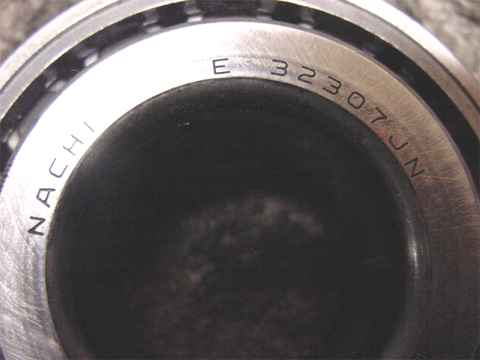
Look on the flange and read off the impressed numbers. You can almost see them beneath the grease in this pic.

hubbearing03.jpg


Like this

chris36.jpg
 
Last edited:
they are tapered bearings with rollers I believe

Dylan

Then unless they are something unusual ( I had one set that had to be tightened against a compressible spacer to preload them ... but dammed if i could compress a new spacer!)

Tighten them while spinning the wheel to ensure they are bedded into the hubs fully.

Back off and re-tighten to leave the slightest detectable play by one of the means described above.

Id clean off and carefully inspect the existing first but if you do replace them tap the outer races into the hub with brass drift to avoid damage. Also be very careful to keep them absolutely square as you fit them. If you have a large vice you may be able to use that to press them in with a large socket or similar as a spacer.
 
Then unless they are something unusual ( I had one set that had to be tightened against a compressible spacer to preload them ... but dammed if i could compress a new spacer!)

Tighten them while spinning the wheel to ensure they are bedded into the hubs fully.

Back off and re-tighten to leave the slightest detectable play by one of the means described above.

Id clean off and carefully inspect the existing first but if you do replace them tap the outer races into the hub with brass drift to avoid damage. Also be very careful to keep them absolutely square as you fit them. If you have a large vice you may be able to use that to press them in with a large socket or similar as a spacer.

I think there's a disparity of terminology here!

Dylan. In your bearings are the races (the circles of metal on which the rollers run) tapered? Also, I imagine the rolling bits themselves are also tapered?

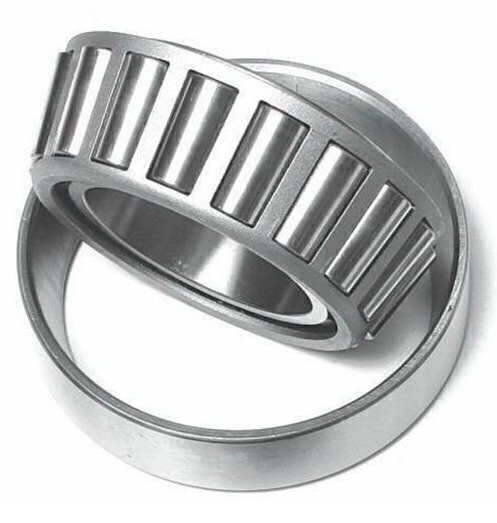
All the types of bearing mention in this thread are collectively known as "rolling element" bearings - because there are bits between the races that roll. However, there are different kinds of rolling element bearing. Often people refer to "roller" bearings, but these can be tapered rollers (as I believe yours will be) or cylindrical rollers (sometimes called "needle rollers"). The latter sort are rarely used (perhaps never used) on wheel bearings because as Vic says, they're brilliant at carrying the weight of the boat and they don't take up much space, but as soon as you go round a corner, the wheel will try to slide off its axle. For this reason, the tapered rollers are often used (2 seats, back-to-back) so that they prevent sideways movement of the wheel on the axle. If the rolling elements are spherical, that's a more modern approach (unusual in old boat trailers). Ones with round balls are usually tightened up to a particular torque. Ones with tapered rollers (like truncated cone shaped rollers) are never tightened to a specified torque. As other have said, just nip them up, make sure they're seated and then back off the castellated nut a small amount until you can feel a tiny bit of play.
 
If the rolling elements are spherical, that's a more modern approach (unusual in old boat trailers). Ones with round balls are usually tightened up to a particular torque.

Small trailers may have simple ball races. My dinghy trailer does There is spacer between the bearings and the hub nuts on that are done up tight ( I guess
there ought to be a specified torque but I dont know what it is.

My boat trailer has "angular contact" ball races .. they are old BMC rear Mini hubs. Similarly they have spacers onto which the bearings are tightened. Somewhere I have an extract from a Mini workshop manual that tells me the torque.

Next time I replace the bearings I will do so with the tapered roller bearings that were used on Mini Coopers. The spacers will then not be used and the bearings will be set up with a barely perceptible amount of play.

BTW fit the wheel and tighten the wheel nuts in order to judge the amount of play left in the bearing It should not be enough to feel at the hub, only at the wheel rim.


A tapered roller bearing:

Trailer_Bearings-cat-1136-cat.jpg
 
Top