Trailer Query ( Safety)

Karnic

Well-Known Member
Joined
16 Sep 2015
Messages
295
Visit site
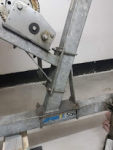
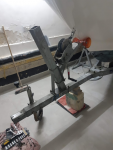
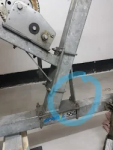
Is It ok to attach safety chain where there is the blue circle ie With the post that holds the trailer winch. Or is it better to put 2 bolts on the arm. Chain will clip to towbar from trailer in case of accidental uncoupling.
1612382178010.png1612382201926.png

1612382231335.png
 
My opinion, on the draw bar as close to the tow hitch as possible. i.e. keep the shortest chain length possible to lessen any movement as much as possible should the hitch fail.
 
Is there no braking damper on the trailer ? Normally the safety chain would attach to the too.
Im not sure I would put one there. Maybe an idea to have the chain attached to a bolt through the box section ?
 
I usually attach a chain to the forward bolt securing the hitch to the draw nar. that way the chain may be short enough to avoid the draw bar falling to the ground, or at least prevent too much sway starting, as it may if the chain was longer.
What boat is it? Is the boat and trailer less than 750 kg? Is the towing vehicle rated for that weight without brakes? Many vehicles are rated for only about 400 kg with an unbraked trailer.
 
A short chain welded to the bottom of the bracket holding the manual winch, then shackled to the winch eye on the boat would be fine for a boat 23’ and under.
When launching and retrieving, the short winch post, higher mounted, safety chain will be easier to deal with and provide enough lateral strength if required, provided all u-bolts and steel box sections are sound.

Another consideration if intending a lot of towing, is adding a secure means of stopping the boat ending up on/in the cabin of the tow vehicle in the event of a head-on collision. Either substantial strapping over the rear cockpit area and down to the trailer, and/or an attachment from the boat mounted (stem) winch eye, running aft to a central point on the trailer frame. More for longer distance highway travelling speeds, than around town.
 
As mentioned above the primary use of a secondary fixing on trailers is to activate the brake in the event of decoupling. It is a legal requirement on a trailer with a running mass of 750kg or above which is quite easy to get too with a fibreglass boat and engine etc. and is usually just a piece of thin gauge SWR/cable rather than chain.

If the trailer is below 750kg and doesn't need brakes then I would be inclined to attach as close to the hitch as possible to reduce any potential movement if it ever came into play, especially the risk of the hitch "digging in" as it dropped of the ball. In reality though, if you did have a hitch/ball failure the trailer flapping around on the end of a bit of chain would be a pretty dramatic incident regardless of where the chain was situated :eek: ?

Cheers,

MM
 
Despite the interesting discussion on the merits of having a chain or cable in case your coupling comes undone, why not have the added security of locking your coupling? Either a directly applied padlock or a locking cover. That way even if you are parked up for a break, the unattended trailer cannot be stolen.
A point often misquoted is the 750kg unbraked rule. The next line in the Act states that a vehicle can also tow an unbraked trailer as long as it is less then half the weight of the towing vehicle. So if your vehicle for example weighs 2040kg, you are allowed to tow up to just less than 1020kg unbraked.
 
Despite the interesting discussion on the merits of having a chain or cable in case your coupling comes undone, why not have the added security of locking your coupling? Either a directly applied padlock or a locking cover. That way even if you are parked up for a break, the unattended trailer cannot be stolen.
A point often misquoted is the 750kg unbraked rule. The next line in the Act states that a vehicle can also tow an unbraked trailer as long as it is less then half the weight of the towing vehicle. So if your vehicle for example weighs 2040kg, you are allowed to tow up to just less than 1020kg unbraked.
Good luck with that.

Type 01: unbraked trailers - max. 750kg gross trailer weight or half the towing vehicle's kerb weight - whichever is less.

Also check the vehicle manufacturer's maximum towing weight for an unbraked trailer. It could well be 400kgs or even less.

.
 
Last edited:
DELETED READ THE POST WRONG SORRY.

M12/14 stainless bolt running horizontal through the drawbar just behind where the hitch is mounted. Mark the chain to be cut to size when trailer is attached to towball as you can mark it short enough to be effective and not too long either.

Run the chain inside the box with the bolt running through the whole thing and use 2 nuts (second acts as a locking/ or use a nylock nut). Also use large penny washers to prevent it pulling through the box as you nip it up.

Run the chain on a diagonal underneath the trailer, say "From left side of bolt and attach to right side of tow ball mounting point." That way if the hitch bounces off the tow ball, The chain sits underneath the hitch and supports the weight and it stays totally clear of the road below.

Last thing you want is your hitch to drag on the road at 60mph!

BUT like stated check all road legal specs first then make a decision. You might have to get it done professionally to be passed off as road legal and safe.
 
Last edited:
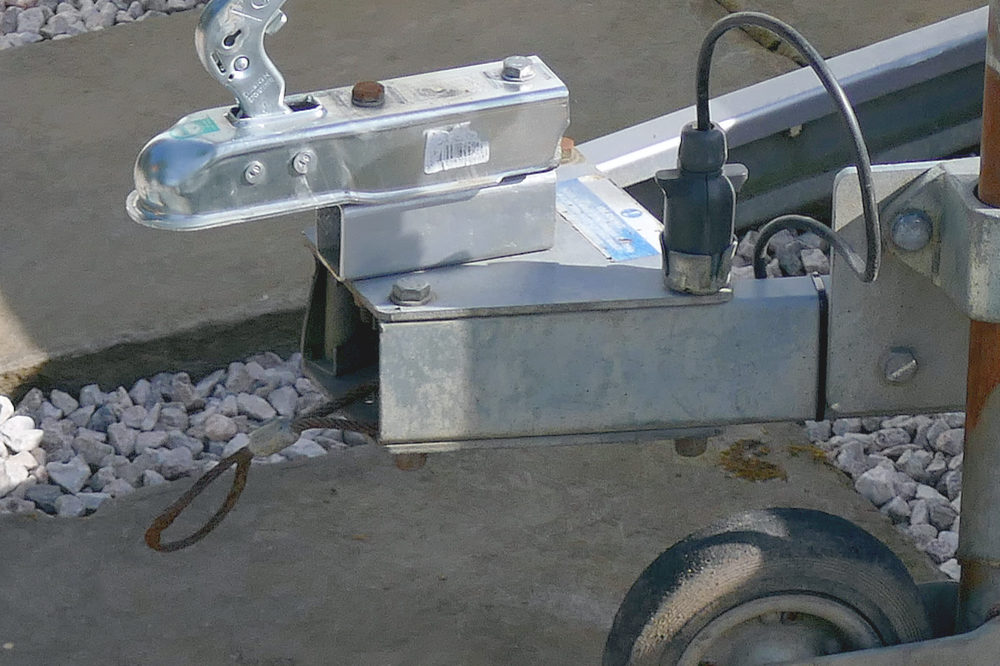
Found a pic of my last trailer. A rigging wire cable formed as a double loop.
The chassis end is around the vertical bolt which holds the hitch plate on.
The free end fits over the swan-neck of the tow hitch before fitting the trailer hitch. If the hitch came off the ball the drawbar could not drop as far as the road.

I have used a similar method on previous unbraked trailers, but using chain.

hitch.jpg
 
Found a pic of my last trailer. A rigging wire cable formed as a double loop.
The chassis end is around the vertical bolt which holds the hitch plate on.
The free end fits over the swan-neck of the tow hitch before fitting the trailer hitch. If the hitch came off the ball the drawbar could not drop as far as the road.

I have used a similar method on previous unbraked trailers, but using chain.

hitch.jpg
I like that configuration...good idea (y)
 
Despite the interesting discussion on the merits of having a chain or cable in case your coupling comes undone, why not have the added security of locking your coupling? Either a directly applied padlock or a locking cover. That way even if you are parked up for a break, the unattended trailer cannot be stolen.
A point often misquoted is the 750kg unbraked rule. The next line in the Act states that a vehicle can also tow an unbraked trailer as long as it is less then half the weight of the towing vehicle. So if your vehicle for example weighs 2040kg, you are allowed to tow up to just less than 1020kg unbraked.

I dont think that's correct.

My understanding of the rules is that ANY trailer over 750kg needs brakes, can't see anything in the rules to say otherwise.
 
On a matter of safety I had assumed no brakes as non are evident in the photo. The chain should be as short as possible and if the trailer is indeed braked then as short as possible on both the arresting wire and chain. Personally I'd rather have a tethered boat and trailer braking behind me than a runaway trailer that is braked but no front wheel or steerage. Just on the principle of the possibility of oncoming traffic if nothing else. (this on the understanding that the brake wire sets the brakes on permanently but not enough to lock them up)
 
My opinion, on the draw bar as close to the tow hitch as possible. i.e. keep the shortest chain length possible to lessen any movement as much as possible should the hitch fail.
Should i bolt to drawbar and attach to towbar with chain?
 
Top