Torqeedo

I think there's some reason electric outboards need deeper propellors? :unsure:

Can't remember what
Possibly due to the torque being full at all revs? It would be far easier to cavitate I'd imagine unless they purposely implemented a soft start. Also likely thay have different props to allow "smaller" motors to grip the water better to save power, given the torque curve is better than petrol and it won't stall.

needless to say, pure speculation!
 
Possibly due to the torque being full at all revs? It would be far easier to cavitate I'd imagine unless they purposely implemented a soft start. Also likely thay have different props to allow "smaller" motors to grip the water better to save power, given the torque curve is better than petrol and it won't stall.

needless to say, pure speculation!

Okay, I stopped being lazy and looked it up. This is from the Nestaway site:

The conventional measurement is from the bottom of the top of the clamp (ie where it sits on the transom) to the cavitation plate. As Torqeedos do not have a cavitation plate there is no direct equivalent, but approximately:
– Standard shaft Torqeedo motors equate to a petrol outboard with an 18″ (450mm) shaft (nearly as deep as some long shaft motors)
– Long shafts equate to a petrol outboard with a 23″ (575mm) shaft

The reason the Torqeedo (and Epropulsion) electric outboard motor shafts are a little longer than “normal” is that the propellers have a larger diameter than those on petrol outboards, and to work most efficiently a propeller needs to operate in non-turbulent water (ie well below the surface and ideally below the boat’s hull). A larger propeller has to sit deeper, to be immersed.
 
I had a Torqeedo 1003 with the smaller battery for five years, using it on my tender in Chichester Harbour. It was brilliant except for two things: the battery offered too little power for the tidal currents - a half mile run against the peak ebb would use half the capacity. The other problem was that the shear pin in the propellor would break annually, usually at a time of maximum inconvenience. It was tricky to replace, and impractical on the boat itself. The larger battery and the sturdier shear pin (possible because of the non-gearbox design) of the newer 1103 model should address both of my concerns.

Last year I replaced it with an e-propulsion - it is faultless! And cheaper than the equivalent torqeedo.
I have often heard about the shear pin issue on 1003s - we have never had a problem in 8 years with ours. Is the breakage due to hitting something with the prop or ??
 
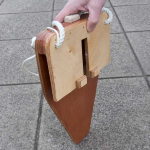
I had to raise the transom of my dinghy by a few centimeters. It made a huge difference, before I did the leg couldn’t rise high enough to beach her or to leave the beach, it also then drove better in the water. It was nothing but problems before I raised it then it ran perfectly until......
one day it just stopped, error codes 45 and 30. We feared the worse, salt water ingress buggering up the battery as well. But, luckily it turned out to be the circuit board well above the waterline. €350 to fix and deliver. That’s the good news. The bad news is that Torqeedo Germany is having post covid supply problems. We were told one customer has to wait eight months for a new propeller. So we are trying to get a definitive answer before I get upset and have to drag the Honda 2.3 out of my workshop.
The real problem is that buying is easy but repair centers are very thin on the ground
Ok, this is a follow up to my last post. The Torqeedo repair centre said that they will receive the new circuit board the end of next week. That’s good for me, because my boat has just been lifted out.
 
Ok, this is a follow up to my last post. The Torqeedo repair centre said that they will receive the new circuit board the end of next week. That’s good for me, because my boat has just been lifted out.
What are you going to do with the defective board?
 
I see what you've done: moved the aluminium clam plate up a boit and fitted a backing pad. (y)

Of course, if I had a young French wife to row me ashore I wouldn't need an outboard motor, would I? it's a thought . . . .

One things sure. If I had a young French wife I would be in no fit state to row anywhere . . .;)

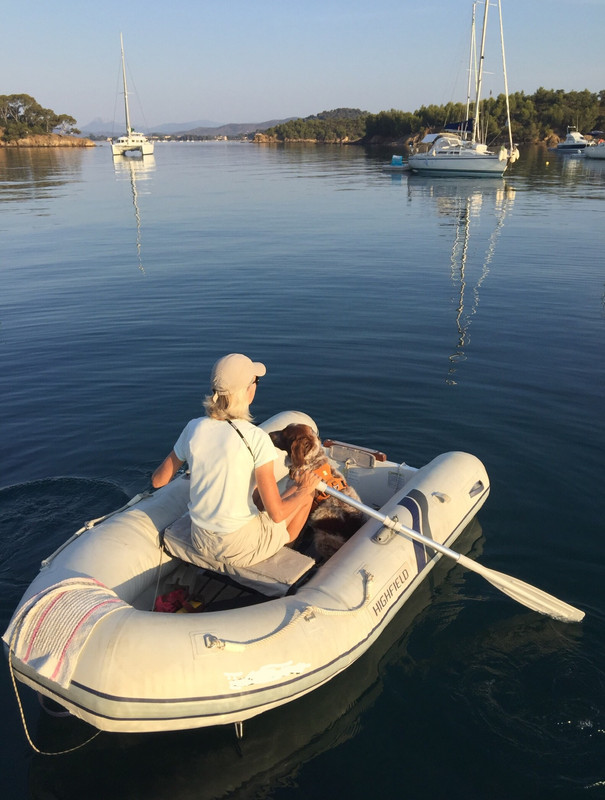
Is Highfield the name of your boat? I don't care but it's just that there was a bailiff making enquiries . .
 
I see what you've done: moved the aluminium clam plate up a boit and fitted a backing pad. (y)

Of course, if I had a young French wife to row me ashore I wouldn't need an outboard motor, would I? it's a thought . . . .

One things sure. If I had a young French wife I would be in no fit state to row anywhere . . .;)
I brought that wife with me from England ?
 
I have often heard about the shear pin issue on 1003s - we have never had a problem in 8 years with ours. Is the breakage due to hitting something with the prop or ??
I wasn't aware of having hit anything when it happened. I did check the pin at the end of one season and it had half rusted through, so perhaps that was the problem.
 
Has any other Torqeedo 1103 owner found it necessary to raise their inflatable dinghy's transom as Bouba has done? See post #19
Mine is the 1003, when I started to have so many problems, I did some research and found the Torqeedo spec on transom height and just followed that
 
Has any other Torqeedo 1103 owner found it necessary to raise their inflatable dinghy's transom as Bouba has done? See post #19

No, but we keep the bottom half of oars (as paddles) available for the last few metres when arriving or leaving at a beach. It's a small adjustment and worth it.
 
No, but we keep the bottom half of oars (as paddles) available for the last few metres when arriving or leaving a beach. It's a small adjustment and worth it.
Yes but, if I understand him correctly, I think Bouba is saying that even with the motor latched up, the drive pod was still below the bottom of his dinghy so that if he pulled it up a beach the drive pod dragged on the ground.
 
Top