Tiller vs wheel steering practicalities

My experience of tiller steering was a small outboard on a dinghy (don't sneer- it works exactly the same way!)
Subsequently on sailing/racing dinghies for many years prior to getting a bigger boat, We had a Sunrise 35 with a tiller- which I chose because it was a familiar option, It sailed very well and was responsive in most all conditions - with appropriate sail!
Going astern required concentration and a bit of practice.

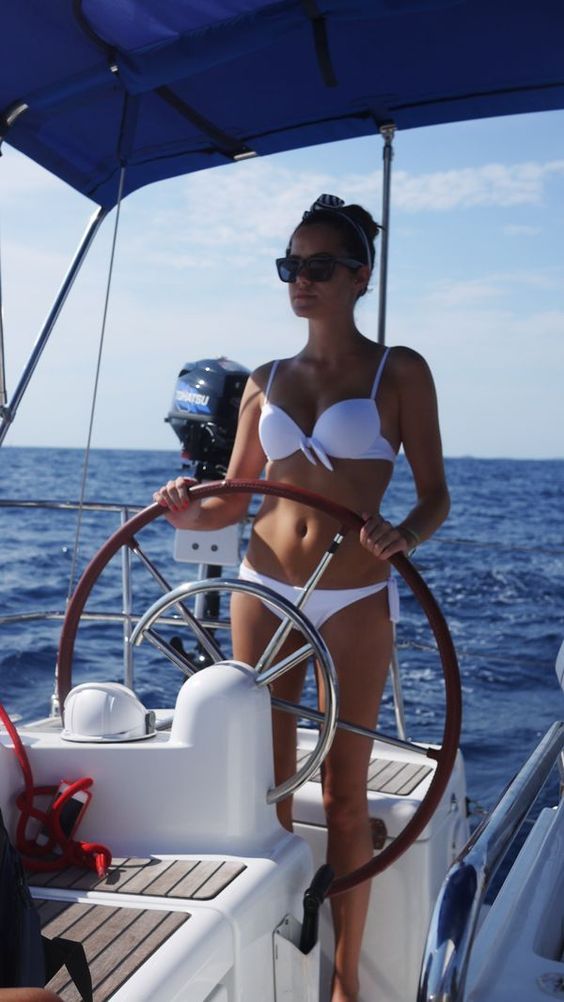
Now we have twin wheels, Different but not unfamiliar,. My wife finds it easier and had a shorter learning curve that I did. With a tiller I never had to think about what I was doing -my arms were on auto!
Don't be put off by a tiller, they are great and much more sensitive than wheels. Sail balancing is what you learn with a tiller!
 
Last edited:
Now we have twin wheels, Different but not unfamiliar,. My wife finds it easier and had a shorter learning curve that I did. With a tiller I never had to think about what I was doing -my arms were on auto!


I had the same experience the first time I steered with a wheel, it was so completely alien to me; you just didn't steer a boat that way. It's better now ... My wife prefers a tiller too, as at first we would occasionally head off in the wrong direction.
 
Last edited:
I've had both wheel and tiller. My attempt to answer your questions as follows:

- How much attention does the tiller need? i.e. does it self-centre or stay where it is if you let go? On our wheel-steered Beneteau you could set it on a course (when motoring anyway), then leave it and do jobs (getting another beer from the fridge for example!) - what would happen to the tiller if you did this?
On my Jeanneau I found that the tiller was very balanced, which also meant the boat easily went off course if the tiller was left alone for more than a few seconds. I have not found this so much in my wheel steered boat. I suspect the wheel steering is less likely to move as a result of the additional friction of the steering rack and pinion system and the inertia of the wheel

- I've noticed that people attach shock-cord to tillers - presumably this is related to the question above to keep it centred?
Yes, this keeps it centred. The good thing about shock cord is that you can easily steer if you need to. I set up a Tiller Tamer system with shock cord which I found to be a good solution. N.B. Tiller pilots are much cheaperthan wheel pilots. Although I was very careful to keep my tiller pilot (Raymarine ST2000+) in a waterproof coat as they are susceptible to having water ingress through the buttons.


- I imagine these differences are amplified when sailing...?
I find when sailing that I need to tweak the sails or the steering to maintain a straight course. But yes, I did find the differences amplified when sailing.
 
To help with single-handing I use a universal autopilot ..... once set up properly they can operate with tiller or wheel steering (single or dual wheel).

I have a slightly older model but they come in all sorts of shapes and sizes ....

fd0e98580c82babf37aa736178a43061.jpg
 
I've got a tiller-steered 32' boat. There are options for locking the tiller in place, whether a line across the cockpit and around the tiller a couple of times to provide friction, a bit of shock cord or any of the commercial offerings. All will keep the boat on course for a short period, if the sails are trimmed correctly - probably just as well as a locked wheel.
As to tiller vs wheel, on a smaller boat such as mine I appreciate being able to raise the tiller out of the way when moored, being able to sit in different positions to steer, and to be able to hold the tiller between my legs while doing something else.
About the only downside I find is when motoring in reverse, a firm grip of the tiller is need to prevent the force of the water slamming the tiller over. It's not a problem if you're on the ball, I prefer to reverse into slips and it certainly doesn't prevent me doing that.
 
I've got a tiller-steered 32' boat. There are options for locking the tiller in place, whether a line across the cockpit and around the tiller a couple of times to provide friction, a bit of shock cord or any of the commercial offerings. All will keep the boat on course for a short period, if the sails are trimmed correctly - probably just as well as a locked wheel.
As to tiller vs wheel, on a smaller boat such as mine I appreciate being able to raise the tiller out of the way when moored, being able to sit in different positions to steer, and to be able to hold the tiller between my legs while doing something else.
About the only downside I find is when motoring in reverse, a firm grip of the tiller is need to prevent the force of the water slamming the tiller over. It's not a problem if you're on the ball, I prefer to reverse into slips and it certainly doesn't prevent me doing that.

Here you can see the simple arrangement I have for holding the tiller steady. Two lines like tent guys. Infinitely adjustable.

I got the idea from "Cruising Under Sail" by Eric Hiscock.


View aft showing tiller lines.jpg


For motoring astern in my Twister I might just as well lock the tiller since it doesn't have the slightest effect on the direction of travel! :(
 
To help with single-handing I use a universal autopilot ..... once set up properly they can operate with tiller or wheel steering (single or dual wheel).

I have a slightly older model but they come in all sorts of shapes and sizes ....

fd0e98580c82babf37aa736178a43061.jpg
I too have a more "experienced" model. Unlike "Arnold", our not-so-smart electronic back-up, this one is "self-learning".
 
I’ve got a little project boat with a tiller and a modern 40 ft boat with a wheel.
For the project boat, there‘s no practical alternative to a tiller. It’s way too small to even consider fitting a wheel and why would you? However, the rudder is sensitive and can’t be left unattended. It has to be lashed in place before being left unattended, so single handing calls for a degree of forward planing to avoid mishaps.
The bigger boat is easier to cope with. The wheel lock is easily applied and effective for a short absence from the wheel but the real answer is the autopilot. That said, as per the project boat, leave the wheel unbraked and unattended for more than an instant and the rudder will tend to go hard over one way or the other.
I’m happy with either method of steering and it wouldn’t make me choose a particular boat because it had a specific steering method. Rather, is the steering easy to use and appropriate for the boat in question?
 
I’ve got a little project boat with a tiller and a modern 40 ft boat with a wheel.
For the project boat, there‘s no practical alternative to a tiller. It’s way too small to even consider fitting a wheel and why would you? However, the rudder is sensitive and can’t be left unattended. It has to be lashed in place before being left unattended, so single handing calls for a degree of forward planing to avoid mishaps.
The bigger boat is easier to cope with. The wheel lock is easily applied and effective for a short absence from the wheel but the real answer is the autopilot. That said, as per the project boat, leave the wheel unbraked and unattended for more than an instant and the rudder will tend to go hard over one way or the other.
I’m happy with either method of steering and it wouldn’t make me choose a particular boat because it had a specific steering method. Rather, is the steering easy to use and appropriate for the boat in question?
I think that would depend on the boat. A well balanced boat should have very little rudder pressure and not more than 2 degr. weather helm. I like a tiller because all that information is instantly available and without the need for additional electronics, like rudder indicators etc.
I have seen tiller steered boats with a screw type lock on the rudder shaft which might be an option for you on a project boat. Perhaps in the form of a collar that squeezes tight with a foot operated lever.
Colin Archer lifeboats and even large Dutch sailing barges were all steered by tiller, a big'un, and with a matching set of chaps to operate it.
 
Top