thrust race on rudder stock

Pagetslady

Well-Known Member
Joined
15 Feb 2006
Messages
863
Location
Fleetwood marina
Visit site
Hi the rudder on my Corsair seems quite stiff to move even with the cables disconnected, I am in the process of fitting new cables and re routing the cables, but I had a thought there are loads of fairly cheap roller thrust bearing that could be used to replace the system used at present which are very basic just the plastic head of the top bearing and the Metal support ring and grease as there is no water in this area i thought a thrust race would reduce friction, has anybody tried this or already has a system that supports the rudder weight by a race.
Mike
 
A common cause of stiffness in the rudder is that the plastic bearings have swelled as a consequence of years of being wet. Most plastics swell in water, some very little but some, Nylon 6 for example, by as much as 11%. Could be worth checking before going for engineering modifications.

Bearing steels corrode very easily. I have never seen a roller bearing used like this and imagine you would need to seal it quite effectively. Plain bearings seem to be quite adequate for most boats, certainly no problem on mine, where the bearings are more than 25 years old and the tiller is very light.
 
Hi the rudder on my Corsair seems quite stiff to move even with the cables disconnected,
I am in the process of fitting new cables and re routing the cables, but I had a thought there are loads of fairly cheap roller thrust bearing that could be used to replace the system used at present which are very basic just the plastic head of the top bearing and the Metal support ring and
Normally there is not any high vertical load on the rudder trust bearing, remember that the buoyancy of the ruddder will take load of when in water.

grease as there is no water in this area i thought a thrust race would reduce friction, has anybody tried this or already has a system that supports the rudder weight by a race.
Mike
plastic bearing's and grease is not a god combination

A common cause of stiffness in the rudder is that the plastic bearings have swelled as a consequence of years of being wet. Most plastics swell in water, some very little but some, Nylon 6 for example, by as much as 11%. Could be worth checking before going for engineering modifications.

Yes - find the cause of the problem first, you could try to offload the truste bearing by lifting the rudder 1-2mm with ropes and see what happens.
Maybe it's a good time to drop the rudder for inspection before you start planning modifications.

Bearing steels corrode very easily. I have never seen a roller bearing used like this and imagine you would need to seal it quite effectively.

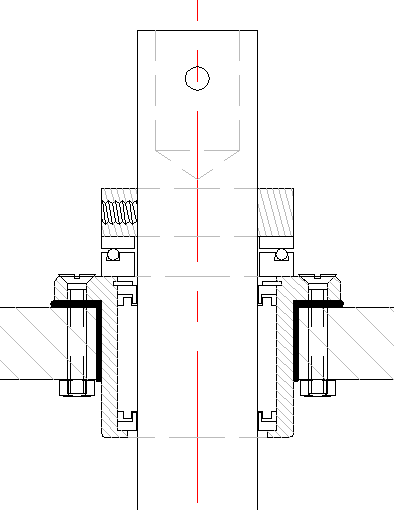
On new boats they use plastic roller bearings like this.
wasball-1-big.jpg


This show how it's installed.
wasball-cad-2.gif


Plain bearings seem to be quite adequate for most boats, certainly no problem on mine, where the bearings are more than 25 years old and the tiller is very light.
Roller bearings and ball bearings are used on (some) new production boats.

But my old (1984) plain bearings are still up to the task

I dropped the rudder for inspection last winter, dropping it to the ground gave me acces to the hole lenght of the rudder stock.
Top assembled
IMG_1465.jpg


Top bearing
IMG_1608_zps384e85be.jpg


Trust bearing and locking ring
IMG_1609_zps99ed09ac.jpg


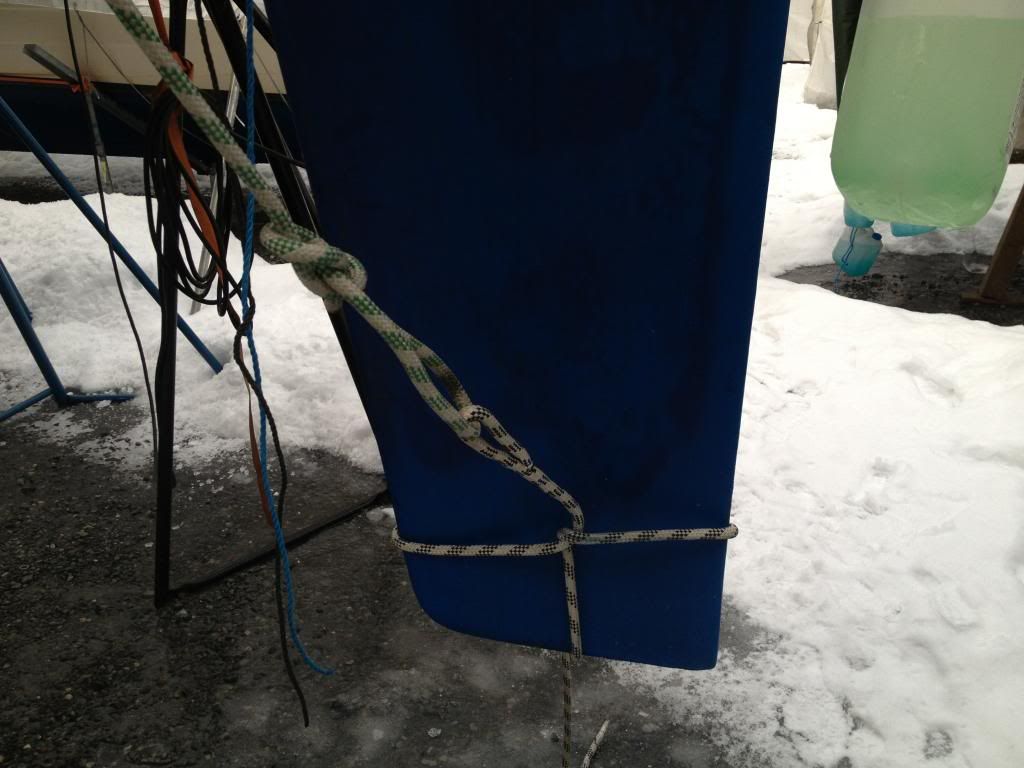
Lifting the rudder to offload the trust bearing / locking pin
IMG_1592_zpsb3689b0d.jpg


Lower bearing pulled down for inspection
rudde_with_lower_bearing.jpg
 
The Corsair original rudder bearings should not be stiff. It drops easily and I am able to lift it (65 and not athletic) - just.

As Vyv says, the bearings can swell, but that should have finished doing so years ago, so lower the rudder and clean the bearings, particularly of any grease that WILL pick up and hold particles from the water below and dust from above.

There is a tapped hole vertically in the top of the rudder stock that can be used for an eyebolt to help contollba partial drop whilst afloat,if you can identify the thread.

The bottom sleeve bearing obviously is water lubricated. The top one will get wet (mine certainly did).
I did hear that there is a lipseal at the top, but I never saw one!

I was told at one time that the bottom bearing was worn, turned out that the bearing was loose in the hull. Fixed by re-installing with some epoxy. But do replace before the epoxy sets to align the bearing correctly ( it was loose or you wouldn't be doing it, so it can go back at a very slight angle - bad news for stiffness!!)
 
Top