
This sort of thing really annoys me

Rivers & creeks

Well-Known Member
Joined
23 Nov 2004
Messages
10,925
Location
Norfolk
Visit site
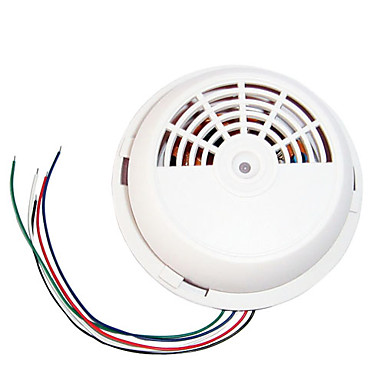
We've fitted gas so need a gas alarm. The 'marine' units are insanely expensive, even NASA charge about £65 yet claim it uses inexpensive parts. So then I come across this:

http://www.lightinthebox.com/sg-2008h-lpg-gas-detector-with-nc-no-relay-output_p214287.html?utm_source=mb_ShoppingUK&utm_medium=PCS&utm_campaign=5078&litb_from=paid_pcs_Shopping&currency=GBP&lightinthebox&CA_6C15C=1134292543
wagmks1314686405808.jpg


It's 12v hard wired and even has a relay so I guess if you had a solenoid you could have auto shut off using it as well. Costs £9.

Why the heck to marine companies charge so much? Just rip off practices.

Even this is only £33, has mains and 12v hard wiring, relay, alarm for high temperature and alarm for Carbon Monoxide.

http://www.ebay.co.uk/itm/GAS-CO-LPG-DETECTOR-COMBINED-12V-230V-WITH-LCD-DISPLAY-/191449510001?

Is the marine market actually really small or do they charge us obscene prices because they've always got away with it?
 
Only problem is that it is out of stock on that link.

I got a Trio gas alarm off eBay with three sensors.

It does LPG and CO in one alarm, and the three sensors mean I have one in each cabin.

Very easy to install and very well priced compared to special marine stuff.
 
Is the marine market actually really small or do they charge us obscene prices because they've always got away with it?

Combination of the two.

Fortunately, the Internet allows us to avoid "marine" prices on things which aren't uniquely marine, as you've just demonstrated. I wouldn't dream of buying something like this by breezing into Force 4 and inviting them to empty my wallet. For smaller items I usually start with eBay.

Pete
 
But you get what I mean surely?

I certainly do: TATTP

It's by no means confined to the leisure marine market. There's a thread elsewhere about sunglasses. Recommendations include Oakleys: I'd be very surprised if a pair cost more than $1 to make, but they retail for at least 100 times more. The founder of Oakley began in business making motocross clothing. When he diversified into leisure wear etc, everyone said he was mad. About a dozen years ago he sold the company -- for $1 billion. That's a lot of over-priced sunglasses, and a lot of twerps buying them. Not that Oakley are alone in this, of course.)
 
Relay?
In a gas alarm?
Relays are well known for sparking.....

One way of raising the alarm....

A lot of this stuff will also have a short life in the humidity of many yachts.
 
"We've fitted gas so need a gas alarm. The 'marine' units are insanely expensive, even NASA charge about £65 yet claim it uses inexpensive parts. So then I come across this:"

Not wishing to be a kill joy but non of the units shown have a separate "sensor" which in the case of LPG, which is heavier than air, has to be mounted in the lowest position to be able to detect any gas in the bilges etc. Ok for CO as that does lurk every where and the unit can be about 1metre above the floor level. These also have problems if mounted in a draft area eg open door/window.
 
Last edited:
Relay?
In a gas alarm?
Relays are well known for sparking.....

One way of raising the alarm....

A lot of this stuff will also have a short life in the humidity of many yachts.

It alarms at 5% LEL so I reckon I'm OK ;)

My boat isn't damp. You think maybe they shouldn't be fitted to houses next to a river? Or that the £120 jobbies don't use exactly the same sensor?
Yes mount it low down but gas doesn't woosh down to the ground like water you know, it is a bit heavier than air and scientific bods will tell you how quickly it mixes to produces say 20% LEL at 1m.
 
As Big John says, you need the gas sensor to be in the bilges because LPG is heavier than air.
 
As Big John says, you need the gas sensor to be in the bilges because LPG is heavier than air.

But as Lzy Kipper has said it does not whoosh to the ground ( or bilges) like water.

It will initially sink, so a gas sensor mounted low down makes sense, but it then diffuses throughout the available space. A property of gases every school kid is taught!

If the gas pipe passes through the bilges then a sensor there may be sensible especially if there are any joints, but not if the bilges are wet.
 
In the bilges? Are you sure about that?????

Depends if they're wet or dry, I guess - I believe getting wet pretty much destroys these sensors immediately.

Ours (installed before we got the boat) has its sensor mounted just above the cabin sole, in the kick-space under the galley lockers. Last year we had a gas bottle fall over in the locker in rough weather, unbeknownst to us, and when we turned on the cooker for a much-needed cup of tea after tying up the liquid in the pipe caused some scary and erratic behaviour from the cooker, including some unburned gas escaping. The alarm went off just as it should.

Pete
 
You don't want it to get wet, but you do want the sensor as low down as possible.

I have one under the floorboards (my bilges are dry), and one behind the cooker at the bottom.
 
gas bottles should be secured

Indeed they should. I have a really good design for a securing arrangement, but it's quite a long way down the list.

In the meantime, the crappy bungee arrangement we inherited does the job in most normal conditions. It really was quite a rough passage that day, and we probably had too much sail up but the third reef pendant wasn't rigged.

Pete
 
When I bought Concerto there was a gas alarm fitted, but the previous owner said it was worse than useless and kept going off at night. No gas leak was ever detected and he eventually disconnected the wiring. I decided that as it was not working correctly it was only fit for the bin, so removed it.

I doubt if I will fit another one as I make sure the gas bottle is only turned on when the cooker is used and then turned off immediately once finished. That should stop any leaks whilst unused. Over the winter the cooker, flexible hoses and regulator are being replaced.
 
From time to time, as seems a good idea, I get down on all fours and have a good sniff.
Effective, reliable, unaffected by moderate amounts of damp, uses 0 amps, and costs £0.
If I'm asleep the gas will be firmly turned OFF at the regulator.

Need to be careful though - my crew has no sense of smell (not uncommon).
 
Top