Testing Oil Pump on PRM Gearbox

nashynetfit

Member
Joined
3 Aug 2011
Messages
31
Visit site
Dear forum,

Im trying to eliminate possible causes for my prop shaft not turning, one of which would be the oil pump failing on the gear box.

Sounds silly, but how would I tell if the pump is or isnt working.

I can view into the dip stick area.

Also as the oil had water entering as completely creamy, any tips on areas where water may enter the gear box.

Thanks for your time.
 
Does your g/box have a cooler? That would be a possible water ingress point. If not then your filler/dipstick or other opening must have let water in. Was it ever submerged in the bilge?
I'm presuming that there is not a g/box oil pressure gauge but is there a port to fit one? If that is not possible and you have no means to check flow either visually or with gauges then your going to have to try and listen to it with either a stethoscope or a screwdriver against a set of ear muffs. However in that case you kind of need to know what your listening for. The sound will change as you engage the prop shaft.
If your oil is an emulsion of water though that would tend to suggest it had been run through a pump.
 
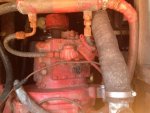
Gear box has a cooler, as attached.

The dipstick was tight so no water ingress there, but there was another small hole with just a piece of foam inside, but engine is covered.

It was running fine until I hooked up a car tyre into the prop.

Need to buy new coupling, as this was cracked in half, but cant seem to source anything.

Thanks again for your quick replies.
 

Attachments

  • gear box.jpg
    gear box.jpg
    61.7 KB · Views: 6
If you have a cooler then the tube nest would be the first suspect for water. either a seal or a tube. If you physically stopped the shaft on a running hydraulic g/box with a tyre then you will have certainly lifted a relief valve. it is not uncommon for relief valves not to re seat themselves properly meaning that the pump will just circulate the fluid between the pressure and suction sides. Unfortunately a relief valve that won't seat itself really needs removed and serviced to reset the spring to the right pressure. Looking at the picture, a T-piece could easily be inserted into the cooler hose fitting allowing the fitting of a pressure gauge which could help with future diagnosis.
 
If you have a cooler then the tube nest would be the first suspect for water. either a seal or a tube. If you physically stopped the shaft on a running hydraulic g/box with a tyre then you will have certainly lifted a relief valve. it is not uncommon for relief valves not to re seat themselves properly meaning that the pump will just circulate the fluid between the pressure and suction sides. Unfortunately a relief valve that won't seat itself really needs removed and serviced to reset the spring to the right pressure. Looking at the picture, a T-piece could easily be inserted into the cooler hose fitting allowing the fitting of a pressure gauge which could help with future diagnosis.

This is a PRM hydraulically operated gearbox- the hydraulic oil does not transmit the engine power to the propshaft, it only engages the clutches (and cools/ lubricates), so stopping the propshaft will not cause a high pressure event in the hydraulic system.

That apart, cryan is correct that the oil cooler is the most likely source of water in the oil if the bilgewater has not been over the top, or even up to the level of the input or output shaft. To check, disconnect the hydraulic hose off one end of the cooler, and with the seacock open watch for at least 30 mins to see if clean water emerges from the oilway. Do not start the engine...

With fresh oil in the gearbox, and everything reconnected, start engine and take out dipstick- lots of oil should splash out, and you shoud see the gears inside turning. If not suspect the drive plate on the flywheel.
If yes, then stop engine, and unbolt the oil pump from the rear of the 'box- but you need assistance from an engineer or knowledgeable friend now.... post again when you reach this point!
 
This is a PRM hydraulically operated gearbox- the hydraulic oil does not transmit the engine power to the propshaft, it only engages the clutches (and cools/ lubricates), so stopping the propshaft will not cause a high pressure event in the hydraulic system.

That apart, cryan is correct that the oil cooler is the most likely source of water in the oil if the bilgewater has not been over the top, or even up to the level of the input or output shaft. To check, disconnect the hydraulic hose off one end of the cooler, and with the seacock open watch for at least 30 mins to see if clean water emerges from the oilway. Do not start the engine...

With fresh oil in the gearbox, and everything reconnected, start engine and take out dipstick- lots of oil should splash out, and you shoud see the gears inside turning. If not suspect the drive plate on the flywheel.
If yes, then stop engine, and unbolt the oil pump from the rear of the 'box- but you need assistance from an engineer or knowledgeable friend now.... post again when you reach this point!

Thank you Northup.

At the weekend I did drain the oil out, it was very creamy, but refilled and started the engine. I was advised to check the oil level once the engine was running, so did this but didnt observe any oil coming up from the dipstick area. It may be the case that I haven't added enough oil, but will redo the whole process again this weekend.

Boat is an old clinker built hull, water does come in each tide, but never above engine area as have 2 bilge pumps in place. So many problems over the last 2 years of ownership but want to make sure its safe to go out on.

Will try and get sons Grandad to come down as hes a semi retired tractor mechanic.

Thanks for your tips and advice will let you know how I get on.

Cheers
 
I believe there are 'O' rings in the oil pump which have been known to fail, also the pump in some of these boxes is driven by a slotted shaft with a flat spindle in it, if used at tickover for long periods the 'rattle' effect can shear the flat spindle end. Sometimes the drive plate (on the engine flywheel) sacrificial plastic element shears under shock load (as it's meant to), sometimes the splines on the gearbox input shaft are sheared through prolonged wear with 2 or three cylinder engines. Having said all that, these outfits are usually very reliable, I picked up a chain which stopped the (6 cylinder heavy flywheel engine ) dead, but there was no damage, or none that has become apparent over the subsequent 5000 hours, and this gearbox has done 12000 hours all in.
The thing at the top of the pic is the oil cooler which can fail and allow water into the box or oil into the outlet water, often both as the pressure varies.
 
I believe there are 'O' rings in the oil pump which have been known to fail, also the pump in some of these boxes is driven by a slotted shaft with a flat spindle in it, if used at tickover for long periods the 'rattle' effect can shear the flat spindle end. Sometimes the drive plate (on the engine flywheel) sacrificial plastic element shears under shock load (as it's meant to), sometimes the splines on the gearbox input shaft are sheared through prolonged wear with 2 or three cylinder engines. Having said all that, these outfits are usually very reliable, I picked up a chain which stopped the (6 cylinder heavy flywheel engine ) dead, but there was no damage, or none that has become apparent over the subsequent 5000 hours, and this gearbox has done 12000 hours all in.
The thing at the top of the pic is the oil cooler which can fail and allow water into the box or oil into the outlet water, often both as the pressure varies.

Thank you Fisherman,

I'm going to hope that its the oil cooler, but will try and check the oil pump prior to filling again with new oil. Just wished I lived closer to the boat as I could test each thing then eliminate and know what parts I may need to get as myself and son are looking at taking her out again. Cheers
 
This is a PRM hydraulically operated gearbox- the hydraulic oil does not transmit the engine power to the propshaft, it only engages the clutches (and cools/ lubricates), so stopping the propshaft will not cause a high pressure event in the hydraulic system.

That apart, cryan is correct that the oil cooler is the most likely source of water in the oil if the bilgewater has not been over the top, or even up to the level of the input or output shaft. To check, disconnect the hydraulic hose off one end of the cooler, and with the seacock open watch for at least 30 mins to see if clean water emerges from the oilway. Do not start the engine...

With fresh oil in the gearbox, and everything reconnected, start engine and take out dipstick- lots of oil should splash out, and you shoud see the gears inside turning. If not suspect the drive plate on the flywheel.
If yes, then stop engine, and unbolt the oil pump from the rear of the 'box- but you need assistance from an engineer or knowledgeable friend now.... post again when you reach this point!

Hi Northup.

Had disconnected the hydraulic hose from the oil cooler, but no water came out, on disconnecting the other hose a small amount of creamy oil came out.

Tried the engine again with dip stick bolt removed but no oil came out, so believe it must be the drive plate.

Does the drive plate also work the oil pump, just trying to illimate all that I can, as changing the drive plate looks like a big job.

Thanks
 
The drive plate works the oil pump- its the connection between the engine and the gearbox to transfer the power.

Before you start dismantling- just confirm that you have topped up the oil to the bottom of the dipstick at least?

If you are going to do the job yourself, apart from the difficult access its not too technical if you take it one step at a time. First question is what kind of seal is on your propshaft at the stern tube, where the shaft goes through the hull, because after disconnecting the propshaft at the gearbox you will have to slide the propshaft astern by about 4 -6" to allow the gearbox to be removed.
 
Before you start try this, fill the gearbox to the level, undo one of the flexi's to the oil cooler, gearbox end, start engine, select gear transmission fluid should flow from the undone pipe if not then stop engine, replace the flexi from the open one and undo the other one, repeat the operation if still no fluid showing then the pump is not working, first job remove gearbox and inspect drive plate, if sound then it's the gearbox needs overhaul. Take it to someone who knows what he is doing.
 
Hi Northup and Omega2

Thanks for telling me that the drive plate works the oil pump. The oil was between the 2 markers on the dip stick. I had started the engine with hydraulic pipes on and also removed them to see if any oil was coming out, but nothing came through.

The prop shaft has a few bolts which are connected into another piece (stern tube) thats on the back of the boat, but 2 of the 4 screws here also have been damaged, so will need to drill out and insert larger screws, but think that the prop shaft will slide back to enable gear box to be removed. I believe from reading other info on the net that I can take the flywheel housing off with the gearbox attached, which makes me feel a lot comfortabler.

Just trying now to source the correct drive plate, have sent details to a useful site which should respond back asap.

Be good to get this sorted again, as was worried that all the work (2 years over many weekends) has resulted in only 30 minutes of cruising time.

Many thanks to everyone so far - will be going down again in 2 weeks.

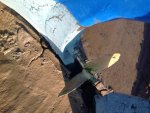
Have attached picture of prop shaft, but will also need to get new coupling as mine cracked in 2 places.prop shaft.jpg
 
As per the link above from omega 2 , R & D Marine will have drive plates and shaft couplings to suit.
They are very good to deal with. ( no connection etc)
 
SPLIT THE GEARBOX FROM THE FLYWHEEL COVER, for fear of breaking the cover it's generally alloy, the prop shaft coupling on the back of the gearbox is the one to undo, then it will slide back through the hull fitting. You will only need about 2" clearance to clear the housing. I get the feeling you have no idea how to tackle this job so at the risk of getting an earful here is what you have to do.Remove the flexible pipes and gear-change cable. Undo the shaft coupling at the gearbox. Slide the shaft back undo the gearbox mounting bolts at the flywheel housing get rope sling around the box, take the weight and remove the mounting bolts, then gently ease the gearbox backward and upward to lift out. Remove the flywheel housing and behind that you will find the drive plate, looks like a clutch plate from a car but no friction plate, instead there is a flexible cushion at the centre, this is fixed to the outer part of the plate (or should be) Undo the set studs holding the plate to the flywheel and ease off, lots of bits will be found like springs and things if it's busted. This info refers to a Borg Warner box on Sabre engine but yours should be similar.
 
SPLIT THE GEARBOX FROM THE FLYWHEEL COVER, for fear of breaking the cover it's generally alloy, the prop shaft coupling on the back of the gearbox is the one to undo, then it will slide back through the hull fitting. You will only need about 2" clearance to clear the housing. I get the feeling you have no idea how to tackle this job so at the risk of getting an earful here is what you have to do.Remove the flexible pipes and gear-change cable. Undo the shaft coupling at the gearbox. Slide the shaft back undo the gearbox mounting bolts at the flywheel housing get rope sling around the box, take the weight and remove the mounting bolts, then gently ease the gearbox backward and upward to lift out. Remove the flywheel housing and behind that you will find the drive plate, looks like a clutch plate from a car but no friction plate, instead there is a flexible cushion at the centre, this is fixed to the outer part of the plate (or should be) Undo the set studs holding the plate to the flywheel and ease off, lots of bits will be found like springs and things if it's busted. This info refers to a Borg Warner box on Sabre engine but yours should be similar.

Thank you Omega2,

No ear bashing from me, its a case of trying to figure out whats wrong and then try and fix by the knowledge of others. Its difficult when you have no real mechanical knowledge, but would rather try and learn. Its now trying to figure out what is the correct drive plate that I need to get, as would ideally like to get this prior to doing the work, so I can replace if needbe when I can view the old one.

Cheers again.
 
The BMC engine was Marinised by a few different companies and used a few different drive plate set ups unless you know who Marinised your engine be a lottery to get the right plate first time you may get lucky. The PRM box has a courser input spline than a BorgWarner's, if you have a plate on the engine some wear saying who Marinised it then a supplier may be able to match with a modern plate.

Good luck they are heavy burgers to get off and out the bilge someone down below and a second person up top with a rope around the box to take the weight works, you also need to flush the box well with clean oil ASAP 2-3 oil changes with a short run in between to dry the box out. while you have it all apart do your oil cooler they are a standard cooler and the suppler of the drive plate will be able to match you up a new cooler.

Steve
 
Top