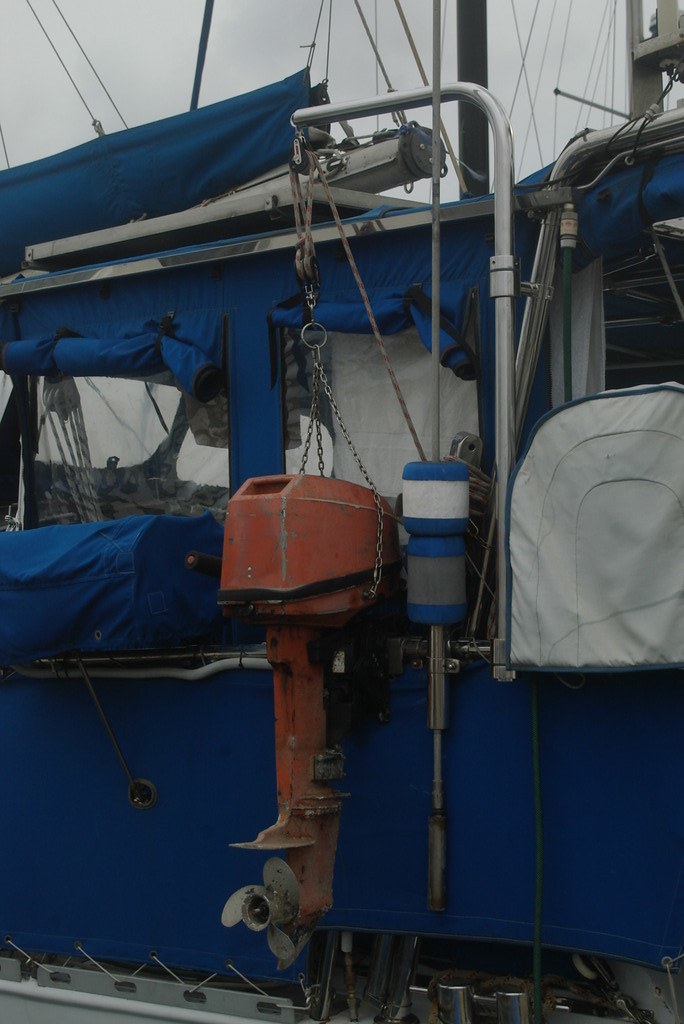
Tender to Boat Outboard Transfer - single handed

Me too ... best €2000 I've ever spent! ... I would recommend the latest one to anyone - 30 kms distance or about 6 hours and easily breaks down, the heaviest bit being 9 kilos ... :encouragement:

Same here and bought 3 years ago to avoid the lifting issues but so much better having an outboard I can refuel from domestic batteries too, and store on a bunk cushion as no oil or smells
 
I have a Yamaha Malta 3hp and have never had a problem. I raise the prop etc from vertical to horizontal and its beautifully balanced. Then using the handle behind the fuel tank lift it off the transom and climb aboard with it. As long as the dinghy is pumped up well I use the sides of the inflatable as a step and pull myself up one handed. I'm 71 next birthday and my boat is a 38' AWB. I've never been comfortable using the sugar scoop unless the nose of the inflatable was lifted on to the step and tied on tightly then that's a lot easier. However I've now blocked that route with a hydrovane so it's back to brute force, balance and timing. I've done this without slipping falling or damaging anything since 1992.
Using lifting tackle has always seemed to be a bit of a palaver to me as you have to lift the o/b off the transom / bracket, rest it in the dinghy clamber on board to set up the lifting rig, back onto the dinghy to attach that to your o/b then back on board your boat to haul the o/b back onto the boat. Unless I'm missing something......
Mike
 
and climb aboard with it. As long as the dinghy is pumped up well I use the sides of the inflatable as a step and pull myself up one handed. I'm 71 next birthday and my boat is a 38' AWB. I've never been comfortable using the sugar scoop unless the nose of the inflatable was lifted on to the step and tied on tightly then that's a lot easier. ......
Mike
I too am approaching 71 ( feb 18) & have enough trouble getting myself on board let alone whilst carrying an outboard. You must be super fit !!!
All the more reason to row myself when I am forced to use the dinghy. Far easier & less hassle,
 
Last edited:
Just fold the tiller down and use that to carry it on its side. Balances perfectly. (But won't work too well if the tiller pivot is loose).

Its a very weak connection with a bolt to an optimistic flange of thin cast alloy ? Mine has already delevoped a crack there. I wouldn't care to side load it at all. Not the best design feature on the engine !
I just carry mine one handed holding the leg - or put the power head over my shoulder and hold the prop. No weight to them.
 
I just carry mine one handed holding the leg - or put the power head over my shoulder and hold the prop. No weight to them.

Seagull.jpg
 
Tie dinghy fore and aft on the yacht's quarter. Lift outboard off the dinghy's transom and into the bottom of the dinghy, carrying handle uppermost. Tie a thickish line to the handle, a genoa sheet is handy for me. Get on board the yacht and hoik up the outboard with the attached line. Stow outboard.

Reverse the process to fit the outboard back on the dinghy.

That's what I do - but to be fair not often as I usually row for reasons described earlier in the thread... 6HP long shaft Tohatsu...
 
Why not use an outboard lock on the dinghy and padlock the dinghy to the mooring buoy with a length of ss wire ...... IE an old shroud/ stay or summin ?
 
> one answer could be to mount a pad on the push pit - to the stern or to the side according to layout - in order that you can secure the ob with a short lift from the dinghy.

That's what we did.
 
Why not use an outboard lock on the dinghy and padlock the dinghy to the mooring buoy with a length of ss wire ...... IE an old shroud/ stay or summin ?
Perhaps I am contradicting myself in an earlier post, but for me personally, because of what I wrote in my narrative log a couple of years ago:

"I arrived back on board in the dark quite late and felt a great weariness; it had been a long day and the prospect of hauling the outboard up to its pushpit bracket when I knew I would use it again in the morning for some fresh provisioning seemed unnecessary. It was a still, calm night, the forecast had been favourable and the barometer was high - so for the first time in my sailing life I left the outboard on the dinghy and retired below.

It was shortly after midnight that the shrieking wind and plunging bow woke me in the forecabin.The bora wind was coming from the north-east, landward corner of the harbour with little fetch but at 50 knots the water was a smoking maelstrom. The dinghy, of course, was airborne and, of course, was regularly inverting and landing back in the water, completely submerging the outboard. The next hour was spent in a struggle to get the dinghy upright and lashed alongside, the outboard raised and onto its bracket, dried as best I could."
 
I have a hoist for the outboard, made up of a series of bits of 25mm stainless tube, held together with bimini fitting. A 4:1 handy billy hooked on to the end of the hoist with a snap shackle on the lower end which attaches to a simple webbing harness round the engine. To remove the engine from the tender, attach the hoist, loosen the engine clamps and hoist the engine clear of the transom. Make the hoist line fast to the cleat mounted on the outboard bracket for the purpose (set low down so as to be reachable from the water), move the dinghy to the stern and climb aboard. Finish hoisting the engine onto the bracket. Reverse the process for putting the engine onto the tender.
It takes all the hassle out of mounting the engine on the tender and vice versa. Even though I use a Suzuki DT2 which is very light weight, I found I was struggling with the damn thing and forever twisting my back, which would result in visits to the chiropractor. Fitting the hoist has done away with any problems and also has the bonus that the Admiral can do the job as easily as I can.
 
I have a hoist for the outboard, made up of a series of bits of 25mm stainless tube, held together with bimini fitting. A 4:1 handy billy hooked on to the end of the hoist with a snap shackle on the lower end which attaches to a simple webbing harness round the engine. To remove the engine from the tender, attach the hoist, loosen the engine clamps and hoist the engine clear of the transom. Make the hoist line fast to the cleat mounted on the outboard bracket for the purpose (set low down so as to be reachable from the water), move the dinghy to the stern and climb aboard. Finish hoisting the engine onto the bracket. Reverse the process for putting the engine onto the tender.
It takes all the hassle out of mounting the engine on the tender and vice versa. Even though I use a Suzuki DT2 which is very light weight, I found I was struggling with the damn thing and forever twisting my back, which would result in visits to the chiropractor. Fitting the hoist has done away with any problems and also has the bonus that the Admiral can do the job as easily as I can.

I can see a picture of it on your website. Very neat idea. :encouragement:
 
Top