Stripping and reapplying varnish to a tiller

Boo2

Well-Known Member
Joined
13 Jan 2010
Messages
8,606
Visit site
Hi,

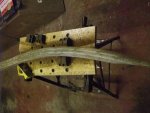
I've taken off Sunrunner's tiller to revarnish as it's got a bit tatty. My original intention was to use International Woodskin but I read on these forums that a wood stain is not really appropriate for a tiller because it is porous and that is not a good idea unless the underlying wood is an oily wood like teak. My tiller is laminated from 2 types of wood, one light coloured and one darker and reddish so I assume maybe mahogany and ash (see attached pic).

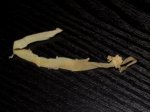
Anyway, I was thinking of applying a varnish instead and wondered if anyone can guess what was there before ? The other pic is a scraping which has an appearance akin to a thin parchment if that helps identify it. Brands of suitable replacement varnishes for this specific application would be appreciated.

I have removed all the fittings and got 2 sides done by using a scraper like this one http://www.diy.com/nav/decor/decora...rris-Pro-Long-Life-Heavyduty-Scraper-10517563 with carbide blades. It's quite hard work and it seems that once the bulk of the varnish is off the scraper takes off shavings made of 50% wood dust + 50% varnish. Will there be compatibility problems between the old and new varnish if I stop at the 50:50 stage or do I need to keep going untill absolutely all the shavings are wood dust ? And is it better to leave a scraped finish before applying the varnish or to give a rub down with sand paper first ?

Thanks,

Boo2
laminations.jpg

varnish_scraping.jpg
 
I am hardly an expert on varnishing however. I think most varnishes will be compatible with the original varnish so if it looks good when sanded. (Yes do sand it a bit at least.)
However if you decide to use a 2 pack polyurethane varnish then you must get rid of all the old oil based varnish as the solvents in the polyurethane will dissolve the old varnish and make a mess. 2 pack polyurethane is incredibly tough however and fairly UV resistant. I have some on internal wooden stairs at home now 38 years old original varnish which must be polyurethane and it is still good.
An easy alternative is to oil the wood which gives a low gloss look but must be reoiled at least mid season and each winter. But no sanding down needed and easy brush clean etc.
Or just go for ordinary oil based varnish and redo it next winter as UV damages it. good luck olewill
 
I agree with olewill on the general approach. I would have used a stripper like nitromors to ease the removal of the varnish. Don't agree about oiling if it does indeed include ash. Ash is rated "P" for "perishable" in timber tables, and goes horrid if not sealed. I think if you are oiling it you need a "VD" - very durable, or D rated timber. Teak and Iroko (and things which you can no longer get like afrormosia) are VD. Most of the mahogany substitutes are D - I'd be very surprised indeed if it was made of genuine mahogany - most likely utile. Oak (American and European - not Japanese) is also D.

If you have the time I'd go for lots (12 ish) of coats of conventional varnish not two part. Two part polyurethane is easy and lovely when new, but it bleaches rather than mellows in sunlight, and so any dings which you patch up later look horrid. With a quality conventional varnish you'll never need to take it back to the wood (at least for many years). I have two-part on my mast and so have a good few years experience with it.

It can be a pain in the butt putting lots of coats on something small. Tip - put your brush in a poly bag in the freezer between coats to save cleaning it.
 
Woodskin will be fine for this application. You can use gloss varnish but it is a lot of work to get a good finish on a fiddly thing like a tiller. The best thing you can do is treat the tiller to a canvas cover and always put it on when you leave the boat. That way your finish will last almost indefinitely.
 
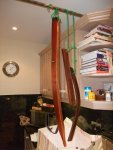
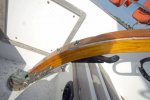
I'm a newbie here but for my tuppence worth, my tiller was in a very bad state - I resorted to a plane, then an electric sander, then finishing by hand, before 6+ coats of Epifanes. Finally, glossed it all up with brasso (as it's just abrasive enough to get a really good shine) before bees waxing it.

Here's a before and after:
DSCF3057.jpg
DSCF3066.jpg

SWMBO wasn't too keen on the kitchen being used for this purpose though.
 
If you use a woodstain type product then it is important to get rid of ALL the old varnish otherwise you will likely end up with light patches. Having said that, I use Cetol Filter 7 (which appears to be the same thing as International Woodskin). It is very easy to apply and maintain giving a soft gloss finish. Very light rub over and re-coat on an annual basis keeps it looking good. If you ever need to start again it removes very easily. The finish on my tiller is now 10 years old and still looking good.
 
May be a bit late with this suggestion but I've recently become very sold on cabinet scrapers [simple rectangle of spring steel, Google them] after years of using Skarsten-type ones. They are very easy to sharpen and give an excellent finish. I have an ash and an oak tiller awaiting varnishing once the weather warms up a bit and I recently freshened up the top of a teak veneer bedside table which we've had 48 years.
 
Used on my Hillyard with excellent results and cheap as chips http://www.screwfix.com/p/no-nonsense-yacht-varnish-750ml/23164
Used on my Sadler with excellent results and cheaper than than chips (or Screwfix) http://www.toolstation.com/shop/Pai...od+Care/Yacht+Varnish+1Ltr/d150/sd3176/p64100.
Tip - thin the first coat ~20% with white spirit and apply a liberal coating - it will take longer to dry but it will soak into the timber and seal the pores much better than if used neat. Remaining coats use unthinned.
 
The best thing you can do is treat the tiller to a canvas cover and always put it on when you leave the boat. That way your finish will last almost indefinitely.
+5 (years that is, and it still looks like it was just varnished (apart from a couple of dings) Another tip is give it a coating of 50/50 beeswax and carnuba wax after the mandatory 8~12 coats of varnish having "polished" the final varnish coat with 1200 grit wet and dry.
 
May be a bit late with this suggestion but I've recently become very sold on cabinet scrapers [simple rectangle of spring steel, Google them] after years of using Skarsten-type ones. They are very easy to sharpen and give an excellent finish. I have an ash and an oak tiller awaiting varnishing once the weather warms up a bit and I recently freshened up the top of a teak veneer bedside table which we've had 48 years.

+1

The beauty of a Swedish Cabinet Scraper is that it leaves the wood showing the intricate grain. Once you sand, much of the grain is lost. Harder work, but worth it, particularly on a small job like a tiller.

There is a knack to good sharpening - in fact it is burnishing - so you will need a quality burnisher as well for best results.
 
+1

The beauty of a Swedish Cabinet Scraper is that it leaves the wood showing the intricate grain. Once you sand, much of the grain is lost. Harder work, but worth it, particularly on a small job like a tiller.

There is a knack to good sharpening - in fact it is burnishing - so you will need a quality burnisher as well for best results.

Absolutely right. I found this out by accident. Thanks for reminding.

I purchased a Cabinet Scraper some time ago, unfortunately, I could not attain the skill to use it or the eyes to sharpen it.

However, may I introduce a true icon of boat maintenance.

It is the Harris would scraper that costs less than a fiver. The one with four sides that you unscrew and switch when needed. Two sides are fine and the other two medium. It even now comes with a much better rubberised handle.

When the edges are rough , I give it away to those that have the eyes and skill to sharpen it thereby passing it on to future generations and to enhance a greener way of life. Alternatively, you can buy them a pint and company for an hour for sharpening it.

It is always a warm feeling when purchasing one of these every few years and proves that you can still have fun without the drudge of needing shore power.
 
If thinking of varnishing in a coldish atmosphere it will pay to warm the varnish and the tiller to about the same temperature,standing the pot in a container of warmish water for a few minutes. Varnishing on the bare wood may induce small air bubbles if items are not warmed slightly,and warmed brush loads will not leave any brush marks either on larger surfaces.
I'm waiting a warmer day to get mine from the boat and do this job. By the way I bought off Ebay a set of 5 Cabinet scrapers for around £7 the burnisher was slightly more I remember,but a beautiful clean finish showing the full grain on my ash tiller.
+ 1 for the canvas cover for it too.


ianat182
 
Epifanes, 50/50, 25/75 then 6+ coats of 10/90 - first number epifanes thinners, second number is epifanes varnish.

Looks good, smells great, pleasure to work with.

Mind you varnish stained shorts seem to drive away unwanted female attention!
 
Absolutely right. I found this out by accident. Thanks for reminding.

I purchased a Cabinet Scraper some time ago, unfortunately, I could not attain the skill to use it or the eyes to sharpen it.

However, may I introduce a true icon of boat maintenance.

It is the Harris would scraper that costs less than a fiver. The one with four sides that you unscrew and switch when needed. Two sides are fine and the other two medium. It even now comes with a much better rubberised handle.

When the edges are rough , I give it away to those that have the eyes and skill to sharpen it thereby passing it on to future generations and to enhance a greener way of life. Alternatively, you can buy them a pint and company for an hour for sharpening it.

It is always a warm feeling when purchasing one of these every few years and proves that you can still have fun without the drudge of needing shore power.

There are lots of videos on the Internet re. use of cabinet scrapers. That's how I learned how to use and sharpen one. Curiously, in one video the man is adamant that you need to finish off with a light sanding of the workpiece whereas most sat no sanding. In that same video the man sharpens using the file only - no subsequent burnishing.
 
Top