Stripped threads on Stern Gland - another one for the engineers

mattonthesea

Well-Known Member
Joined
28 Nov 2009
Messages
1,519
Location
Bristol
ayearatsea.co.uk
I have done a stupid thing. when I redid the stern gland packing while the boat was out recently I noticed that the threads on the clamping studs were a bit shallow and did nothing about it. I am now back in the water and on the way to Ireland, currently in Milford Haven.

While motoring on the last leg I noticed that the gland was leaking. On examination the threads are too far gone for the nuts to hold the clamp in place. The water ingress is pretty much now held by grease!

My question is: is it possible to re tap the threads in situ? Given that the studs are about 15 mm from the prop shaft I expect the answer is no but I live in hope. Given that the shaft removal means an engine move and that means another lift out and all this means that holiday plans are ruined I am a little put out.

Or is there a temporary measure I could put in place?

Thanks for reading
 
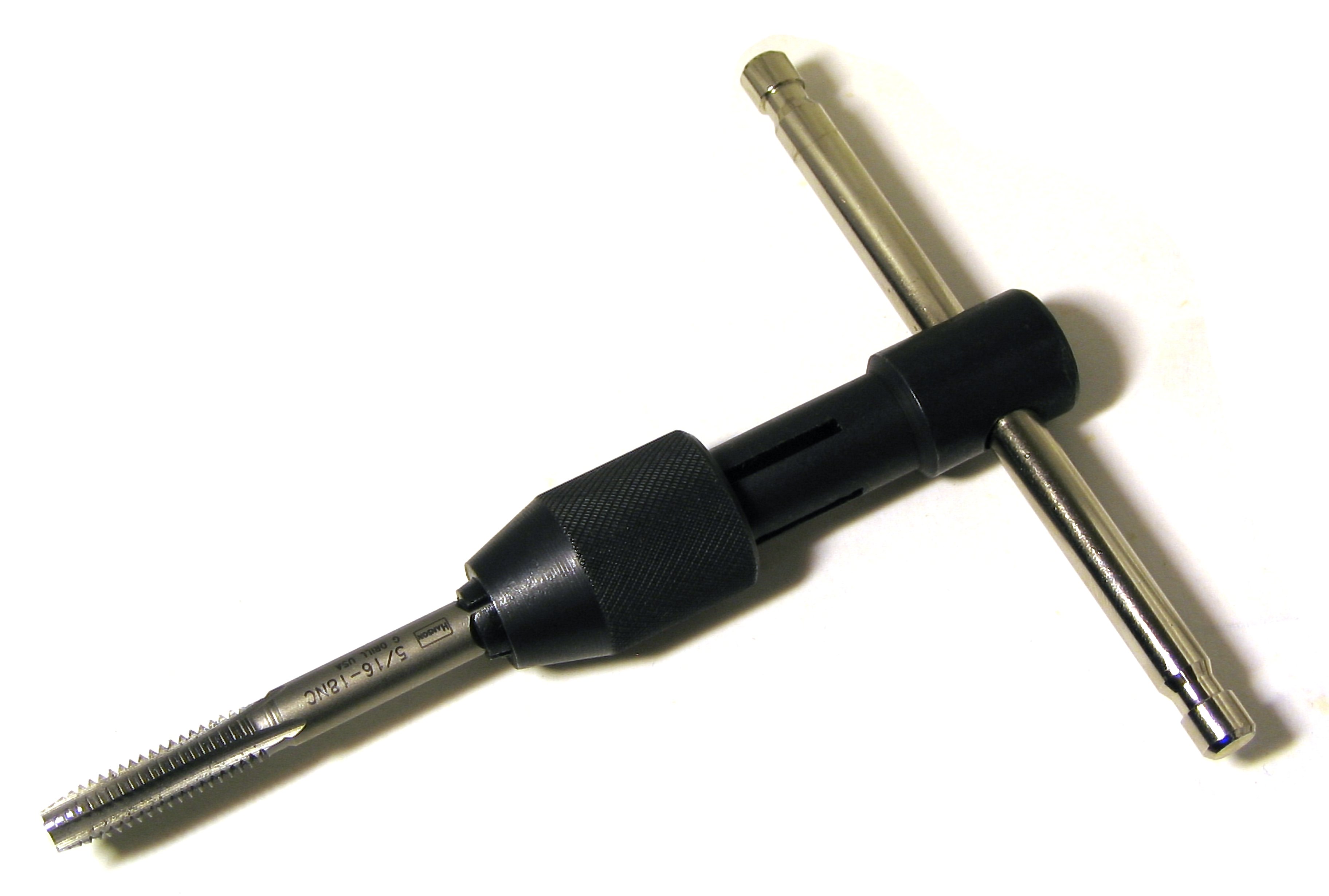
Yes you could retap the hole in the fixed part of the stern gland either using a tap wrench with silding handle of even with an adjustable if you are very careful.

But as posted if the damaged thread is the stud or clamping nut just replace those items. If the thread in the fixed part is stripped depending on the design you may be able to get a nut behind the fixed flange or a modified nut if the back of the gland is too close to the thread,

Tap_and_T-wrench.jpg
 
There are some options, none of which are likely to be pleasant or easy as a DIY job.
Wot pvb said is one option. You might well need a stud remover.
Use a die nut to cut a slightly smaller thread, if there is space and the existing shagged thread allows. So if the original was 1/4"unf and that has stripped you might be able to cut an M6 thread onto the studs and replace the nuts.
Mackle a couple of clamps out of studding and metal strip to take the strain off the existing studs. Only works if the stern gland is the right shape though.

Some photos would help us to help you further
 
You'll have difficulty re-tapping them in situ, but can't you replace the studs?

Exactly so. The studs are inserted into tapped holes in the gland body. Normally I would tighten two nuts together and turn them to unscrew the stud but if the threads are really knackered you may have to use a stud extractor or maybe a Mole wrench if you are lucky.
 
This is how I would approach a shaft seal like this one ...

IMG_9680.jpg


Obtain some new studding of the same thread size, ideally bronze or stainless steel, cut the exposed length plus ~0.5". Wind up the greaser hard. Fit two nuts to one of the studs, then lock these hard together, using the inner to undo the stud. Insert the first new stud, grease thoroughly with waterproof grease, add the nuts and gently nip up, repeat for the second stud.
 
...On examination the threads are too far gone for the nuts to hold the clamp in place. The water ingress is pretty much now held by grease!

My question is: is it possible to re tap the threads in situ? Given that the studs are about 15 mm from the prop shaft I expect the answer is no but I live in hope...

The answer is no. If the threads are worn or corroded, re-tapping won't put back the missing metal. Replace them as other replies have said.
 
Thanks for all the replies - and so quickly too.

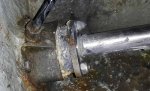
I didn't think of replacing the studs. I suppose I just assumed as they were so old that they would be totally embedded, plus the only way I have ever removed studs is by lock nuts - and there is not enough thread to use nuts. Picture below.
stern gland.jpg

Sorry that it is so greasy; that's to keep it water tight. I think that I can release the clamp flange without too much ingress. If I go to an engineer will they have something to remove the studs? I don't know how old the gland fitting is; were Rivals fitted with these type at birth? If they were then they are likely to be imperial.

I like problem solving but just occasionally I would like to just sit back and do some cruising :rolleyes:
 
Thanks for all the replies - and so quickly too.

I didn't think of replacing the studs. I suppose I just assumed as they were so old that they would be totally embedded, plus the only way I have ever removed studs is by lock nuts - and there is not enough thread to use nuts. Picture below.
View attachment 78064

Sorry that it is so greasy; that's to keep it water tight. I think that I can release the clamp flange without too much ingress. If I go to an engineer will they have something to remove the studs? I don't know how old the gland fitting is; were Rivals fitted with these type at birth? If they were then they are likely to be imperial.

I like problem solving but just occasionally I would like to just sit back and do some cruising :rolleyes:

You could try putting several washers on the studs to move the nut right to the end, even allowing the nylock insert to overhang a tad. I've often done similar to move the nut to a better part of the thread until I can come up with a permanent solution. Ideally, use a couple of new nuts, plain or nylock.

Richard
 
If you check what thread they are you can get new studs ready, they just use two normal nuts to lock the stud to remove, , they will fit as the nylocks are thicker, if this cannot be done you will have to get a stud removal socket.

Do it tight and you could do one side at a time
 
You could try stripping some copper electrical cable and taking some of the inner strands, thread them thru the nut and carefully tighten it back onto the stud. Has got me out of a fix or two in the past.
 
Thanks for all the replies - and so quickly too.

I didn't think of replacing the studs. I suppose I just assumed as they were so old that they would be totally embedded, plus the only way I have ever removed studs is by lock nuts - and there is not enough thread to use nuts. Picture below.
View attachment 78064

Sorry that it is so greasy; that's to keep it water tight. I think that I can release the clamp flange without too much ingress. If I go to an engineer will they have something to remove the studs? I don't know how old the gland fitting is; were Rivals fitted with these type at birth? If they were then they are likely to be imperial.

I like problem solving but just occasionally I would like to just sit back and do some cruising :rolleyes:
I zoomed into your photo. It looks like the threads continue past the companion plate, just smothered in grease, so you could try removing both nuts (loosen first to make sure the ocean doesn't pour in) and pul clear the companion plate, this would provide plenty of decent thread to get the two locknuts on. I would make the replacement studs at least 20mm longer.
 
I like problem solving but just occasionally I would like to just sit back and do some cruising :rolleyes:

And so say all of us! :ambivalence:

You could try putting several washers on the studs to move the nut right to the end, even allowing the nylock insert to overhang a tad. I've often done similar to move the nut to a better part of the thread until I can come up with a permanent solution. Ideally, use a couple of new nuts, plain or nylock.

Richard

^^^ Wot he said ^^^
 
I zoomed into your photo. It looks like the threads continue past the companion plate, just smothered in grease, so you could try removing both nuts (loosen first to make sure the ocean doesn't pour in) and pul clear the companion plate, this would provide plenty of decent thread to get the two locknuts on. I would make the replacement studs at least 20mm longer.

This is what I was going to suggest ... use new nuts.
 
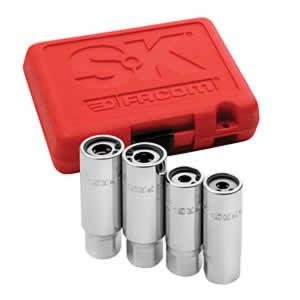
Remove the existing nuts and extract the studs with one of these that will grip on the remaining damaged thread.

31f-UEDyyaL.jpg
 

Attachments

  • 31f-UEDyyaL.jpg
    31f-UEDyyaL.jpg
    10.5 KB · Views: 0
Stud extractor should do. However one of my studs sheared whilst removing single nut to repack. Boat out of water. I don't think P.O. had ever touched the gland in 28 yrs!
I drilled out broken stud using a £10 right angle drill adaptor and then retapped thread all with prop shaft in position. Worked well. Just needed lots of care in a really awkward position.
Dismantled 2 yrs later when engine out and replacing rubber hose coupler and all looked fine.
 
Thinking slightly out of the box - someone hasnt fitted 10mm nylocks onto 3/8 whit threads have they ?? Carefull identification of the thread is essential anyway.
Only seen worn gland threads on a commercial boat after years of continuous use.
Jim
 
Thinking slightly out of the box - someone hasnt fitted 10mm nylocks onto 3/8 whit threads have they ?? Carefull identification of the thread is essential anyway.
Only seen worn gland threads on a commercial boat after years of continuous use.
Jim
Wasn't going to say it but yes I think that's the case. When I replaced with nylocs I checked the thread carefully, of the nuts. Didn't think to check that someone would have put metric onto imperial!
 
Top