Stopping an inrush of water when fitting the log

mcdonald_ajr

New Member
Joined
29 Jan 2006
Messages
19
Location
Ramsgate, Kent
Visit site
I remove the log (Paddle wheel) when leaving the boat for long periods to stop it getting fouled. Also to reduce damage during lift in/out. But I do get pretty wet every time! The flood of water that comes in is a pain, before I can fit the plug. Probably only a few litres, but it goes everywhere. I did fit a new airmar (Garmin) thru-hull which is supposed to have a flap to minimise water entry, but the flap fell off during the first season! Does anyone have a neat solution for minimising the flood? Maybe using an elastic band and a large clear plastic bag over the tube, with the plug already inside the bag?
 
I remove the log (Paddle wheel) when leaving the boat for long periods to stop it getting fouled. Also to reduce damage during lift in/out. But I do get pretty wet every time! The flood of water that comes in is a pain, before I can fit the plug. Probably only a few litres, but it goes everywhere. I did fit a new airmar (Garmin) thru-hull which is supposed to have a flap to minimise water entry, but the flap fell off during the first season! Does anyone have a neat solution for minimising the flood? Maybe using an elastic band and a large clear plastic bag over the tube, with the plug already inside the bag?
I remove the transducer with my right hand and immediately cover the hole with the palm of my left hand. Next I put down the transducer and pick up the screw cap (still using my right hand). Then I quickly remove my left hand and screw on the cap with my right hand.
 
I now have a log with a flap but in the days when I had a basic one I became fairly skilful at withdrawing it. My method was to split the action into two halves. For the first action I would quickly pull up the log (or blank) and with my other handslide a sponge over the hole. Only a little water comes through the sponge held in place. Then I would slide the blank (or log) across displacing the sponge and insert it. You shouldn't get more than a few mugfuls of water in. My then Sadler 29 had a box round the impeller and sounder, so the water could easily be scooped or sponged out.
 
I used to use a rubber glove. Put the blanking cap in the glove, put the glove wrist opening over the tranducer, tie around glove wrist with duck tape, unscrew the tranducer (having lossened it beforehand) and pull out the log, fiddle the blanking cap into position and screw up. Remove the duck tape and a glovefull of water. It is bit alarming when removing the log as the small seawater pressure will well inflate the glove. The small amount of water can be caught in a bowl.
 
I used to use a rubber glove. Put the blanking cap in the glove, put the glove wrist opening over the tranducer, tie around glove wrist with duck tape, unscrew the tranducer (having lossened it beforehand) and pull out the log, fiddle the blanking cap into position and screw up. Remove the duck tape and a glovefull of water. It is bit alarming when removing the log as the small seawater pressure will well inflate the glove. The small amount of water can be caught in a bowl.

genius!
 
A rag. Pull out transducer with one hand, slap rag down over hole. Put down transducer, pick up blank, remove rag and insert blank. It should be possible to do this without more than about a pint of water entering the boat. A little more the opposite way as the impeller needs to be placed more carefully but barely more than a sponge full.
 
A rag. Pull out transducer with one hand, slap rag down over hole. Put down transducer, pick up blank, remove rag and insert blank. It should be possible to do this without more than about a pint of water entering the boat. A little more the opposite way as the impeller needs to be placed more carefully but barely more than a sponge full.

+1
 
I remove the log (Paddle wheel) when leaving the boat for long periods to stop it getting fouled. Also to reduce damage during lift in/out. But I do get pretty wet every time! The flood of water that comes in is a pain, before I can fit the plug. Probably only a few litres, but it goes everywhere. I did fit a new airmar (Garmin) thru-hull which is supposed to have a flap to minimise water entry, but the flap fell off during the first season! Does anyone have a neat solution for minimising the flood? Maybe using an elastic band and a large clear plastic bag over the tube, with the plug already inside the bag?

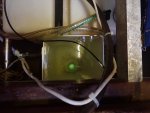
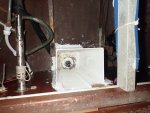
I built a water tight trunk higher than sea level around the log hole (pic 1 & 2)
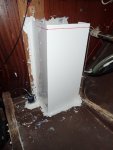
when log/dummy plug is removed, water flooded in remains in the trunk and other areas can keep dry (pic 3)

Have plenty of time to do the plug / unplug. After sealed with Log / dummy plug, use a small submerge pump (or hand pump) to pump the seawater from the trunk to the loo nearby, then pump out to sea.
 

Attachments

  • 17-11-37.JPG
    17-11-37.JPG
    197.8 KB · Views: 2
  • 17-11-36.JPG
    17-11-36.JPG
    230 KB · Views: 1
  • 17-11-35.JPG
    17-11-35.JPG
    233.4 KB · Views: 1
I built a water tight trunk higher than sea level around the log hole (pic 1 & 2)
when log/dummy plug is removed, water flooded in remains in the trunk and other areas can keep dry (pic 3)

Have plenty of time to do the plug / unplug. After sealed with Log / dummy plug, use a small submerge pump (or hand pump) to pump the seawater from the trunk to the loo nearby, then pump out to sea.

I once had the o-ring of the dummy plug damaged and water leaked in slowly while nobody on board, which nearly sunk the boat. Having the water tight trunk does help to avoid such risk.
 
I did it the other day with a sponge. Pulled the log and shoved the sponge in the hole pushing it tightly home.

Reversed the procedure and used the sponge to mop up. Probably no more then 1 - 2 pints
 
I once had the o-ring of the dummy plug damaged and water leaked in slowly while nobody on board, which nearly sunk the boat. Having the water tight trunk does help to avoid such risk.

That's an interesting observation. I had a similar fright on my old HR352, the log transducer ceveloped a slight leak. I lifted the floorboard one day and found water lapping at the underside.
 
mcdonald_ajr;6503508 I did fit a new airmar (Garmin) thru-hull which is supposed to have a flap to minimise water entry said:
I think the flap breaking is a common fault and Garmin are reluctant to address the problem. It happened to me last year after fitting a new one it lasted about 4 weeks before deciding to part company. Removed the whole unit during winter lift our and sent all the parts back. Garmin sent new one. The pain in the rear is having to go through the procedure of fitting a new one.
 
I think the flap breaking is a common fault and Garmin are reluctant to address the problem. It happened to me last year after fitting a new one it lasted about 4 weeks before deciding to part company. Removed the whole unit during winter lift our and sent all the parts back. Garmin sent new one. The pain in the rear is having to go through the procedure of fitting a new one.

Even when it is working it is far from perfect. OK, it reduces the flow but the blank needs to go in pretty smartly.
 
Surrounding the area with a couple of disposable nappies helps soak up water. I remove the " wings" of the nappies with scissors first so they lay out flat.


( I have always done this as i find that they cut into my legs a bit!!! :encouragement:)
 
Last edited:
The flood of water that comes in is a pain, before I can fit the plug. Probably only a few litres, but it goes everywhere.
Like others have said you need to practice.

I remove sensor, place hand over hole, pick up blanking plate, remove hand and insert blanking plate. It is all done in about 5 seconds from start to finish and the through hull is in an enclosed area so even is I was to be a tad slower all the water is contained.

A sponge and bowel is ready to mop up.
 
I think you may have been unlucky? I had an Airmar log transducer and took it out whenever we left the boat after a trip for 9 years and the flap was still keeping most of the water out when replacing it.
 
Top