
Stern gland questions...

Iain C

Well-Known Member
Joined
20 Oct 2009
Messages
2,366
Visit site
Typical...my Nigel Calder book is down on the boat so once again I need to tap into the collective wisdom of the forum.

When I got my Sabre 27 last year, the sterngland arrangement looked like this.
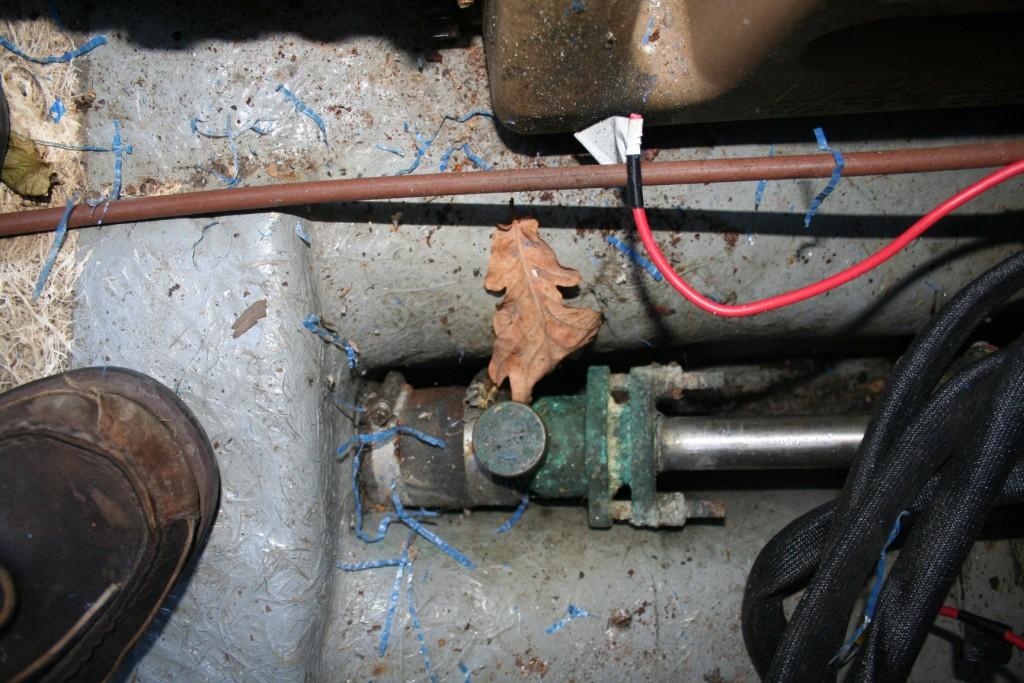
4585195810_45ccea57d4_o.jpg


With the boat ashore, I had a marine engineer recomission the engine and check everything out, and he said the gland looked OK. However he did advise me to change the cap thingy for a proper screw down grease injector, which I have done. Basically I unscewed the cap, replaced with a brass fitting, ran a copper pipe back to a screw down injector which is bolted to one of the engine bearer mouldings, filled with white grease, and gave it turns until resistance was felt. I give it a few turns before starting or daily when in use.

Before I changed to a screw down injector, there was always a bit of water after having run the engine, but now however, she does seem to be leaking quite a lot. After a few hours motoring I probably have half a bucket swilling round the engine room. The boat does not leak a drop when on her swinging mooring, or when sailing (even with the prop turning). Which does make me think I need to check for a raw water cooling leak, but as things have suddenly got worse after fitting the injector, I am convinved it's something to do with the gland...just seems too much of a coincidence. By screwing the grease in under pressure have a knackered something?

How does it all come apart? What do I need to repack it? I'm assuming this needs to be done out of the water...has anyone got any tips?

Many thanks!
 
To be honest the whole thing looks dreadful. However, to service the gland, you have to undo the compression plate at the front and slide it along the shaft towards the engine. Remove all the packing rings, if possible count how many rings there are. (probably 3). Obtain some packing material, wind round the shaft the appropriate number of times (probably 3). Cut at an angle with a stanley knife and rotate each of the resulting rings so that the cuts are equally spaced around the circumference. Push the rings gently into the gland housing replace and re-tighten the compression plate until the shaft shows some slight resistance to turning. Job done! Run engine and check that it doesn't leak - 1 drip per minute is generally accepted figure. Also check that the gland does not get hot - if it does ease off the compression plate.
While you are at it, I would certainly put new bolts in the compression plate as yours look quite corroded and could seize up/shear off at an inconvenient time. The protective tube also looks a bit iffy and could do with replacing for peace of mind - remember the sea is on the other side of it. I would at least replace the jubilee clips and 'double up' if there is enough room.
Definately an out of water job but can be done between tides if you're lucky.
 
Looks very much like the gland on my old Halcyon 23. Extremely unlikely you've done any pemanent damage but the marine engineer's advice was well meant but 'as it wasn't broke don't fix it' applies. He was right that filling the cap with grease is incovenient and messy and that remote greaser with a bigger reservoir was more easier, but it wasn't a mtter of life or death. I did six years wth the cap on the old boat.

Assuming thee rubbber hose you show isn't leaking, there are two things you can do. You need to check if tightening the gland cures the problem. THis can be done in the water. On mine the bolts had two nuts - a tightening nut and a locking nut. If yours is the same, loosen the locking nuts (you might need to hold the tightening nut with another spanner if possible as they can stick together). Ideally you want to leave the tightening nut in its current position as - again ideally - you need to tighten both nuts by the same amount. However don't worry if they are stuck together and come off as one piece and have yo be separated. This is not brain surgery. Tighten the gland and see if the leak stops when you motor. Stop motoring and check the gland and see if it is hot. (An engineer told me if you can touch it and keep your hand on it its not hot!) If it's not too warm, then you've still got some adjustment left if it's still leaking. Too tight and the packing binds on the shaft and it gets hot. I used to turn the shaft by hand and see if it was binding.

If it still leaks the you will probably have to repack it. Best out of the water. (Mind you tightening may reduce the leak and you might be able to live with it until the boat is next scheduled to come out).

Remove the nuts. Pull out the face plate and move up the shaft out of the way. Hook out the old packing. It's in rings and you will need to make sure you get all the old stuff out. An inspection mirror might help. But if you have a suitable hook - a large aberdeen fishing hook opened out and attached to a bit of old wire coat hanger would be ideal (aberdeens are wire and bend more than silver hooks) - you can get the packing out.

Repacking is easy if fiddly. Make sure you get the right size - take a bit of the old stuff with you. And make sure its the right type - bronze and stainless steel shafts need different packing. (No I don't know why either.)
The bgooks will tell you to cut rings with a 45 degre slant on the ends so they match up when you warp them round the shaft. I could never quite manage that but it didn't seem to matter. I sued to use a craft knife and cut the rings in situ round the ahft and trim the ends until they were snug and the ring was tight. Forget trying to measure it acurately. To get the rings into the gland push them using the face plate.

I think mine took four rings. You will find that when you come to retighten there rings will pack themselves. The tightern the face plate and lock it and prceed to check for leaks as soon as you get in the water. If the boat is out I used to try turning the propellor - a bit of resistance showed the packing was in place.

Its not brain surgery. Its a very simple system. Good luck!
 
Mine looks similar, i´ve had very good success with ptfe stuffing from asap supplies. they do a tool to make removing the old packing easier as well. Good luck.
 
quick clarification - when i said forget trying to measure it accurately what i meant was cutting to length from measurrments away from the shaft - cut it in situ and trim accordingly until its tight
 
Not much to add, except it may be worth detaching the new greaser tube at the sterngland end, making sure that grease is actually being pumped through and you don't have an airlock/cavity.
At the exit of the gland to the shaft there is a residue of grease showing on the shaft,but not white,so perhaps you have not been putting the grease in, but an air bubble.
Many of these have a castellated adjustment nut so that the packing is compressed,but I cannot see one in your photo, so possibly the two clamp bolts and plate are your adjustment in this instance.
You should only need 1 turn ,before leaving the boat,on the greaser.

ianat182
 
Many thanks guys. Does not sound too hard to do then.

We are off for a 2 week cruise at the beginning of June, so if there's no chance of sudden catastrophic boat-sinking failure, I will give the whole lot a squirt with some WD40 to penetrate the threads, and have a go at snugging it up on the adjustment, and "bleeding" any air out the grease system. If no joy there, then I will factor in a dry out somewhere and repack it. Good pointer on the jubilee clips though, I will double check them.

Ianat182, that picture was taken with the engine hatch having been lifted for the first time in a very long time! So ignore the grease on the shaft, and the control panel electrics wires which now go to the control panel, and the red wire which now goes to an anode!

Thanks again all!
 
Many thanks guys. Does not sound too hard to do then.

We are off for a 2 week cruise at the beginning of June, so if there's no chance of sudden catastrophic boat-sinking failure, I will give the whole lot a squirt with some WD40 to penetrate the threads, and have a go at snugging it up on the adjustment, and "bleeding" any air out the grease system. If no joy there, then I will factor in a dry out somewhere and repack it. Good pointer on the jubilee clips though, I will double check them.

Ianat182, that picture was taken with the engine hatch having been lifted for the first time in a very long time! So ignore the grease on the shaft, and the control panel electrics wires which now go to the control panel, and the red wire which now goes to an anode!

Thanks again all!

Any catastrophic boat sinking will not be from the gland but could be from the stern tube rubber gaiter. If it was mine I would be replacing the gaiter and the hose clips (as said 2 either end)
As for the leak you should be able to tell if it is from the gland if you have a look at it when the engine is running. Dry everything off and put some dark paper towels under it and see how wet they get. You still have a bit of room for tightening up the nuts and bolts so there is still some packing left. It is normal to have to adjust it over time.
Good advice and pictures Here
http://www.diybob.com/diyPackingGland.htm
Yours is fig5

Also Here
http://www.tb-training.co.uk/10sgear.htm
 
Bear in mind the rubber gaiter is a special material, not just radiator hose. Of course it costs 5 times as much! But it resists oil, grease, diesel, etc.

If the current hose feels at all soft I would do something about it.
 
No worries Ian, I wann't suggesting you were!:) Any advice is useful here!

Spyro, that website is a great help. I think I might have worked out what's happened from that. By the looks of things, my grease port is down at the propellor end of the stuffing box. I assume that the packing rings themselves are hidden away in the widest part of the somewhat green looking bit!

Whilst the old cup greaser was in effect filling the packing box by gravity, I have obviously given it the beans on the new screw down greaser, injected grease at the propellor end of the stuffing box, and probably forced the old packing material up the shaft a bit towards the gearbox. The packing material has been in there for about 10 years (this is my first boat, still learning about this stuff!) so probably has little "give" in it. I'm hoping that if I do adjust the end to compensate then I might close up any voids that might have opened up. I will certainly change the packing at the earliest opportunity though!

My only question is this...and I hope it does not seem too naive! The propshaft is presumably a uniform diameter, so you could make your new rings by winding the new packing material around the propshaft at any suitable location along it's length (I guess you'd need to open it up to get one ring out first so you know what to buy for the new material). Assuming all threads were soaked in penetrating oil, and everything was turning before you took it apart, and you had a friend standing by with a portable bilge pump, is it really impossible to do it with the boat in the water? I'm guessing that you are only really going to get a decent trickle of water when the last ring comes out, and assuming the others are all made up and ready to go in, surely it's manageable, or is it a super fiddly job? (I have good access to the gland, I'm stood in the hatchway in the cockpit floor in the photo, you can probably see my foot!) To me, it seems no worse than pulling a log impellor out to clear it!

Obviously, for this last point, I will absolutely take people's advice!
 
I don't think the grease would force the rings up more likely the grease would just end up down the stern tube.
I think the general advice is if you are re-packing it in the water that you leave the last packing ring in. It is important to have the correct size packing.
Having done it once in my garage with the shaft and gland out of the boat I would do it in the water now as i would know I had the correct size and all the bits cut correctly. I would say if it is your first time then do it with the boat out.
BTW Portemere rubber comp do approved stuffing box hose, they will cut to size what you need.

P.S. It definitly needs to come out of the water to change the hose. :D:D:D
 
Bear in mind the rubber gaiter is a special material, not just radiator hose. Of course it costs 5 times as much! But it resists oil, grease, diesel, etc.

If the current hose feels at all soft I would do something about it.
May I second that - the rubber pipe is a special pipe made for stern glands. Please don't replace it with something that is the same size and looks as though 'it will do'.
 
Iain C;2508281 I will give the whole lot a squirt with some WD40 to penetrate the threads said:
Wd 40 is a waste of time as it is not a penetrating oil. You need Plus Gas which is a penetrating oil however it may not deal with the crystaline deposits and that may require brick cleaner however make sure you promptly wash the residue away or neutralise it as it is an acid. B and Q sell it.

Have you determined that the water is coming from the gland as usually these leak when stopped if they are leaking when running :)
 
The new packing nowadays will most likely be PTFE impregnated material,about 6mm in square section and should not be oiled at all, grease only, for the water seal.
PTFE has the grade of 'Ice-on-Ice' for non-friction properties; in its solid form it has been used to form the bearing surfaces of suspension type bridges /structures to allow movement, and for bearings on rudders for instance.Special handling needed too when machining on lathes etc.

ianat182
 
You can wrap the packing around the shaft to cut it to correct length. I use a razor blade and cut it at an angle rather than square to get a (hopefully) better seal. I have done the job while in the water and the leakage was minimal. Looking at the photo I wouldn't be surprised if the packing was pretty old. Overtightening old hard packing can be hard on the shaft, you might want to take a good look at everything next time you haul.
There is a lot of good advice on this forum with loads of experience. I make no claims to expertise but thought I would share my experience. Best of luck!
 
Guess what?

Nothing to do with the stern gland (which incidentally looks a lot cleaner that that, I think the marine engineer who recomissioned my engine sorted it all out as everything moved very easily).

It's a drip from the water pump. If anyone knows about wonder sealants and clips please have a look at this thread...

http://www.ybw.com/forums/showthread.php?p=2517370#post2517370

Many thanks for the stern gland advice though...even though I was barking up the wrong tree I've learned a lot about them from here!
 
Two daft question no one has asked...:eek:

(a) In order to select the proper size of packing material for a stuffing box, is it possible to expose the existing packing while afloat ?

(b) Is it possible to replace the packing while afloat without sinking the boat ?

Has anybody tried these daft ideas ?:o
 
There is such a thing as co-incidence, so first try to find where the leak is coming from. Have a good look when the engine is running.

If it is coming from the stern gland, repack it. Better still replace it with something modern like a Volvo shaft seal. But it could well be coming from (say) the raw water pump piping.
 
Facing a stern gland adjustment on Friday. First time I have ever had a traditional packing style gland, still surprised that there is no greaser. As far as I can see its back off the locknut, tighten the packing nut until the drips stop, or at least drop to 1 a minute or so and then wang up the locknut again. Of course, with my v drives, naturally, the whole thing is under the primary gearbox!
 
Top