

coopec
N/A
I know the feeling !! The big 80 approaches and I know I have to be more careful moving around the boat! I don't really know if 'solid' rails would make me feel safer though. I find most guard rails/wire are too low for me, just the right height in fact to tip me over! Mine would need to be 6 inches higher.
Possibly solid rails would be even more of an incentive for crew ( and especially crew of other boats ) to use them for pushing their boat off and thus straining the fittings.
I might consider some grab rails say around the mast.
I have to agree with you when you say " I find most guard rails/wire are too low for me, just the right height in fact to tip me over! Mine would need to be 6 inches higher" . What is the point installing a SS top rail 650mm off the deck!!?
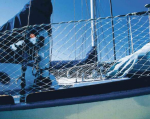
My stanchions are 930 mm high which is a good height (but not high enough for commercial vessels). I have Stainless wire rope on top but I will certainly be installing netting from the top guard wire down to deck. Apparently most serious cruising yachts are set up that way.
I'd worry about the extra wight above deck too. The weight of the tubing 600mm above deck weighing 30kg (?) will probably negate 120 kg of your ballast.
Unless you get the top rail rolled to follow the curvature of the deck it will look faceted and hideous.

 . Boat was outside a larger one on the pôntoon, so access tricky. As for bending it in a vice. Lots of force required and not accurate enough. The 'little nip' method was a bit slow, but very controllable. Tube not very cheap, if one kinks it...