
SS Richard Montgomery masts finally to be removed next year

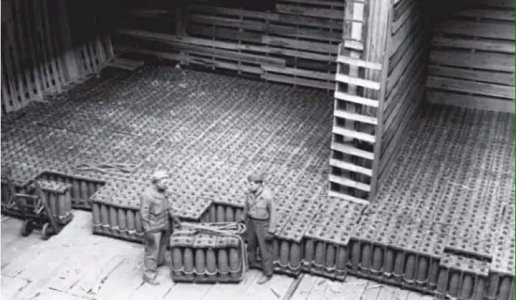
The survey reckons about 1400 tons of munitions are left out of the original cargo of 9000 tons. If it went off it would be a big bang indeed but claims of tidal waves & destruction of the medway towns is just cobblers.
Here is a link to a you tube video , Liberty ship John Burke carrying full cargo of munitions explodes after a kamikaze strike,
,
 
The survey reckons about 1400 tons of munitions are left out of the original cargo of 9000 tons. If it went off it would be a big bang indeed but claims of tidal waves & destruction of the medway towns is just cobblers.
Here is a link to a you tube video , Liberty ship John Burke carrying full cargo of munitions explodes after a kamikaze strike,
,
There is one difference between the video and the Montgomery, the depth of water is shallow where she lies. This would certainly be more likely to create a tidal wave as if she did explode, none of the explosive force would be downward, but more sideways. In another thread, some people have described the sound and tidal waves from ordance that was exploded underwater, even at several miles away it was still great. Just imagine a lot of unstable ordenance blowing up just because of an unexpected shock like a mast falling or a vessel hitting the wreck. Even the tidal wave driven up Benfleet Creek would increase in height and would cause a lot of damage to boats moored there.
 
If I were in a passenger jet I would be very happy to make a ten-minute diversion to avoid flying over the RM while they were working n it.
 
From my hazy memeory of my 1970's training, the difference between bombs and shells (conflated in the above article) is significant. Shells have to be stabilised to take the shock of being fired out of a gun barrel, bombs dont have to be so stable, and the explosives in the aircraft bomb mix can separate out from the inerting absorbent under prolongued storage on one side to form shock sensitive crystals. I understand the RM cargo was mostly aircraft bombs.

Clearing the Maplin Sands proving range for Londons prospective third airport, we found the shells which formed the bulk of the ordnance to be reassuringly inert. The general procedure was that, once anything especially dodgy, (like naval mines or German aircraft bombs and a suspected mustard gas shell which turned out to be an inert oil filled test round dummy) had been dealt with by specialists, usually by detonation in place at high tide, the remaining stuff would be batched up for "bulk detonation", with applied charges, which usually did nothing, sympathetic detonation-wise. It would then be loaded in palleted crates onto an LCT and taken out into deep water (probably passing the RM on the way, dunno, I was never on the LCT) and bulldozed off the front.

The only concerning incidents I recall involved white phosphorus shells, which, if the casing was cracked, could ignite in the live crate as they dried of, with the possibility of cooking off other nominally live stuff, though AFAIK the latter never happened. Surprising how fast one can run in thigh length waders. According to Wickipedia the RM has WP onboard, but this should be OK since it should never dry out.
 
Last edited:
For further fun and profit there was also some officially discouraged dealing in smuggled scrap. Shells have relatively soft (I believe phosphor bronze) drive bands around the base to engage the gun rifling, and for some reason, maybe higher pressures, on really big capital ship naval stuff, of 12 inches or so and up, this is often a plate covering the base of the shell and curving around the sides, so quite a heavy high value item. I had some conflicts due to my reluctance to allow people in my search team to bash these off with a hammer, which made me nervous, but if we didnt do this the people downstream quite often did, and with a 16 inch shell they were sometimes not far enough away to have made much difference if the payload detonated.

Cannonballs were another high value item, sold as "antique" props, for arrangement in conical piles on both sides of your swanky gravel driveway entrance. 40 quid a pop IIRC, not peanuts then.

Canonballs are of course completely inert, but there was a much commoner WW1 spiggot trench mortar with a spherical bomb and a stick tail which frequently broke off on impact or corrosion. I wouldnt be very surprised if there are some still out there, wating for a Range Rover to reverse into them.
 
Last edited:
Top