
pjsgsy
New Member
Just thought I'd share a little precautionary tale!
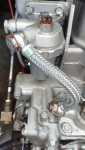
The other day when I got back in from a short trip out, I could smell diesel. I thought it might have been just exhaust, but on checking around the engine, there was diesel over it. Started it up yesterday to find the source and it was spraying in fairly significant quantities from this hose, right over top of engine! ?
Anyway - The point of posting was, the engine is clean, and well maintained, and I check hoses etc. But, I realise now it's pretty impossible to inspect a braid-covered hose! On removal, I would note that the old hose seems stiffer than the new 'flexible' same original part I replaced it with (in the photo). So, I would suggest perhaps replacing these every X years in accordance with the manual, or, when perhaps when they appear to get stiff (and thus maybe less flexible). In my case, having a barbed banjo connector on board so I could make up and emergency fuel hose rather than source an original part would probably also be a good idea!
Safe boating folks. (I'm very thankful I don't have a petrol engine, or ???)
The other day when I got back in from a short trip out, I could smell diesel. I thought it might have been just exhaust, but on checking around the engine, there was diesel over it. Started it up yesterday to find the source and it was spraying in fairly significant quantities from this hose, right over top of engine! ?
Anyway - The point of posting was, the engine is clean, and well maintained, and I check hoses etc. But, I realise now it's pretty impossible to inspect a braid-covered hose! On removal, I would note that the old hose seems stiffer than the new 'flexible' same original part I replaced it with (in the photo). So, I would suggest perhaps replacing these every X years in accordance with the manual, or, when perhaps when they appear to get stiff (and thus maybe less flexible). In my case, having a barbed banjo connector on board so I could make up and emergency fuel hose rather than source an original part would probably also be a good idea!
Safe boating folks. (I'm very thankful I don't have a petrol engine, or ???)

