Spirit stoves and carbon monoxide

mullet

Well-Known Member
Joined
16 Nov 2020
Messages
237
Visit site
I have noticed that my Origo sometimes kicks out a certain amount of CO - significant enough quantities to potentially be bad for the health, though not for long enough to set off the carbon monoxide alarm (it has an LCD monitor showing the ambient CO levels, this is separate to sounding the alarm for dangerous levels). We are talking often >50ppm, on a recent cruise we saw >150ppm, albeit only once and when using both burners simultaneously.

I keep the underside of kettle and pans scrupulously clean so I don't think the CO is due to sooty deposit burning off them unless it accumulates soon after starting to cook (the flame can be very slightly yellow and does create soot); and I allow the burners to warm for a minute or two before putting a pan on them. The only correlation I have noticed is between the burner pots being almost empty and clean burning (ie no CO shortly before they run out of fuel). Pots are filled per their instructions.

Does the brains trust have any suggestions - is this just a feature of this style of stove? Something about the fuel I have been using? Sign that the burner pots are past it or need a hot burn to decarbonise? Any suggestions/insights gratefully received.
 
What spirit are you burning?

I used my race fuel-pure Methanol-in a spirit stove and in a simple wick type Fondue burner.

I never had a yellow flame, which indicates incomplete combustion, always a nearly invisible one in bright light, blue in dim light.

The byproducts of Methanol combustion are mainly CO2 and H2O. CO can be found when the burner/burners do not have enough oxygen. Some particulate matter can be found when burning like this.
 
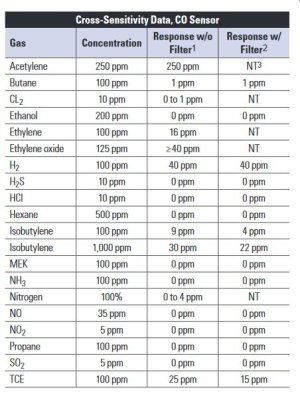
Yes, alcohols can give a false positive (the baseline for this table is 100 ppm CO, so about 2:1 for ethanol).
1756402321273.jpeg
Alcohol stoves also produce slightly more CO than other fuels, although the difference is slight and variable. Any flame can do this when it is quenched by a cold surface (the pot). The main thing is to keep a window open.

BTW, unvented space heaters are banned by the ABYC and EU IIRC. The combustion products must be sealed and vented away (smoke stack).
 
Yes, alcohols can give a false positive (the baseline for this table is 100 ppm CO, so about 2:1 for ethanol).
View attachment 198529
Alcohol stoves also produce slightly more CO than other fuels, although the difference is slight and variable. Any flame can do this when it is quenched by a cold surface (the pot). The main thing is to keep a window open.

BTW, unvented space heaters are banned by the ABYC and EU IIRC. The combustion products must be sealed and vented away (smoke stack).
Thank you, this is very helpful.
 
Methylated spirits are mostly ethanol ( as industry makes it in bulk) plus added methanol, making it 'methylated' and thus poisonous plus pyridine to make it taste foul as a warning.

Water vapour from gas cooking or even damp sets off our CO alarm, but it was worse on our old boat which had a methylated spirit ORIGO stove, so it could well be the ethanol vapour or trace methanol that was to blame. I doubt other bio fuels would be any better

A quick boil fancy kettle with semi enclosed bottom is however potentially the worst due to increased risk of incomplete combustion and we gave away the one that came with our last boat. Similar (a Jetboil) nearly killed a friend while winter climbing and boiling billie in the tent porch,
 
Last edited:
Methylated spirits are mostly ethanol ( as industry makes it in bulk) plus added methanol, making it 'methylated' and thus poisonous plus pyridine to make it taste foul as a warning....
"Common denaturants include methanol, wood naphtha, pyridine, tertiary butyl alcohol (TBA), and the bittering agent Bitrex. The specific combination and quantity of these denaturants are regulated by the Methylated Spirits Regulations 1987 to prevent human consumption and comply with tax laws, with different formulas used for industrial and domestic purposes."

The US has similar regulations, although with a much greater variety of denaturants (most are similar--butyl alcohol is probably most common, though aldehydes are also common).
 
The effect of cold water in a pan is also quite important; it cools the flame before the CO (which is always produced within the flame) can oxidize to CO2 in the outer part of the flame. Primus-type stoves used in Antarctica have somewhat longer legs on the pot stand in order to keep snow being melted for drinking water further from the flame; at the normal distance from the flame, it produces unhealthy amounts of CO. Sadly this modification resulted in at least one accident because the stove was less stable and boiling water landed on someone's legs, burning them badly! This resulted in a further modification to stabilise the setup!
 
"Common denaturants include methanol, wood naphtha, pyridine, tertiary butyl alcohol (TBA), and the bittering agent Bitrex. The specific combination and quantity of these denaturants are regulated by the Methylated Spirits Regulations 1987 to prevent human consumption and comply with tax laws, with different formulas used for industrial and domestic purposes."

The US has similar regulations, although with a much greater variety of denaturants (most are similar--butyl alcohol is probably most common, though aldehydes are also common).
In Taiwan ethanol is widely available in liquid and gel fuel form and the liquid has no obvious denaturants (at least it doesn't have a noxious smell like meths does. Havn't tried drinking it though.) This makes alcohol camping stoves (I use a Trangia knock-off I bought in Australia) quite a good option.

'd suppose I'll find out how viable they are in the UK but my memory of meths for Primus starting is not encouraging.
 
My origo on my contessa once set my CO alarm off too, when the charcoal burning heater never has. Given the stink the stove was making I was feeling a little odd anyway so the alarm made me open the cabin up for air. I've not really trusted the stove since, but it makes sense that it was probably alcohol vapours I was smelling / experiencing rather than CO as the flame burns clean. Either way lesson learnt and a vent has been installed above the stove to get rid of fumes.
 
I once tested a dozen brands of denatured alcohol for Practical Sailor Magazine. Not much help to you guys, because they were all US brands. But what I learned was:
  • Isopropanol is the lowest odor (when burning) denaturant but it increases soot on the pots. They like it for fireplaces because the flame is more visible (and hence more soot).
  • Methanol as a denaturant is low odor and low soot. Regal Flame was one.
  • Ketones and aldehydes increase soot and smell (when burning). Most hardware store brands.
  • e-NGR. used only Bitrex. Low odor while burning and low soot.
It turns out that some of the makers target decorative fireplaces and such for indoor use, where smell when burning is not tolerated. Maybe you can seek one of these out. Certainly, look at the denaturing ingredients (must be listed on SDS) and try a better burning product.

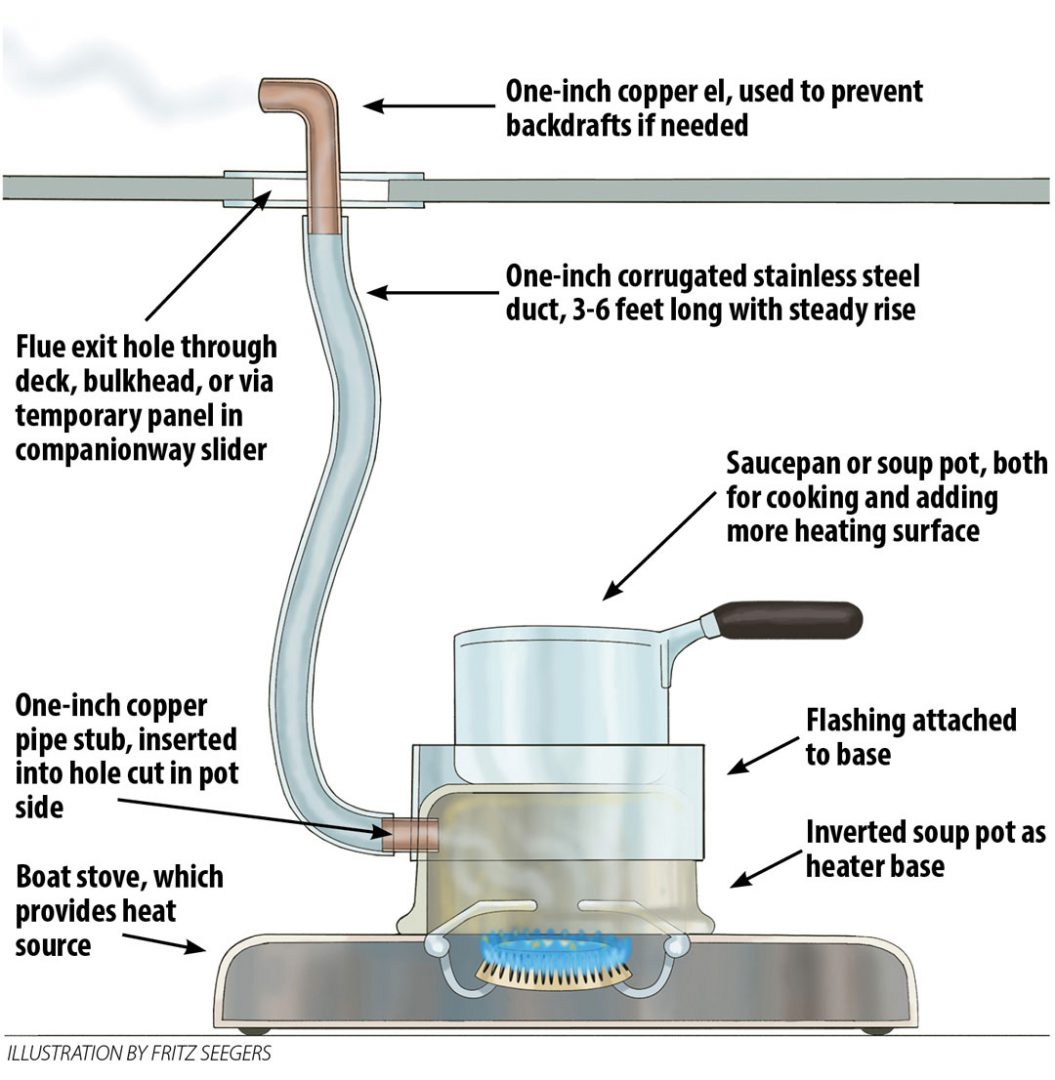
[My F-24 has an Origo stove. Mostly, though, I just use it for heat in the winter, in which case the heater is vented through a stack, so I don't smell anything. I can also warm food on it in the winter, which is really the only time I want hot food, since I day sail this boat. I recommend this system. It is a VERY effective boat heater and does not require leaving a window wide open for venting. It would work on a gas stove as well, since I first tested it on my home methane stove.]
stovetop-heater-diagram.jpg


DIYvented cabin heater based on stove.
 
Top