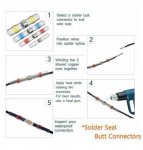
I've never really trusted them because if the wires are slightly oxidised you might not get a good solder joint. With new fresh cable they are probably OK but difficult to properly inspect the joint. I prefer either crimp or solder joints with glued heatshrink for waterproofing.
I have used them, but am not really a fan. You need clean cable, not oxidised black, and occasionally (using a mini blowtorch lighter) I have burnt through the plastic outer before the solder joint was made properly. Maybe the set of 4 sizes I got from Amazon was a cheap and nasty set, and there are better ones. One problem is you need three hands, two to hold the wires and one for the mini blowtorch. Like any solder joint, movement just as the solder solidifies can give a poor joint.
Per jwilson, I manage to damage or burn through the insulation far too often to be entirely happy with them. That said, I add heatshrink tubing for extra insulation and I've developed the trick of heating up the outer ends first to grip the wires before heating the middle to join them. Less chance of a dryjoint than just twisting and soldering wires (in my shaky hands, anyway).
I dont like crimp joints - too much experience of them pulling apart and the danger of moisture getting in. Adhesive lined heatshrink is your friend there, though.
And if you come across blackened, corroded wire, just replace it. Cut back to good bright copper if you must, as I've done on light load wiring. But the moisture that causes corrosion is wicking its way slowly along the strands of wire. It significantly increases the resistance in the wire run, causing problems later in time that are hard to find unless its carrying a high load when the cable will heat up. Alarmingly in one wire on my own boat. And the joints will always be poor.
I have a box of them, they're useful occasionally. Burning the plastic is easily avoided by using a hot-air blower (either electric or gas-catalyst) instead of a naked flame.
(But the naked flame will work, with care, which makes them a useful emergency repair device needing no other tools but a handy cigarette-smoking crew member, or failing that the galley stove lighter )
I use them all the time; van engine / fuel system & electrics, boat engine / fuel system & electrics as well as using them to repair machine tools. One thing i do to add a bit of security (depending on application) is add a length of heat shrink over the original soldered butt splice.