Soaked to the core

linksX-119

New Member
Joined
12 May 2014
Messages
5
Visit site
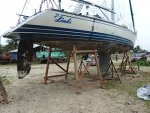
Hello all, I am the new owner an x-yacht, x-119. That has been floating on its mooring since 2005 in Pohnpei, where I currently reside. My issue is Ozmosis. And plenty of it. It has spent quite sometime collecting rain water over the last 10 years. Even with efforts made by the preveous owner to keep the bildge relativly dry it was not uncommon to find the it with a good 6" of fresh water inside.

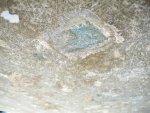
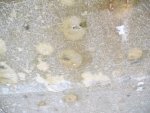
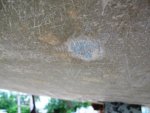
To Add to this, the yacht is a racing cruiser. So the outside laminate is very thin. Around 1/8 an inch in some places. This has meant the Hydrolisis has had no troubles reaching and wetting the core. the blisters in these photos when ground out, I could see the sweating water from the core. Its a closed foam cell core so I am optemistic it hasn't deteriated and only taken on the water. How can I tell if the core has damage? And is there any other way of telling if the core has delaminated from the inside without being inside with a small hammer doing the sound test?

So my question is. Could the boat be irepariable? Its been sugested that I must take the laminate all off back to the core. If I have to do this, could I turn the boat upside down? Remove the keel or leave it on? Is the Job totally unrealistic an the boat a throw away? The use of a crain is not an issue. Only whether it could suport itself during the role over. Which I don't know?

If I did role the yacht over and relaminate. Would just laying laminate successfully work? Or do I have to do a major vacuum bag operation to insure propper a proper build.

My fibreglass work is good but my knowlege of boat construction not so much.

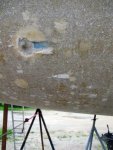
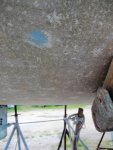
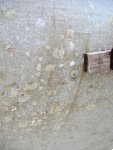
The pics are taken after the gelcoat had been ground with a gelplane. So the outside Laminate has already been removed
help is much appretiated

Vincent
IMG_1660.jpg

IMG_1660.jpgIMG_1660.jpgIMG_1660.jpgIMG_1661.jpgIMG_1664.jpgIMG_1668.jpgIMG_1670.jpgIMG_1674.jpgaaaaa.jpgIMG_1661.jpg
 
That laminate looks pretty poor,I'm afraid.It's full of voids which have no doubt encouraged all that osmosis.As always it's repairable and your idea of rolling the boat,assuming you can manage it,is good but you'll have to make sure it's an economically viable project.You'll have to open all the blisters and voids ,allow to dry thoroughly ,fill and laminate over with epoxy and glass.Then you'll need to fair the bottom which is a lot easier with the boat upside down.I'tll be a hugely labour intensive project and unless the boat was dirt cheap to begn with it may not be worth doing.
I rebuilt and even worse boat in the early 90s because I couldn't afford anything else and had the time.It's still around after all these years.
 
X-119s do hold their value well, but it will need to be pretty cheap to start with if the investment in time and materials is to be worth while.
 
I don't see any reason why you can't fix the boat. It will certainly be much easier to replace the laminate with the hull upside down. The project would probably grow to become a much larger project than you initially anticipated. Your fibreglass work is good so I would say get on and do it.
The only difficult part is getting a good enough taper join between the old and new fibreglass. (Many years ago we built a Roberts 34 and we built the hull upside down on a male mould we made.)
If I was undertaking this project I would consider removing the engine first and needless to say all the tanks (water/fuel) would be empty.
You could remove the keel but I found it handy to have something to hold onto whilst working on the upside down hull. Same applies to rudder.
You would need to remove any skin fittings in the areas you're going to be working on.
The foam core needs to be absolutely dry and if I found 'wet' areas I would be tempted to replace it to speed up the process.
The next hardest job is preventing any resin from running down on to the untouched gelcoat. So make sure it's well protected.
You may find the area around the keel stub is fine. The osmosis being only at a surface level.
It's a time consuming job but not expensive if you are able to do the work yourself.
 
You need to establish a reasonable cost of the total repair including materials, like Solvent free Epoxy resin, for the repairs, then at least 5 coats of same over the hull, followed by a high build Epoxy primer, several depending on manufacturer, top coat type, 2 pack with long chain polymers would be my choice, Sand paper and sanding disks, Acetone and any special or additional tools required, and that's just a start.There may be yard charges, transport, surveys or other costs involved.

Also note 'Closed Cell' means no water can enter it, if have a sodden section of foam it may not be closed cell, perhaps an old repair job.

Inverting the hull will not make huge difference and inverting with a keel still attached is asking for trouble.

The existing lay-up looks a bit starved or resin with some voids, typical of chopper gun too far away, or just nut fully rolled out after wetting. Do you have any pin holes on or near any sharp curves around the cockpit?

The actual repair work is pretty strait forward, but it MUST be very DRY before you start applying any new resin, or you risk trapping moisture in the hull and having to the whole job all over again in a few years, and do mean a few.

When grinding out bad areas look for a thin brownish line, follow this with the grinder to find the cause and eliminate further problems, the blister may be several inches from the cause, a tiny puddle in the laminate.

When re-glassing the holes/ ground out areas, start with a large patch and then smaller ones till almost flush and let it cure leaving a small space to fill with resin and Micro-spheres (small glass bubbles) better below the water line than Micro-balloons (resin bubbles).

Cleanliness is paramount, all contamination Must be removed prior to coating or re-coating, Acetone and only white rags has to be the most effective cleaner I have found to date and not too expensive if purchased in bulk.

Oops, 2300 hrs and I have an o530 start in the morning.

Good luck and fair winds. :)

t
 
It looks like Im faced with quite a decision here... Will the epoxy resin stick to the PVC core as well as to a roughened and clean fibreglass surface? A worry I have is getting delamination from the core when I lay the new laminate.

The boat was dirt cheap so I do have a bit of spending money. A quick calculation and it looks like I wont have much change from 20k. After buying fibreglass, paints, fairing material, 2 drums of resin, etc. Labour is cheap here, but then the humidity is high. Maybe I bake the boat dry in a tent?

X-yacht says there isn't a problem with inverting the boat. And I will do so. It looks like taking off the keel for inspection of the bolts is something that is worthwhile doing regardless of me fliping it or not. If the boat isn't fully dry when I invert it, could there be an issue with gravity pulling the water into the sides of the boat. Towards the gunwales?

What kind of taper would be recomended where the new laminate reaches the sides. Indestry standard seems 12 to 1 but I would think more like 40 to 1 would be better?

THen there vacuum bagging. Does it give a better finish, less fairing? Do I have to lay up thicker laminate if not using the vacuum bag technique to provide an equal strength? Origionally the hull was laid with 3mm of 450g CMS, at the back, tapering to 6mm at the front. I want the hull to be equally strong or stronger than origional. You know, for peice of mind 2000km from no where.

Your help is greatly appretiated. It gives me hope that the boat isn't destined to the chainsaw.
 
12 to one is perfectly adequate.Is the core well stuck to the outer laminate?Inverting the boat will probably assist evaporation.You're going to lay a new skin on so why not drill lots of holes on the existing skin to help get rid of the water and check the quality of adhesion.these can be filled with epoxy before laminating.Once everyting is nice and dry if you find spots of unstuck core you can inject epoxy resin to fill the void and restore structural integrity.
High humidity will slow down evaporation.You could always paint the bottom with a light coat of black epoxy paint to increase temperatures in the sun.Sanding it off shouldn't be too difficult.
 
I guess the bottom line is that an X-119 in decent condition can easily be worth £50k, so you've got a fair amount of leeway before it is a write-off.
 
THen there vacuum bagging. Does it give a better finish, less fairing? Do I have to lay up thicker laminate if not using the vacuum bag technique to provide an equal strength? .

Vacuum bagging will strengthen the laminate and probably save you a bit on resin (but you will have to pay for the bagging materials so you won't make an overall saving). The finish can be better but the real thing that will determine the finish is how well you lay the glass fibre.

Getting your work pattern and timing right to get the most from vacuum bagging will be an interesting challenge.
 
Last edited:
You need to investigate further before inverting the hull, any de-lamination will mean moisture migrating toward the toe rail.

You can opt to vacuum the repairs at little cost.

The taper on repairs should be as such that the new class overlaps onto what was good glass prior to grinding, so a 6 x 3 contaminated/damaged area wound be 8 x 5 minimum, more is better, this provides full cover and a ansures all contaminants are removed the area properly sealed with a good overlap onto good glass.

Keel bolts can be inspected any time, by one only checking it and replacing it before the removing the next one.

Good luck and fair winds. :)
 
If there is any chance that the existing laminate will have to come off I would be very cautious about inverting the hull with the keel still on. If a temporarily weakened hull were distorted by the weight of the keel......
 
Top