Snuffer: line size and construction

mattonthesea

Well-Known Member
Joined
28 Nov 2009
Messages
1,519
Location
Bristol
ayearatsea.co.uk
I am making a new snuffer for the cruising chute on my 32ft boat. The one I am modelling on has the control line (continuous one that hauls the mouth up and down) in 14 or 15mm diameter. Am I missing something or is this not overkill? I'd happily use this as genoa sheets on a 50ft yacht! Would it not just need to be strong enough and grip-able enough?

I do not have a sewing machine powerful enough to go through the canvas lining of the mouth. Any ideas as to what I could use to from a stiff opening? I have some hyperlon to line it with.

Thanks

M
 
Hi Matt,

Not at the boat a the moment but i believe my uphaul / downhaul is 8mm. 14mm does sound overkill.
I,ve heard some people have tried a bottom less plastic bucket to form the entrance, but haven't seen it close up so not sure how they attach.

Rich.
 
Any sewing machine will go through canvas with the right needle (generally a denim one will work). I'd agree that you're sizing lines for comfort here since 1mm dyneema is probably strong enough!
 
The line on mine is 10 or 12mm. That all you need. I tend to wear gloves (to help my hands) and that makes gripping easier.

I've got a "plastic bucket" type opening which is a nuisance when stowing it. Could you use fibreglass rod(s) in pockets round the opening. I bought a secondhand old sewing machine for £48 serviced and it goes through many layers easily. Newer machines can't do it without risking the timing getting wrecked.
 
The line on my snuffer is either 6 or 8mm. The open end is a fibreglass 'moulding'. The material itself is a bit like medium weight spinnaker material. The line runs up the inside using rings to hold it in place. At the top the line comes out of a stainless steel tube that is bent to face downwards.
Not to sure who made it; but it is around 45 years old and will possibly fail due to age rather than use.
 
Your mention of gloves would suggest that 10-12mm isn't sufficient. Most sailing string will cope with the loads even down to 2-3mm so there's little advantage to 12mm if it's still uncomfortable in use. If 14mm is the minimum for comfort then 14mm would seem to be the one to go for.

Newer machines can't do it without risking the timing getting wrecked
Newer is the wrong word here. Many new machines are perfectly happy with canvas even at the £100 price point. My partner just bought a Singer which has all metal gearing internally for about £400, not for canvas work but it copes very well. The main issue is needle size and shape.
 
Your mention of gloves would suggest that 10-12mm isn't sufficient. Most sailing string will cope with the loads even down to 2-3mm so there's little advantage to 12mm if it's still uncomfortable in use. If 14mm is the minimum for comfort then 14mm would seem to be the one to go for.


Newer is the wrong word here. Many new machines are perfectly happy with canvas even at the £100 price point. My partner just bought a Singer which has all metal gearing internally for about £400, not for canvas work but it copes very well. The main issue is needle size and shape.
I use gloves because my hands are not great (trigger finger and arthritis). The line size was OK when my hands were ok.
My wife has a newer machine capable of fancy work and the advice from the local sewing machine shop was that an old machine that did simpler stuff and was a lot better for multiple thick layers. Clearly a modern machine designed for tough work would be fine. Mine cost £48, a lot less than mending hers!
 
14mm is total overkill. 6-8mm will produce much less friction. There is very little resistance on the line so I wouldn't worry too much about your hands as long as you can actually grip the rope.

Ideally you want the line to run in its own sleeve rather than loose (or just in a few loops) in the snuffer. You need to ensure the line us not twisted around the sail material which can be tricky to sort out after switching from on gybe to another.
 
Parasailor snuffers have the downhaul split into two where it approaches the bucket and this 'bridle' attaches to two places on the bucket. Might make it easier.
Spray the bucket and the inside with your favourite silicone rigging spray.
It is said to be easier and safer to use the downhaul not by reaching up and pulling downwards, but by having it pass through a block on the foredeck and pulling up from that.
 
Ideally you want the line to run in its own sleeve rather than loose (or just in a few loops) in the snuffer. You need to ensure the line us not twisted around the sail material which can be tricky to sort out after switching from on gybe to another.

This is the feature that distinguishes those that work reliably and consistently and those that don't.
 
I am making a new snuffer for the cruising chute on my 32ft boat. The one I am modelling on has the control line (continuous one that hauls the mouth up and down) in 14 or 15mm diameter. Am I missing something or is this not overkill? I'd happily use this as genoa sheets on a 50ft yacht! Would it not just need to be strong enough and grip-able enough?

I do not have a sewing machine powerful enough to go through the canvas lining of the mouth. Any ideas as to what I could use to from a stiff opening? I have some hyperlon to line it with.

Thanks

M
Hi,
I made a snuffer for my SHE32C last season for my cruising chute which used 8mm Line (I used seperate lines for uphaul and down hall), you don’t need anything heavier.

For the opening I used a piece of thick tubing turned around on itself, some people use a waste bin.

Below are the notes and references I used for my design. They are very easy to make up
(1) cloth cut to the width of the snuffer
(2) join them all together
(3) make up another peace four inches wide to run the hole length of the snuffer on one edge sow up the inside edge
(4) put rope from the bottom to the top with a pulley
(5) reinforce the top and put webbing over to make a crown.
(6) join the two edges together
(7) at the bottom put a bit of water pipe in to make a circle with some reinforcement where the rope tube is. Sow up
Put an eye or webbing loop in for the rope to be tide to to pull the snuffer down.
IKEA waste bins

FNISS white, Waste bin, 10 l - IKEA

DIY
Building a Spinnaker Sock DIY

https://pdfslide.net/docum
 
Parasailor snuffers have the downhaul split into two where it approaches the bucket and this 'bridle' attaches to two places on the bucket. Might make it easier.
Spray the bucket and the inside with your favourite silicone rigging spray.
It is said to be easier and safer to use the downhaul not by reaching up and pulling downwards, but by having it pass through a block on the foredeck and pulling up from that.
Yes, using a ratchet block on the downhaul makes it a lot easier to pull the snuffer down.
 
Version !
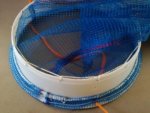
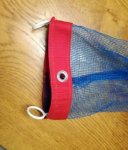
I used plastic flower pot and trimmed to size and drilled 3 mm holes around the rim.
Hand stitched on the sleeve.
The sleeve material was mulch/ onion bags that were unstiched and sewn into the tube.
Haul line was 6mm they ran externally through plastic guide rings about 1 metre apart.
Problem 1 was that the diameter of the throat was too small and caused the sail to bunch up.
Problem 2 was that the haul line twisted back on itself and jammed (either hauling up or down).
Problem 3 The sleeve material was a slippery type of net. It went up and down well, had no windage and dried quickly, but was too firm and bunched up too much up aloft.
 

Attachments

  • Neck 1.jpg
    Neck 1.jpg
    30.2 KB · Views: 11
  • half and half.jpg
    half and half.jpg
    27.8 KB · Views: 11
  • file - コピー.jpg
    file - コピー.jpg
    22 KB · Views: 11
  • file.jpg
    file.jpg
    44.7 KB · Views: 10
  • throat.jpg
    throat.jpg
    40.3 KB · Views: 10
Ideally you want the line to run in its own sleeve rather than loose (or just in a few loops) in the snuffer. You need to ensure the line us not twisted around the sail material which can be tricky to sort out after switching from on gybe to another.
Thanks everyone. I think I'm mainly sorted.

Last questions: should both the mouth uphaul and downhaul lines go inside the sock? If they do then does the uphaul go inside the line sleeve as well as the downhaul? I presume that this is to stop prolapse. If I use loops rather than sleeve then the uphaul would gather the sock evenly; if it is a sleeve then I can see some friction and bunching issues arising.

Thoughts?

M
 
Version 2
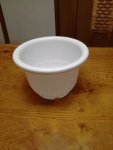
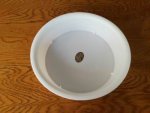
Made a large throat from a planter pot tray. Same as before (drilled 3 mm holes around the rim.
Hand stitched on the sleeve. ).
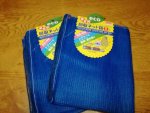
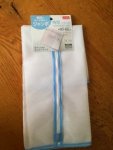
At the 100yen shop bought washing bags for sweaters, These are very light.
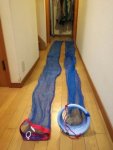
Cut off the zippers and it opened out to 70cm X 1000cm. Used 7 of these to make the sleeve.
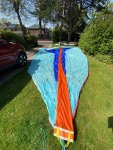
Made a smaller 50cc sleeve and sewed to the outside to take the haul lines. If one line is inside the sleeve it can twist around the sail and prevent smooth operation.
The large throat, lighter sleeve material and outer small sleeve sorted out all of the drawbacks and for 3000 yen ($30 dollars US) I have a home made sleeve that works well. $30 US all up.
 

Attachments

  • planter tray 2.jpg
    planter tray 2.jpg
    15.4 KB · Views: 5
  • washing bag.jpg
    washing bag.jpg
    26.4 KB · Views: 5
  • snuffer laid out.jpg
    snuffer laid out.jpg
    251.5 KB · Views: 6
Last edited:
Thanks everyone. I think I'm mainly sorted.

Last questions: should both the mouth uphaul and downhaul lines go inside the sock? If they do then does the uphaul go inside the line sleeve as well as the downhaul? I presume that this is to stop prolapse. If I use loops rather than sleeve then the uphaul would gather the sock evenly; if it is a sleeve then I can see some friction and bunching issues arising.

Thoughts?

M
I was advised by a sailmaker to put the Uphaul and down hall lines outside of the main sleeve, and that is how it’s done on most of the professional sniffers I looked at on YouTube. It should stop them getting entangled up in the Cruising Chute. I don’t think using loops is a good alternative as it will tend to bunch.
Other Tips.. use proper sailing thread which is UV resistant and webbing tape to strengthen.

Here is a picture of mine which my wife helped test from the upstairs window !
 

Attachments

  • 6F5B5448-14C5-45C1-BDA8-05A2C0C3D8B9.jpeg
    6F5B5448-14C5-45C1-BDA8-05A2C0C3D8B9.jpeg
    910 KB · Views: 19
  • A1CE69FA-2748-449F-A981-0C3CAD740CE4.jpeg
    A1CE69FA-2748-449F-A981-0C3CAD740CE4.jpeg
    589.6 KB · Views: 19
Being a singlehanded sailor who loves setting the spinnaker, I am puzzled why so many people think they need a snuffer for their spinnaker. The trick to drop a spinnaker is to clip the sheet down with a snatch block at the aft end of the coachroof before tripping the guy. This holds the sail behind the mainsail, so is depowered and easy to gather the foot. I then slip the halyard with one turn an the winch and it drops straight into the cockpit. Unfurl the genoa and then sort the boat out.
 
Using a snuffer. Singlehanded.

I have a gennaker so I run simple home made bowsprit.
Usually I run a port and starboard sheet down to the bow, but only connect one.
I originally packed the sail in a spinnaker bag, but had some trouble with haul lines on the wrong side of the sail when hoisted.
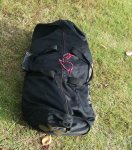
I noticed on the internet that many sailmakers supply bags that open horizontally, so I pulled out one of daughter's old basketball duffle bags and use that.
It has clips fore and aft that clip to the toe rail.
The sail is easy to pack and comes out very smoothly.

As recommended on one of the you tube vids, to gybe, I pull down the snuffer. Connect the other sheet, swing the whole lot across in front of the forestay and unfurl. No drama, no flogging sail, no wineglass and quite fast to handle.

PS, eebygum. We seem to have had a very similar experience. My wife helped out in the same way.

gary
 

Attachments

  • Bowsprit.png
    Bowsprit.png
    753.5 KB · Views: 12
  • IMG_20211021_090133.jpg
    IMG_20211021_090133.jpg
    197 KB · Views: 11
  • Bag.jpg
    Bag.jpg
    375.3 KB · Views: 11
Top