Smelly Heads

Baddox

Well-Known Member
Joined
1 Mar 2010
Messages
1,479
Location
Sunny Northumberland
Visit site
I was nearly knocked out with the sulphurous smell today. All I wanted was to flush the heads through unused as it had been sitting with a drop of bleach in for three weeks. It was OK until I pumped the Jabsco to flush in the fresh water.
Posts on here suggest a problem with the pipework, but there was no smell until the replacement water made an appearance. I’ve used other boat heads which have some odour but nothing compared to today’s noisome miasma.
Was it just the warm weather causing sea-water bugs to fester in the inlet pipe downstream of where the seacock was closed?

Any suggestions for cause or cure?
 
I was nearly knocked out with the sulphurous smell today. All I wanted was to flush the heads through unused as it had been sitting with a drop of bleach in for three weeks. It was OK until I pumped the Jabsco to flush in the fresh water.
Posts on here suggest a problem with the pipework, but there was no smell until the replacement water made an appearance. I’ve used other boat heads which have some odour but nothing compared to today’s noisome miasma.
Was it just the warm weather causing sea-water bugs to fester in the inlet pipe downstream of where the seacock was closed?

Any suggestions for cause or cure?

The problem is nearly always caused by the inlet water being foul rather than anything in the bowl or in the output side. The guaranteed cure is easy and cheap if you have an inlet strainer. I'll look for the threads. OK, it's all in post #19. http://www.ybw.com/forums/showthread.php?432535-Heads-inlet-pipe-smell :)

Richard
 
Last edited:
I have a similar problem. I fail the bowl with fresh water from a bucket and pump the bowl dry. I get an immediate foul snell that dissipates through the open hatch. I've done it three times and no real change. Could it be something in the inlet pipe, which is currently open to atmosphere?
 
I have a similar problem. I fail the bowl with fresh water from a bucket and pump the bowl dry. I get an immediate foul snell that dissipates through the open hatch. I've done it three times and no real change. Could it be something in the inlet pipe, which is currently open to atmosphere?

It's faecal matter in the inlet side which comes from the pump and bore. You would probably need to pump it for hours to stop it forming next time the toilet is left unused. The permanent solution is in the link in post #3. :)

Richard
 
The solution is easy and two-fold.

(1) Pump a lot when you've had a crap, then wait a bit for the cloud of fish food to disperse (takes a long time in still water, thirty seconds in a good current) and pump a lot more. More than you'd think necessary, then some.

(2) When leaving the boat, pump a lot without having used the toilet.

The general guidance I give to people on my boat is 30 - wait - 30 strokes of the pump for a jobby and 50 strokes of the pump at the end of a trip to clean things out.
 
Hydrogen sulphide H2S. It's a waste product of anaerobic bacteria - and natural.

What you have done is to seal off sea water. The aerobic bacs have used up all the oxygen. Now the conditions become good for the anaerobes.

As folk say, on arrival to the boat open the valves and give a damned good flush. Ventilate boat. Thereafter regular generous flushing will have the bog smelling of roses. No need for harmful products, or replacement of pipes.
 
I used to have this issue and tried all sorts of in line gadgets, without success!

My regime now is to give a thorough flush before I leave the boat (37 pumps in my case - Jabsco manual says how many pumps per mtr of pipe). And then fill the bowl with fresh water and pump that out. Never had the problem since :)
 
The smell can occur with a brand new boat where the toilet has never been used except to test flush it: it is bugs dying in the inlet pipe. Since fitting a small Jabsco strainer midway through the inlet pipe and using a cistern block in the midde of the gauze filter inside this strainer the smell is pretty much cured. Most supermarket cistern blocks eg "Bloo" are slightly too big so you have to cut them down, but they last about 6 weeks. The really cheap own-brand versions don't last as long. https://www.jabscoshop.com/images/46400-0004.jpg.axd?width=750&cache=always&scale=both is the strainer.

You can buy fancy sanitiser kits that do the same thing, but the strainer is about £10 plus jubilee clips.

If I was fitting out a boat from scratch I'd fit an engine-inlet-sized Jabsco strainer somewhere accessible but above the waterline, and put in blocks without having to cut them down.
 
Last edited:
The smell can occur with a brand new boat where the toilet has never been used except to test flush it: it is bugs dying in the inlet pipe. Since fitting a small Jabsco strainer midway through the inlet pipe and using a cistern block in the midde of the gauze filter inside this strainer the smell is pretty much cured. Most supermarket cistern blocks eg "Bloo" are slightly too big so you have to cut them down, but they last about 6 weeks. The really cheap own-brand versions don't last as long. https://www.jabscoshop.com/images/46400-0004.jpg.axd?width=750&cache=always&scale=both is the strainer.

You can buy fancy sanitiser kits that do the same thing, but the strainer is about £10 plus jubilee clips.

If I was fitting out a boat from scratch I'd fit an engine-inlet-sized Jabsco strainer somewhere accessible but above the waterline, and put in blocks without having to cut them down.

If you buy these blocks or similar (hundreds on eBay with different flavours!) https://www.ebay.co.uk/p/Urinal-Cha...aner-500g-Postage/1188353437?iid=231048469714 they fit the Jabsco strainer perfectly. I put two in side by side and have had the same two blocks in for 3 years now so don't buy too many.

Since the day I popped them in the strainer I have not had a single smell. No fancy pump through at the end of the season required. :)

Richard
 
I've never had a problem with smells on current or previous boat, but always pump through more water than is neccessary to clear whatever you've put down the toilet. On leaving close inlet pipe, then flush through with fresh water from the tank two or three times along with cheap disinfectant.
On each boat I've also changed all the inlet and outlet pipes when I first bought the boat.
Andrew
 
We have tried to limit the use of the bog onboard for number 2 which I think does cause most of the problem.

Our leaving the boat regime has been fairly strict, having cleaned round the whole area, pump through with copious salt water and then empty, fill with fresh water, add some ecover bog cleaner & pump through, add another generous dash of ecover in the remaining water, pump and leave.

ON arriving, pump through fully, leave hatch open as there is still a minimal smell then load the rest of the gear on board.
 
I fitted a syphon break in the inlet hose some years ago for different reasons, but this has reduced the sulphurous smell, which is now negligible.
 
I fitted a syphon break in the inlet hose some years ago for different reasons, but this has reduced the sulphurous smell, which is now negligible.

That is because the hydrogen sulfide that people can smell ( and it is "smellable" at very low concentrations) is produced by the action of anaerobic bacteria on sulfates in the water. Open the system to the air and the anaerobic conditions won't exist so no hydrogen sulfide will be formed.
 
I fitted a syphon break in the inlet hose some years ago for different reasons, but this has reduced the sulphurous smell, which is now negligible.

I assume that you're not talking about the inlet hose from the seacock, which I believe the previous posts are referring to, as you can't put a syphon break vent in that one so can't introduce any air. :confused:

Richard
 
Thanks for all the guidance, links and advice. It does appear as suggested, that the water left in the sealed, supply pipes has bugs that have gone anaerobic. For anyone interested, once bugs use all the dissolved oxygen they start on other sources of oxygen such as that in sulphate, leaving the sulphur behind in the form of smelly sulphides.

I called down to the boat after work this evening and fitted a Jabsco service kit to the heads and pump. All the gaskets and o-rings were in good order but I replaced them anyway since they were out and it’s not a job I relish.
I removed the hose from the seacock and both it and the water smelled OK. However, the breakthough came when removing the other end of the pipework where the pump supplies the heads, it was stinking.
Step 2 for tomorrow is to buy and fit the Jabsco strainer / loo blu holder next to the seacock to sanitise the water upstream from there.
 
A solution I found on one thread in the past worked for me when my Jabasco started smelling. The pump is effectively two chambers separated by a neoprene washer. Fresh water one side foul the other. When the the pump gets "dry" cross contamination of the two chambers occurs causing the foul water to get into the flushing water hence the reactions described already. The top of the pump needs to be taken off and the pump cylinder and neoprene washer cleaned. Then grease it with silicon grease and re-assemble. I bought my boat 7 years ago and the 2nd year the the pump got a bit stiff and the heads started smelling. I cleaned and greased the pump and it has been smell free since. I used silicon grease from a plumbers shop.
 
I've research this and other head topics with side-by-side equipment and published numerous articles. In this case, the solution is simple and requires just a little understanding of chemistry.

No disinfectants. Most are harmfull to the materials and pouring them in the bowl doesn't get them where you need them anyway. IT will only make things worse.

The source of the sulfur is not marine organism in the sense you think. It can be. Something can get through and jam under lip. But this is minor. An inlet strainer is a good idea for other reasons, mostly to do with jamming on seaweed.

It's not fecal matter, not if the pump is in any decent shape. Yes there is some, but a trivial amount.

The source of the sulfur is the seawater you flushed with (seawater is very high in sulfate). In the absence of air (you've been away from the boat) facilitative bacteria (from marine growth and fecal matter) use the sulfate as a source of oxygen, reducing the sulfate (reducing in the chemists sense, which mean changing the oxidation state, not the amount) to sulfide, hence the smell. Once you flushed a few times it does not soon recur, because this reaction takes a few days.

The solution? Two fold. First, flush with freshwater whenever practical, or at least before you leave the boat for a while (it is only the last flush that matters). This will clear part of the system and reduce the problem. Second, spray a diluted additive with nitrate (Odorlos), which serves as an alternate oxygen source, in preference to sulfate. However, none of these are perfect, because there is always some hose near the seacock that is not flushed.

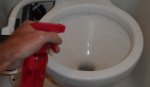
bowl+cleaner+low+res.jpg

http://sail-delmarva.blogspot.com/2016/10/something-lazy-something-free.html

Oh well. Not perfect, but better.
 
It's not fecal matter, not if the pump is in any decent shape. Yes there is some, but a trivial amount.

The source of the sulfur is the seawater you flushed with (seawater is very high in sulfate). In the absence of air facilitative bacteria (from marine growth and fecal matter) use the sulfate as a source of oxygen.

Oh well. Not perfect, but better.

:confused:

If you just put seawater in a bottle with no air and leave it, the sulpide smell will not develop.

Faecal matter is the key and the urinal block in the strainer, on my boat anyway, was a 100% perfect cure, no matter how long the boat is left for in the Med heat. You can't actually see any colour from the block nor smell any toilet block. The only downside is that you have to remember to place the blocks with the curved side facing the outlet vents in the back of the filter or they can act as a one-way valve and stop the pump flushing properly.

As I only have to replace the blocks every few years and they're as cheap as chips anyway, it's a zero-effort no brainer. :)

Richard
 
Last edited:
Top