
You are using an out of date browser. It may not display this or other websites correctly.
You should upgrade or use an alternative browser.
You should upgrade or use an alternative browser.
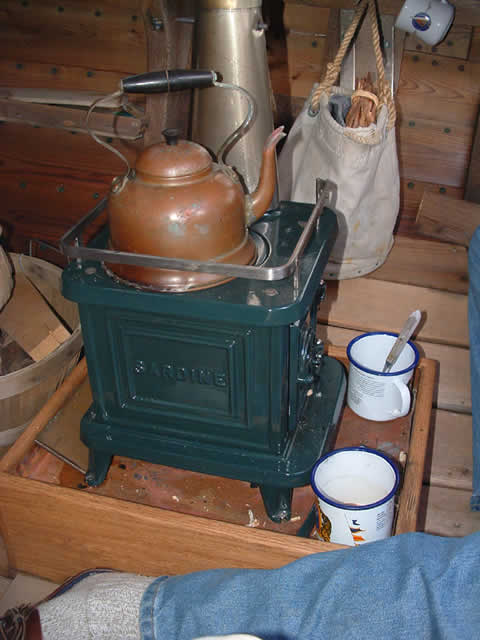
small wood burner in fiber glass boat
- Thread starter Seahallknowhall
- Start date


V1701
Well-Known Member
Here's a lengthy thread from a year ago covering pretty much all the bases. If you decide to go for blown air & can afford it, this might be your best bet - compact & significantly cheaper than an Eberspacher system (still £1k though) but paraffin not diesel - another Albin Vega owner has one & rates it highly, there's not much room to play with on the Vega. Also the blown air units need electricity for the initial warm-up & for the fuel pump, I had one (Eber D2) on last boat & didn't like it at all for long term use living aboard. If you decide to go charcoal, there's quite a few options, least expensive of which the Pascall Atkey Pansy stove at £500 & looks quite nice, many happy users, some consider them messy/dirty though. Another option for occasional use would be an Origo Heatpal, but that's standalone meths heater/stove & will produce moisture. If you have mains electric I prefer oil filled rads as they don't go cold when they cycle off, quieter & more economical (no fan) to use than a fan heater...

Kelpie
Well-Known Member
another Albin Vega owner
*cough* my ears are burning.
By the way, I've tried running the Wallas on domestic heating oil, as it's considerably cheaper than paraffin. It works, but I'm not convinced it's good for the burners, and I think it may smell a bit sootier. So I've gone back to proper clear paraffin. In a whole season you really don't go through much of the stuff. If I was sailing over the winter it might be different I suppose.
Still use heating oil in my Optimus stove in the galley, by the way.

Kilter
Well-Known Member
Here's another thread
http://forum.woodenboat.com/showthread.php?70742-Pansy-Heater&
I had one of these on my Tradewind 33 and it kept everything cosy and dry
http://forum.woodenboat.com/showthread.php?70742-Pansy-Heater&
I had one of these on my Tradewind 33 and it kept everything cosy and dry
Spuddy
Well-Known Member
A bit more anecdotal : two of the liveaboards in the marina use wood burners and one has a charcoal stove. All three are grp. A friend with same model 27' grp boat as mine has used a wood burner for years while living aboard; meant losing half a berth but the dog took it up anyway.
Noen of them had any problems.
Noen of them had any problems.

Bobobolinsky
Well-Known Member
My FRP boat had a SF heater and only half the galley it has now. I was told that the heater was not for sale with the empty hull I bought and it was removed before I bought the boat, but it had been in for 7 or 8 years. If I had the space, I would have a taylors, but it's an oil filled rad or the Hydronic
rob2
Well-Known Member
I have a friend in a thatched cottage with a multifuel heater. Unfortunately, his insurers won't let him use it as there have been quite a number of chimney fires. Apparently if you're burning wood and close the damper down, the lower flue temperature causes resins to line it and next time you let some air in, it catches light. So, I'd advise anyone using such a stove to consider brushing the chimney from time to time!
Rob.
Rob.

Croak
Well-Known Member
This forum is usually quite good for not spouting nonsense.
chrishelen
N/A
Well as said Glass reinforced PLASTIC that your boat is made of burns very well. But if you have ever seen a GRP boat that has burnt you will notice the glass art of GRP remains intact and unburnt. It is the resin that burns.
If I were to want a heater (35degrees yesterday) then I would go to a scrap metal yard looking for steel square tubing around 15 by 20 cms and you want about 40 cms of it. Drill and fit steel bars through the body about 10cms from the bottom for a grate. Get a piece of heavy steel to cover the top. Making a filling lid and possible hot plate. You will need a way to keep it cntred and in place and a way to be able to lift it open for filling.
Another lighter steel plate for the bottom with turn up to make an ash tray.
Drill holes around the sides near the bottom for ventilation and make some way of variable covering of the holes to adjust draft. You might be able to find some fireproof glass and cut a hole for a window in the front so you can see the fire.
At the back and top you need to fit a steel water pipe type elbow of around 50mm diameter for a chimney. From there you need a flue either going straight up to the cabin roof or possibly bending to go aft to the bulkhead for an exit.
Mount it low on the floor or against a bulkhead and insulate the boat structure against the heat. It should be good for small wood or charcoal. Depending on how big you make it.
Just a few thoughts but no idea really olewill
Aussie fella turned up at our club in his 27ft plastic boat(appache?) a few weeks back,sailed from the med via the caribbean. he made a heater out of an old calor gas bottle in Antigua, cut the front 3rd off to make a door on hinges,welded part of an exhuast pipe as a chimney, and had some sort of copper pipe coil in there to heat his water.
I sat having a cup of tea with him on board one cold night and the fire chucked a fair bit of heat out, we had to keep the hatch open. mind you the whole thing was a bit Heath Robinson, his fuel was driftwood btw.
Last edited:
oldfatgit
Well-Known Member
There is a code of practice, useful summary here http://www.soliftec.com/Boat Stoves 1-page.pdf
William_H
Well-Known Member
Boat stove
Thanks Oldfatgit for the link to the code of practice. You had better modify some of my suggestions for a home made stove to fit the code. I imagine however for a smaller stove a smaller flue pipe diameter could be used. I like the idea of using an old gas cylinder. Would need to cut the top off to fit a flat hot plate but a good solid lump of iron to start with. olewill
Thanks Oldfatgit for the link to the code of practice. You had better modify some of my suggestions for a home made stove to fit the code. I imagine however for a smaller stove a smaller flue pipe diameter could be used. I like the idea of using an old gas cylinder. Would need to cut the top off to fit a flat hot plate but a good solid lump of iron to start with. olewill

penfold
Well-Known Member
Wood isn't a practical fuel as the energy density is low, so you need to tow a bunker barge around behind you. Solid fuel can be cosy; I spent December 2006 in Peterhead marina living on a friend's boat, howling arctic gales and snow but the stove kept me warm. Messy though, you need a vacuum cleaner or a lot of patience with a dustpan and brush.
oldfatgit
Well-Known Member
The stove shown here could form the basis of a stove with a smaller flue diameter http://www.ebay.co.uk/itm/GYPSY-CAR...tEquipment_Accessories_SM&hash=item2a26c5223f
Graham_Wright
Well-Known Member
I like the idea of using an old gas cylinder. olewill
Friend of mine did that. Looked very neat. Came complete with first load of calories.

Croak
Well-Known Member
Wood isn't a practical fuel as the energy density is low, so you need to tow a bunker barge around behind you. Solid fuel can be cosy; I spent December 2006 in Peterhead marina living on a friend's boat, howling arctic gales and snow but the stove kept me warm. Messy though, you need a vacuum cleaner or a lot of patience with a dustpan and brush.
You don't need to carry it with you, it can be found on most beaches. (Don't start on about free radicals.)