Sidepower sidethruster

Montemar

Well-Known Member
Joined
17 Jan 2011
Messages
832
Location
Dorset
www.voltloudspeakers.co.uk
A friend has just had a Sidepower sternthruster installed. It operates at 24v from two 12v batteries in series which are charged in parallel at 12v.
When operated it draws 170A one way which is correct but 230A the opposite way which blows the fuse.
Some wrangling is ensuing about who is paying for what, faulty parts, installation or wear and tear!
When changing the direction of the thruster is this simply a reversal of the polarity of the supply to the motor?
Does anyone have any ideas about what could be causing his problem?
 
Are you letting the motor stop before reversing, also don’t touch anything if it’s a new install get them on it
 
You could talk to Sleipner UK
Bryn Thomas is one of the engineers - he is a motor boater himself so easy to talk to.

BTW - I don't understand your explanation of the batteries.
Yes, I get the 24v from two batteries in series driving a 24v thruster.
But whats all this "charged in parallel at 12v" mean?
 
You could talk to Sleipner UK
Bryn Thomas is one of the engineers - he is a motor boater himself so easy to talk to.

BTW - I don't understand your explanation of the batteries.
Yes, I get the 24v from two batteries in series driving a 24v thruster.
But whats all this "charged in parallel at 12v" mean?
I’d also have Simon Blackaller on your phone contacts, he’s the most helpful and knowledgeable chap I’ve come across in the boating world. What he doesn’t know about stabs and thrusters is not worth knowing.
 
You could talk to Sleipner UK
Bryn Thomas is one of the engineers - he is a motor boater himself so easy to talk to.

BTW - I don't understand your explanation of the batteries.
Yes, I get the 24v from two batteries in series driving a 24v thruster.
But whats all this "charged in parallel at 12v" mean?
Thanks, I pass on what I was told by my yottie friend but I assume his charging system is for the usual 12v system on his yot and not up to 24v charging. It does sound prone to problems. He has some kind of parallet/series switching set up. Suspect he should have had a 12v thruster if they exist.
 
You could talk to Sleipner UK
Bryn Thomas is one of the engineers - he is a motor boater himself so easy to talk to.

BTW - I don't understand your explanation of the batteries.
Yes, I get the 24v from two batteries in series driving a 24v thruster.
But whats all this "charged in parallel at 12v" mean?
He'll no doubt tell us but my guess is he has 12 volt electrics and a 24 volt thruster to reduce current draw. I have the same.
 
You could talk to Sleipner UK
Bryn Thomas is one of the engineers - he is a motor boater himself so easy to talk to.

BTW - I don't understand your explanation of the batteries.
Yes, I get the 24v from two batteries in series driving a 24v thruster.
But whats all this "charged in parallel at 12v" mean?

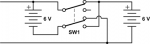
This is a Vetus series/paralled switch that will drive a 24 VDC thruster but charge fro 12VDC when thruster is not being used.

Vetus Series parallel switch for 24 volt thruster with 12 vo (Vetus BPSPE)

1597318859011.png

this is 6 V or 12 V batteries but 12 V /24 V will be the same setup
 
Thanks, I pass on what I was told by my yottie friend but I assume his charging system is for the usual 12v system on his yot and not up to 24v charging. It does sound prone to problems. He has some kind of parallet/series switching set up. Suspect he should have had a 12v thruster if they exist.
My boat is 12v but the Sleipner thruster is 24v, I have an extra battery and switches to cope. Works fine for me.
 
This is a Vetus series/paralled switch that will drive a 24 VDC thruster but charge fro 12VDC when thruster is not being used.

Vetus Series parallel switch for 24 volt thruster with 12 vo (Vetus BPSPE)

View attachment 96630

this is 6 V or 12 V batteries but 12 V /24 V will be the same setup
Having installed my own 24v thruster motor replacing the original 12v Sidepower motor so I could have proportional control I was interested to see that there's a switch to handle the situation on a 12 volt system.

If ever there was an example of boat prices, there it is. £869 incl VAT. I achieved the same thing with a couple of £30 solenoids from Winch It and a simple fused charging circuit.

Winch Solenide Heavy Duty Upgrade 12/24V Ring Terminals | Winch It
 
Thank you. My friend is looking to the installer to sort it out. It’s a shame he does not have the technical knowledge to diagnose the problem. The assumption is that the thruster is faulty but I would not rule out the switching/charging system
 
Having installed my own 24v thruster motor replacing the original 12v Sidepower motor so I could have proportional control I was interested to see that there's a switch to handle the situation on a 12 volt system.

If ever there was an example of boat prices, there it is. £869 incl VAT. I achieved the same thing with a couple of £30 solenoids from Winch It and a simple fused charging circuit.

Winch Solenide Heavy Duty Upgrade 12/24V Ring Terminals | Winch It

Yes I agree as shown in in pic you only need a double pole changeover. The issue is finding one with a high enough current capacity

How did you wire up the winchit solenoids as I have to write up a 24vcd winch on my mainly 12 Vdc boat
 
Yes I agree as shown in in pic you only need a double pole changeover. The issue is finding one with a high enough current capacity

How did you wire up the winchit solenoids as I have to write up a 24vcd winch on my mainly 12 Vdc boat
That's a story in itself but the key thing is that the extra battery stands in isolation and is only connected in series with the original one by solenoid when needed, pos of old to neg of new, then pos of new to the reversing solenoid which runs the thruster. Boat neg must never go anywhere near neg on the new battery to avoid any possibility of a short if a solenoid fails open or closed. The extra battery is trickle charged through a pair of lightly fused wires with light bulbs in circuit on each as resistors, a method I earned from a web article.

The solenoids are 500 amp, way plenty for a 4hp 3kw thruster on 24 v, about 125 amps.
 
That's a story in itself but the key thing is that the extra battery stands in isolation and is only connected in series with the original one by solenoid when needed, pos of old to neg of new, then pos of new to the reversing solenoid which runs the thruster. Boat neg must never go anywhere near neg on the new battery to avoid any possibility of a short if a solenoid fails open or closed. The extra battery is trickle charged through a pair of lightly fused wires with light bulbs in circuit on each as resistors, a method I earned from a web article.

The solenoids are 500 amp, way plenty for a 4hp 3kw thruster on 24 v, about 125 amps.


Ok thanks for that
 
Top