Neeves
Well-Known Member
I am posting as a separate thread as it will be easier to find the thread using the YBW search facility without the information being buried under an unrelated topic.
As part of my ongoing development of snubbers I had been side tracked into splicing dyneema. Some of the splices did not have a long bury, for a variety of reasons, and I have been sewing the bury with dyneema fishing line. I was concerned that the stitching was vulnerable and thought to protect the stitching with a shrink cover. I had been persuaded to use shrink covers as the ends of the climbing rope I bought had sewn eyes and shrink covers. Sourcing shrink covers for rope was relatively easy, simply google and a number of sources were unveiled. However shrink covers for rope are NOT to be confused with shrink covers for wiring they are different animals.
I should add - the shrink cover I have bought is intended, I think, to be shrunk with a heat gun, sort of fancy hair dryer. I find the covers shrink in boiling water which provides a controlled maximum temperature of ... 100c.
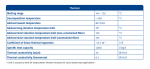
I contact technical support on the Dyneema website and received this answer:
I subsequently contacted Marlow asking the same question, but of different textiles, and received this answer:
Hi Jonathan,
The brief heat involved in shrinking heat shrink sleeves onto ropes wouldn’t normally be enough to cause any noticeable reduction in performance. On Nylon and polyester this is done as a matter of routine on ropes used for climbing and industrial access. These ropes are tested and certified with the heat shrink ID sleeves.
In the factory here we use a hot air ‘gun’ to shrink sleeves, this isn’t hot enough to harm Nylon or polyester unless it’s used incorrectly. We do also shrink sleeves onto HMPE/Dyneema ropes, if done badly this can leave a mark on the rope so we often mask off the area adjacent to the heat shrink with heat resistant cloth when shrinking.
I wouldn’t recommend shrinking sleeves with a blow torch as this does have the potential to damage ropes.
One other point to consider is where the sleeve is positioned. Most often this will be at the free end of a rope for ID, in which case this section of the rope is unlikely to see any loading in use. Or the sleeve is positioned at the throat of a splice in which case it’s a section of the rope that has increased volume and strength compared with the remaining length and so even if there were a small strength effect it doesn’t create a weakness in the system overall.
Regards,
Both companies replied quickly.
My sources of Dyneema have been various, some has been simple 12 braid and some has been offcuts from damaged dyneema ropes (where the cover has been worn) and I have stripped the covers off. Marlow are cautioning use, but not recommending against use, of shrink covers in the middle of a length of rope (where some might consider adding a shrink cover for protection against abrasion). I have been using braided dyneema tape for abrasion protection and, again, sewing the ends. I have used the same, hollow, tape to join 2 sheets together and then cow hitching the space I have left between the 2 sheets for a low profile, slippery join - that does not catch (on anything).
As I mentioned this is an extension of work I was doing on snubbers. One use, suggested by others, for dyneema is a soft shackle for attaching a snubber to the rode. I prefer chain hooks of some description or other. With HT 6mm chain I have found trying to thread 6mm 12 braid dyneema through the aperture of the links simply too difficult and impossible in the dark, rain and with a bit of chop. A steel hook etc can be simply dropped onto the chain and if kept under light tension does not fall off. 6mm 12 braid has the same strength as the chain, and much stronger than the snubber - but down sizing the dyneema to 3mm or 4mm (which might be easier to thread through the 6mm link) which has the same approx strength of the snubber offers a very thin connection - which is an act of faith I think un-necessary.
Jonathan
As part of my ongoing development of snubbers I had been side tracked into splicing dyneema. Some of the splices did not have a long bury, for a variety of reasons, and I have been sewing the bury with dyneema fishing line. I was concerned that the stitching was vulnerable and thought to protect the stitching with a shrink cover. I had been persuaded to use shrink covers as the ends of the climbing rope I bought had sewn eyes and shrink covers. Sourcing shrink covers for rope was relatively easy, simply google and a number of sources were unveiled. However shrink covers for rope are NOT to be confused with shrink covers for wiring they are different animals.
I should add - the shrink cover I have bought is intended, I think, to be shrunk with a heat gun, sort of fancy hair dryer. I find the covers shrink in boiling water which provides a controlled maximum temperature of ... 100c.
I contact technical support on the Dyneema website and received this answer:
- Temperature resistance in below table: short time exposure to 130oC is not an issue. So boiling water in several minutes is ok.
I subsequently contacted Marlow asking the same question, but of different textiles, and received this answer:
Hi Jonathan,
The brief heat involved in shrinking heat shrink sleeves onto ropes wouldn’t normally be enough to cause any noticeable reduction in performance. On Nylon and polyester this is done as a matter of routine on ropes used for climbing and industrial access. These ropes are tested and certified with the heat shrink ID sleeves.
In the factory here we use a hot air ‘gun’ to shrink sleeves, this isn’t hot enough to harm Nylon or polyester unless it’s used incorrectly. We do also shrink sleeves onto HMPE/Dyneema ropes, if done badly this can leave a mark on the rope so we often mask off the area adjacent to the heat shrink with heat resistant cloth when shrinking.
I wouldn’t recommend shrinking sleeves with a blow torch as this does have the potential to damage ropes.
One other point to consider is where the sleeve is positioned. Most often this will be at the free end of a rope for ID, in which case this section of the rope is unlikely to see any loading in use. Or the sleeve is positioned at the throat of a splice in which case it’s a section of the rope that has increased volume and strength compared with the remaining length and so even if there were a small strength effect it doesn’t create a weakness in the system overall.
Regards,
Both companies replied quickly.
My sources of Dyneema have been various, some has been simple 12 braid and some has been offcuts from damaged dyneema ropes (where the cover has been worn) and I have stripped the covers off. Marlow are cautioning use, but not recommending against use, of shrink covers in the middle of a length of rope (where some might consider adding a shrink cover for protection against abrasion). I have been using braided dyneema tape for abrasion protection and, again, sewing the ends. I have used the same, hollow, tape to join 2 sheets together and then cow hitching the space I have left between the 2 sheets for a low profile, slippery join - that does not catch (on anything).
As I mentioned this is an extension of work I was doing on snubbers. One use, suggested by others, for dyneema is a soft shackle for attaching a snubber to the rode. I prefer chain hooks of some description or other. With HT 6mm chain I have found trying to thread 6mm 12 braid dyneema through the aperture of the links simply too difficult and impossible in the dark, rain and with a bit of chop. A steel hook etc can be simply dropped onto the chain and if kept under light tension does not fall off. 6mm 12 braid has the same strength as the chain, and much stronger than the snubber - but down sizing the dyneema to 3mm or 4mm (which might be easier to thread through the 6mm link) which has the same approx strength of the snubber offers a very thin connection - which is an act of faith I think un-necessary.
Jonathan