Should a through hull have an integral seacock?

Polly1

Well-Known Member
Joined
2 Nov 2009
Messages
110
Location
Singapore
Visit site
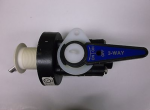
Like this one
snip_20180122104420.png

Pros, one less joint to leak
Cons cant replace it if it fails without removing the through hull.

I am going to replace all the rather greenish though hulls on my ageing fiberglass yacht soon and was just wondering which to go for.
Thanks
 
Like this one
View attachment 68680

Pros, one less joint to leak
Cons cant replace it if it fails without removing the through hull.

I am going to replace all the rather greenish though hulls on my ageing fiberglass yacht soon and was just wondering which to go for.
Thanks
 
I winder what make the ‘greenish through hulls’ are? I had a classic yacht once, built by Camper and Nucholson’s In 1960 and the through hills were barely visible under the green. I removed them and cleaned them up and underneath the verdigris they were as good as new. They were Blake’s and as solid and good as the day they were first fitted.

If you want to change them for your peace of mind, and the old ones are Blake’s, may I have them please?

And the answer to your question is, “Yes, I believe all through hulls should have a sea-cock .”
 
Like this one
View attachment 68680

Pros, one less joint to leak
Cons cant replace it if it fails without removing the through hull.

I am going to replace all the rather greenish though hulls on my ageing fiberglass yacht soon and was just wondering which to go for.
Thanks

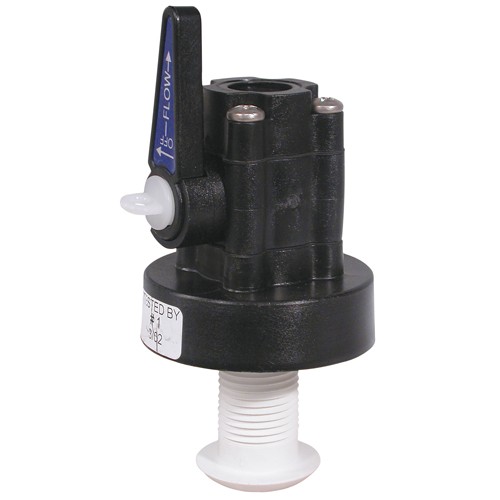
The Forespar seacock in your picture is able to be replaced with the boat in the water, that is the benefit of the design. I did it last summer with the engine water intake. If you can get the supplied plug (in the handle) in the skin fitting on the underside, even better as that bungs it completely allowing the four bolts to be undone and replaced with the new valve. Took all of 2 minutes start to finish. Even if you could not bung from the underside, the water ingress would be minimal. Throughout the entire process the skin fitting and mounting plate remain rock solid.
 
If the originals are merely green clean them up and inspect them. If sound and not showing any signs of dezincification they may be good for many more years of service especially if made of bronze.
 
If the originals are merely green clean them up and inspect them. If sound and not showing any signs of dezincification they may be good for many more years of service especially if made of bronze.


Was just going to say the same thing :encouragement:
 
the one in your picture looks rather like a speed transducer.

??

It's a Forespar marelon seacock:

Forespar%20Marelon%20Sea%20Cock%20NO%20tail.jpg


Pete
 
Also look at the TruDesign range. They resemble the familiar skin fitting + ball valve arrangement and I believe can be fitted as direct replacements

http://www.trudesignmarine.com/

+1

I changed our skin fittings, seacocks and tails for Trudesign and the valves can be operated with one finger even after several months in one position, unlike the dzr they replaced.
 
I can't see any point in fitting a seacock unless either (a) you have good reason for closing it on a regular basis (my galley sink fills on starboard tack if not shut off) or (b) you have genuine reason to expect the hose to fail. Otherwise you are simply adding an additional point of failure, an additional layer of complexity and additional stress on the bit of the whole setup - the skin fitting - which is most likely to fail.

Neither my current boat not my last one had seacocks on the cockpit drains, and I did and do not feel any qualms as a result.
 
I can't see any point in fitting a seacock unless either (a) you have good reason for closing it on a regular basis (my galley sink fills on starboard tack if not shut off) or (b) you have genuine reason to expect the hose to fail.

Maybe it's because I only finished refitting the boat a couple of years ago, but I feel like I would miss the ability to remove a hose in order to replace it, re-route it, or get something else past it. For example my engine has a minor oil leak that will need it to be removed, which I may get round to doing this winter, and most likely the cockpit drain and engine cooling hoses will need to be removed from their skin fittings in order to slide it past. I suppose in theory I could whip the hose off and jam in a wooden plug, but I'll be a lot happier (and drier) with a closed valve.

Like you I don't worry about the hose spontaneously failing or leaping off the seacock of its own accord, though. I exercise the seacocks a few times a year to ensure they don't get glued in position with fouling, but otherwise leave them open.

Pete
 
I can't see any point in fitting a seacock unless either (a) you have good reason for closing it on a regular basis (my galley sink fills on starboard tack if not shut off) or (b) you have genuine reason to expect the hose to fail. Otherwise you are simply adding an additional point of failure, an additional layer of complexity and additional stress on the bit of the whole setup - the skin fitting - which is most likely to fail.

Neither my current boat not my last one had seacocks on the cockpit drains, and I did and do not feel any qualms as a result.

My cockpit drains are above the water line so are a different situation to below the waterline. However, to not have a stop valve on something below the waterline- in my opinion- is just plain silly. I have had a hose split & would never have been able to replace it without a valve. It was in an awkward place & putting a bung in the hole when the hose was removed would have been quite difficult
However, to each his own & if you are happy then so beit. There are a few on this forum whom I suspect would not be
 
Maybe it's because I only finished refitting the boat a couple of years ago, but I feel like I would miss the ability to remove a hose in order to replace it, re-route it, or get something else past it. For example my engine has a minor oil leak that will need it to be removed, which I may get round to doing this winter, and most likely the cockpit drain and engine cooling hoses will need to be removed from their skin fittings in order to slide it past. I suppose in theory I could whip the hose off and jam in a wooden plug, but I'll be a lot happier (and drier) with a closed valve.

That's a good point. Because I almost always winter ashore, I'm used to thinking that I have plenty of opportunity to change hoses. Someone who is afloat for extended periods might well take a different view.
 
That's a good point. Because I almost always winter ashore, I'm used to thinking that I have plenty of opportunity to change hoses. Someone who is afloat for extended periods might well take a different view.

We've had this boat out all winter once, but otherwise it only comes out for brief periods for a scrub, antifoul, anode change, etc. Even when I was in full refit mode with half the interior ripped out and wires and pipes everywhere, we were "laid up afloat" alongside a pontoon. Saves having to carry all the tools and materials up and down ladders :)

Pete
 
Like this one
View attachment 68680

Pros, one less joint to leak
Cons cant replace it if it fails without removing the through hull.

I am going to replace all the rather greenish though hulls on my ageing fiberglass yacht soon and was just wondering which to go for.
Thanks
I have replaced my engine inlets with these, and so far very good. I intend to replace every valve in due course. I did add a marine ply backing plate ~ 3 x the hole diameter. The supplied plug allows you to stop the inlet from the outside whilst the valve can be stripped down for servicing. I am not sure I would remove the valve body from the skin fitting afloat - not brave enough for that, besides the skin fitting would likely turn which would break the sealant, for which I used Sika 291.
 
Almost any skin fitting can be plugged from outside.
But frankly it's usually going to be worth drying out on a tide and giving the hull a wash anyway.
To make that plug seal properly, you will probably need to clean some growth and antifoul off the thru-hull.
 
Good point about inspecting the current ones. The boat is from 1974 but had an osmosis treatment 5 years ago so I imagine that all of the through hulls were re fitted then. I just wanted to set my mind at rest before heading a bit further off shore.
 
Top