Sealant on gaskets?

Copious

Well-Known Member
Joined
18 Jul 2004
Messages
234
Location
Berkshire
Visit site
I am trying to find out the reason for putting sealants on gaskets in relation to marine engines.
As there are gaskets for oil, water, fuel and air components this presumably varies? It appears that is no consensus as to when this should apply.

I have read that rebuilding with old parts might require an additional seal on uneven surfaces.
I understand that it could merely be to hold the gasket in place whilst securing the part.

All thoughts or directions to a suitable source of information on the topic greatly appreciated.

Copious
 
I am trying to find out the reason for putting sealants on gaskets in relation to marine engines.
As there are gaskets for oil, water, fuel and air components this presumably varies? It appears that is no consensus as to when this should apply.

I have read that rebuilding with old parts might require an additional seal on uneven surfaces.
I understand that it could merely be to hold the gasket in place whilst securing the part.

All thoughts or directions to a suitable source of information on the topic greatly appreciated.

Copious

Have you considered a post on the Practical Boat Owner forum ?
 
A few reasons I can think of. Some you mentioned;

- wear in old parts
- holding in place during fitting
- tolerances in new parts
- easier disassembly

That doesn't mean everything *should* have sealant on it, but there are often cases where it helps.
 
Unless the manufacturer recommends it, steer well clear of sealants on gaskets. Use new gaskets only, or to put it another way, don’t re-use gaskets. I used to refurb/recondition car engines - saw more than one case where sealant had got into oil galleries causing reduced oil pressure.
 
I like to use a gasket sealant. No leaks if properly done. Even gaskets which have a specified thickness can need sealants (Mini diff drive flanges for instance. Without sealant they leak horribly, but are shimmed to retain the output bearings, so need only a wipe of sealant.)
The sealant doesn't have to be thick.
I use Blue Hylomar. It's none-setting, good for retaining gaskets whilst fitting and need never squeeze out of joints. Many motor manufacturers specify RTV sealants, but I agree, silicone in oilways does not help the running of an engine. Silicone gaskets need to be applied as per the instructions, but peope often just squish them up straight away.
 
Unless the manufacturer recommends it, steer well clear of sealants on gaskets. Use new gaskets only, or to put it another way, don’t re-use gaskets. I used to refurb/recondition car engines - saw more than one case where sealant had got into oil galleries causing reduced oil pressure.


Poor work if excess Sealant got into oilways. Not the fault of the sealant, but the applier.

I too have rebuilt/restored/modified/tuned thousands of power units over the last 53 years.

From mo-peds to Grand Prix leading edge technology - for the time - engines. From engines that can be held in one hand to huge vee eight diesels from power boats.

There is a time and place for sealant. ?
 
I had the problem with a mercury 50 and the expansion of the bush at the top of the cooling pipe swelling up meaning a complete removal of the powerhead..
There are two stainless large gaskets, around £250... I got put onto a gasket sealant thats really expensive and fluid but amazing at sealing surfaces and it worked very well , only needing a tiny amount.. The lotus 2/2,2 has engine parts that are zero tolerance so only a liquid gasket can be used..
I would never add sealant to a new gasket which is joining good surfaces...
 
Unless you know better, are advised otherwise (by the manufacturer or rebuilder) or have a good reason (someone mentioned to hold in place) them avoid using liquid gasket (which is what it is supposed to be called) on gaskets.

Most engines in the last 10 years or so use impregnated (or self-sealing) gaskets in critical applications. These are usually the ones that are difficult to remove. These should be fitted dry, without any additional "help", and the surfaces should also be clean, dry and not too smooth (no mean feat when refitting a sump in situ...!). The use of additional gasket compound can at best do no harm and at worst cause the gasket to fail or the sealant to damage the engine (I've seen all cases, including as someone else mentioned sealant blocking oil galleries)

The workshop manual will indicate where additional sealant is required or suggested.

Older engines with paper or cork gaskets, or surfaces which are not flat (careful not to confuse smooth with flat) may need some additional sealant, but these are usually fairly obvious. An easy example is the paper gasket often used on raw water pumps - this requires some grease or can also have some silicone. Cork rocker cover gaskets as fitted to some older ford/perkins often required gluing to the valve cover.

For saildrives and sterndrives, it is often advised to use some kind of semi-hardening compound between the mating faces to fill in the very small void left when the o-rings compress. In this case, it's not there for any sealing purpose but to prevent crevasse corrosion.
 
Interesting that all the major Japanese motorcycle manufacturers have their own specified sealants, in their shop manuals and parts lists.

My favourite, now sadly all used up was, IIRC, 'Powerbond' which I purchased from a race parts supplier in Gasoline Alley at Indianapolis when I was racing there on the Speedway.

Modesty insists I make it clear it was not the Indianapolis Motor Speedway at the famous 'Brickyard' but a Motorcycle Speedway nearby.

It was next to a pole dancing bar. When the girls came out for a break and a cigarette the heads in the bleachers turned away from the bikes to cop a load of the half naked crumpet................................ ?
 
Interesting that all the major Japanese motorcycle manufacturers have their own specified sealants, in their shop manuals and parts lists.

My favourite, now sadly all used up was, IIRC, 'Powerbond' which I purchased from a race parts supplier in Gasoline Alley at Indianapolis when I was racing there on the Speedway.

Modesty insists I make it clear it was not the Indianapolis Motor Speedway at the famous 'Brickyard' but a Motorcycle Speedway nearby.

It was next to a pole dancing bar. When the girls came out for a break and a cigarette the heads in the bleachers turned away from the bikes to cop a load of the half naked crumpet................................ ?


I'm going to go off at a tangent here, but as I am an "engine guy" I do enjoy these chats. It's interesting how many of the high performance / high power density engines have done away with gaskets in some areas. Apparently the tolerances are just not accurate enough with a compressible gasket, so steel gasket and/or compound it is....

Sounds like a fun time in Indianapolis :cool:
 
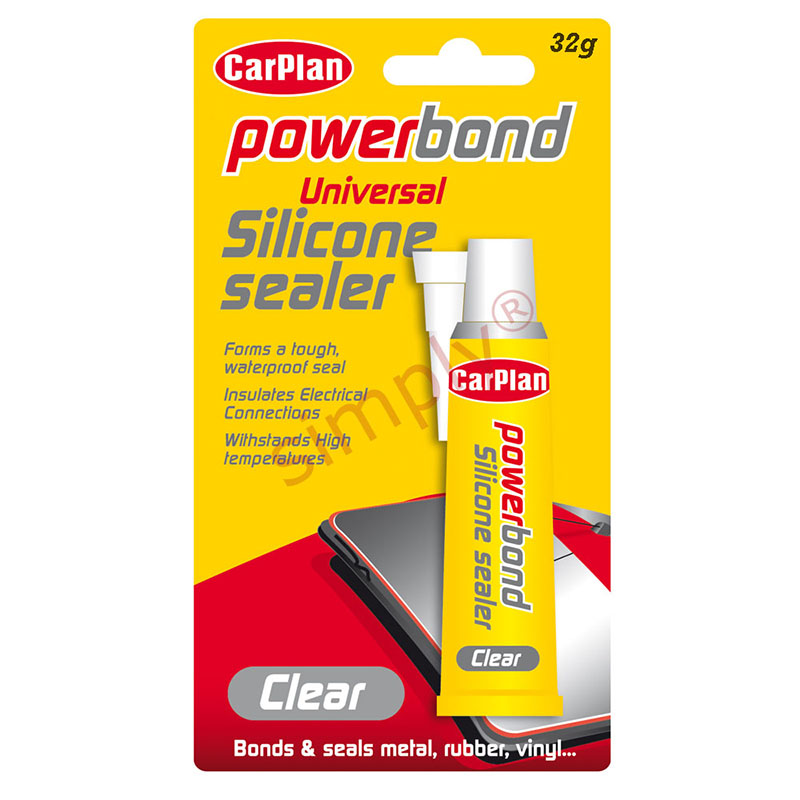
My favourite, now sadly all used up was, IIRC, 'Powerbond'
TUS080 CarPlan PowerBond Clear Silicone Sealer 32g Simply Bearings Ltd
css002_1.jpg


Nope, not that one.

This was in a tin can, US Pint, the lid had a sponge ball aplicator on a twisted wire that was always immersed in the gloop.

It suited me because NASCAR's use alcohol fuel - like Speedway Bikes - and it was resistant to this aggressive fuel. It was a petroleum based sealant by the smell, not unlike an impact adhesive. I used it on the Speedway and Longtrack bikes and found it sometimes got me out of trouble on some of the antiques we used to repair and restore.

All in all, the best all round sealant I have ever used. ?

Moodysailor is correct, many engines now use metal to metal joints with a thin layer of specified sealer.
 
avoid using liquid gasket
It appears from googling that a liquid gasket is a silicon in a tube type thing.
So what would one that is literally liquid, as in consistency of lyons golden syrup be called? This type works extremely well on metal gaskets, fills gaps and cracks without adding any thickness to the gasket.
 
...

Moodysailor is correct, many engines now use metal to metal joints with a thin layer of specified sealer.
That's not exactly new is it? Most British bikes back to WW1 had vertically split crankcases with no gasket.
Back in the 70s I recall 50cc engines with no head gasket.

Sometimes the function of the paper gasket is to break when you want to dismantle things.
The one time I used 'instant gasket' successfully, I struggled to get the thing apart...

I've quite often found a good way forwards is to stick a paper gasket to one side of the joint and grease the other side.
Depends what the application is of course.
 
Top