Sea water strainer O ring

  • Thread starter Thread starter KAM
  • Start date Start date

KAM

Well-Known Member
Joined
6 Jun 2005
Messages
1,357
Visit site
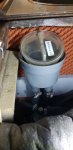
I suspect a lot of people use this sort of strainer. I've been finding it difficult to get an air tight seal on the lid. Suspect the O ring has gone hard but also not sure if the ring sits under the flange of the lid or in the recess on the grey plastic. Both positions work but neither is ideal. I think I used standard O rings last time I renewed but they seem a bit hard. Anyone found anything better or can reccommend a supplier.
 

Attachments

  • 20230202_152215.jpg
    20230202_152215.jpg
    762.8 KB · Views: 50
It shouldn't be difficult to get a seal as long as the ring and the sealing surfaces are in good condition; perhaps get a slightly thicker O ring next time. The better suppliers will have a range of material specifications, allowing a softer compound to be chosen; most tend to supply 70 or 80 shA, or Shore A rating, as standard. Maybe try a 60shA ring? I've used Polymax in the past, but there are a profusion of online suppliers.

It's quite irritating when vendors sell things that are serviceable but do not offer the parts to do it with; ASAP list this as an Osculati strainer, but the Osculati catalogue lists it as an Aquanet product. Not that this advances things any.
 
Last edited:
It's an O ring now. May have been rectangular originally. It's been in some time. It doesent seem to be an ideal application for an O ring. Been having difficulty getting it to seal for some time. Starting to worry the high torque on the lid will cause a failure. Can work it out myself but was hoping someone had a part number and supplier for the correct seal.
 
You've probably already done this, but try cleaning the threads and check they are free and able to compress the ring. Smear threads and ring with vaseline or silicone grease. Ensure it tightened enough to seal - tighten, then back off a bit.
 
I have used small bore clear plastic tube with great success. Cut the ends squarely to length, superglue the ends rogether and it is done. Being tube it is softer than an 'O' ring and forms a much better seal.
 
  • Like
Reactions: KAM
As Supertramp says, smear the threads liberally with vaseline - this worked for me. I also made a 'tool' to undo it easily - just a slot in a piece of shaped varnished plywood.
 
I have often found O rings on Amazon for various jobs. might sometimes have to buy more than one...... Now have 4 spare drive belts for an antique Eumig projector.

Measure the groove dimensions and search. No need to overtighten. As some folk have suggested it is possible to help the seal by greasing the threads, however this should not be necessary of the seal is correctly sized and compressed.

Amazon.co.uk : o ring 75mm X 4mm
 
I have used small bore clear plastic tube with great success. Cut the ends squarely to length, superglue the ends rogether and it is done. Being tube it is softer than an 'O' ring and forms a much better seal.
Superglue is degraded in contact with water, in fact 'warm soapy' water is a releasing agent for superglue, albeit seawater isn't either 'warm' or 'soapy'. it'll still swiftly degrade.
This from Loctite:
HOW TO REMOVE SUPER GLUE FROM SKIN
  1. Do not pull your skin apart
  2. Soak glued area in warm soapy water
When DIY 'O' rings were allowed offshore, superglue was used, but the joint had to be sealed with varnish to ensure it didn't come into contact with water.
An RCV225 ($1 million, 40 years ago) was destroyed by having a superglued 'O' ring fail, which sticks in my memory.
If a strainer fails, it's going towards a catastrophe.
 
Superglue is degraded in contact with water, in fact 'warm soapy' water is a releasing agent for superglue, albeit seawater isn't either 'warm' or 'soapy'. it'll still swiftly degrade.
This from Loctite:
HOW TO REMOVE SUPER GLUE FROM SKIN
  1. Do not pull your skin apart
  2. Soak glued area in warm soapy water
When DIY 'O' rings were allowed offshore, superglue was used, but the joint had to be sealed with varnish to ensure it didn't come into contact with water.
An RCV225 ($1 million, 40 years ago) was destroyed by having a superglued 'O' ring fail, which sticks in my memory.
If a strainer fails, it's going towards a catastrophe.
Isn"t it more likely that the soapy water is dissolving the layer of dry skin on the outside of the epidermis?
 
I suspect a lot of people use this sort of strainer. I've been finding it difficult to get an air tight seal on the lid. Suspect the O ring has gone hard but also not sure if the ring sits under the flange of the lid or in the recess on the grey plastic. Both positions work but neither is ideal. I think I used standard O rings last time I renewed but they seem a bit hard. Anyone found anything better or can reccommend a supplier.
To determine whether you need a "0" -ring or a square profile seal, you need to ascertain whether or not the recesses have round or square profiles. It may havebeen replaced with the wrong part by a previous owner.
 
Superglue is degraded in contact with water, in fact 'warm soapy' water is a releasing agent for superglue, albeit seawater isn't either 'warm' or 'soapy'. it'll still swiftly degrade.
This from Loctite:
HOW TO REMOVE SUPER GLUE FROM SKIN
  1. Do not pull your skin apart
  2. Soak glued area in warm soapy water
When DIY 'O' rings were allowed offshore, superglue was used, but the joint had to be sealed with varnish to ensure it didn't come into contact with water.
An RCV225 ($1 million, 40 years ago) was destroyed by having a superglued 'O' ring fail, which sticks in my memory.
If a strainer fails, it's going towards a catastrophe.
You may be right, but it is immaterial as I never had any problems.
 
Top