
You are using an out of date browser. It may not display this or other websites correctly.
You should upgrade or use an alternative browser.
You should upgrade or use an alternative browser.
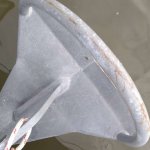
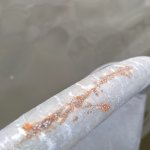
rusty anchor (slightly)
- Thread starter owen
- Start date
pcatterall
Well-Known Member
Most suprised that our anchor experts have not posted yet. I can only comment as an interested but ignortant party!
The rusty tube looks like it either has a seam ( surely not!) or has been rolling around in a way that only the outer edge has been worn.
I assume it is galvanised? The second pic has marked almost like a poor start to some arc welding! ( don't ask how I recognise that!)
I think our experts will 'have a view' on this.
The rusty tube looks like it either has a seam ( surely not!) or has been rolling around in a way that only the outer edge has been worn.
I assume it is galvanised? The second pic has marked almost like a poor start to some arc welding! ( don't ask how I recognise that!)
I think our experts will 'have a view' on this.
Neeves
Well-Known Member
Basically it should not have gone rusty so quickly - but currently it is not significant. I'd complain to the dealer - the galvanising should last longer than that - especially at the roll bar that is not exposed too as much abrasion as the fluke, particularly the toe.
Use the anchor more frequently, seems unlikely as your winter has, presumably, already arrived and the rust will be abraded away (and then come back) A wire brush and some zinc based paint will make it look a bit more pretty, but will not last too long.
Try the 'complain to the dealer' route first up.
It does look as though the roll bar has been dragged on something hard - but galvanising should stand a bit of mis-use - its harder than the underlying steel. Roll bars, or this one, is made from tube - but I don't know how tube is made.
Jonathan
Use the anchor more frequently, seems unlikely as your winter has, presumably, already arrived and the rust will be abraded away (and then come back) A wire brush and some zinc based paint will make it look a bit more pretty, but will not last too long.
Try the 'complain to the dealer' route first up.
It does look as though the roll bar has been dragged on something hard - but galvanising should stand a bit of mis-use - its harder than the underlying steel. Roll bars, or this one, is made from tube - but I don't know how tube is made.
Jonathan
Last edited:

sarabande
Well-Known Member
It looks as if it has been stored with the roll bar downwards , on concrete. You can't blame the maker for that. Especially if the concrete was wet, as that makes the concrete very alkaline. and that is death to any form of galvanising.
Last edited:
Neeves
Well-Known Member
It looks as if it has been stored with the roll bar downwards , on concrete. You can't blame the maker for that. Especially if the concrete was wet, as that makes the concrete very alkaline. and that is death to any form of galvanising.
No - but you might blame the dealer.
Jonathan
owen
Well-Known Member
Thanks for the replies. Its been stored on the front of the boat and no contact with concrete. Its had very light use mainly in mud and sand .Its a Rocna so has lifetime guarantee. I will contact them . thank you

vyv_cox
Well-Known Member
My NZ made Rocna is more than 10 years old now, stored on board every winter. I have been painting it for years since the galvanising disappeared. It seems astonishing that on an anchor costing hundreds of pounds they shake nearly all of the zinc off during production.
macd
Well-Known Member
My NZ made Rocna is more than 10 years old now, stored on board every winter. I have been painting it for years since the galvanising disappeared. It seems astonishing that on an anchor costing hundreds of pounds they shake nearly all of the zinc off during production.
I'm sure many other owners of expensive anchors will feel the same. Our Spade has been similarly afflicted, and a Manson before that. The OP has particular cause for grievance though, in that his hook is clearly very lightly used. On the bright side, the galvanising on our Fortress is as good as the day it left the factory

Last edited:

noelex
Well-Known Member
My NZ Rocna also started rusting quite quickly. However, user reports suggest the Chinese made Rocna anchors have more durable galvanising.
Typically the galvanising wears at the tip first. The rollbar receives less abrasion so rust in this area is usually not seen until the rest of the anchor is in poor condition. So this certainly suggests a manufacturer/transport/storage problem.
It would be worth contacting Rocna. I try to keep track of anchor manufacturer’s responses to warranty claims so please post the results, or send me a PM.
Typically the galvanising wears at the tip first. The rollbar receives less abrasion so rust in this area is usually not seen until the rest of the anchor is in poor condition. So this certainly suggests a manufacturer/transport/storage problem.
It would be worth contacting Rocna. I try to keep track of anchor manufacturer’s responses to warranty claims so please post the results, or send me a PM.
pcatterall
Well-Known Member
When considering the re-galvanising of chain many people claim that the new galvanising is superior to the original ( mine was re-done years ago and is still rust free).
As these new anchors are so expensive is it good value to have them re-done when rust starts to develop?
As these new anchors are so expensive is it good value to have them re-done when rust starts to develop?

Poignard
Well-Known Member
My genuine CQR anchor of indeterminate age shows hardly any signs of rusting.
This is surprising, since CQRs are supposed to be prone to drag at the slightest opportunity, and one might therefore expect the galvanising to be rapidly abraded off .
This is surprising, since CQRs are supposed to be prone to drag at the slightest opportunity, and one might therefore expect the galvanising to be rapidly abraded off .
vyv_cox
Well-Known Member
When considering the re-galvanising of chain many people claim that the new galvanising is superior to the original ( mine was re-done years ago and is still rust free).
As these new anchors are so expensive is it good value to have them re-done when rust starts to develop?
Yes it is but many galvanisers apply a minimum weight requirement so it could work out very expensive. Also, some hardened shanks might be sensitive to galvanising temperatures.

Greenheart
Well-Known Member
My genuine CQR anchor of indeterminate age shows hardly any signs of rusting.
I've acquired a genuine CQR which was distinctly rusty, through an old coat of blue paint.
I've no idea what it would cost to re-galvanise, but I already had sanding disks and silver Hammerite. I will determine how inadequate that protection is, if the anchor develops rust hanging in my garage.

MM5AHO
Well-Known Member
There is the possibility that this is rust staining on top of the zinc.
Given the age, the galvanizing should not be abraded or oxidized or worn that much, and certainly not in that pattern in that place.
You could test this to see if its surface staining. Take a smoothing file and in a small place, very lightly, file the rusty mark. Remember very lightly. It might be that the rusty mark disappears and shiny zinc appears where you filed.
In any case, galvanizing protects sideways a little. That is to say, a small area of exposed steel will be protected by surrounding zinc. (If it didn't, then anodes would need to cover the whole hull of a boat). In my experience, this peripheral protection is good for about 5mm. So a scratch is protected. It might still go brownish, but not seriously rust.
But on this anchor, in the left picture there are what look like drainage marks, or rivulets of brown running round the roll bar. That might suggest spillage of a liquid which has caused this?
Someone mentioned concrete being bad for galvanizing, and that it doesn't like alkaline conditions. That's not right. In fact a lot of reinforcing is galvanized (not so much in the UK), and then immersed in fresh concrete where it protects the steel, preventing (or stalling) spalling of the concrete due to the rebar rusting. Galvanizing will withstand immersion in 10% sodium hydroxide for months. But acids are a different story. Even weak acids do some damage, but strong acids like hydrochloric and sulphuric will strip the zinc quickly. (Not talking about the concentration of the acid, but the strong / weak definition is about types of acid).
Given the age, the galvanizing should not be abraded or oxidized or worn that much, and certainly not in that pattern in that place.
You could test this to see if its surface staining. Take a smoothing file and in a small place, very lightly, file the rusty mark. Remember very lightly. It might be that the rusty mark disappears and shiny zinc appears where you filed.
In any case, galvanizing protects sideways a little. That is to say, a small area of exposed steel will be protected by surrounding zinc. (If it didn't, then anodes would need to cover the whole hull of a boat). In my experience, this peripheral protection is good for about 5mm. So a scratch is protected. It might still go brownish, but not seriously rust.
But on this anchor, in the left picture there are what look like drainage marks, or rivulets of brown running round the roll bar. That might suggest spillage of a liquid which has caused this?
Someone mentioned concrete being bad for galvanizing, and that it doesn't like alkaline conditions. That's not right. In fact a lot of reinforcing is galvanized (not so much in the UK), and then immersed in fresh concrete where it protects the steel, preventing (or stalling) spalling of the concrete due to the rebar rusting. Galvanizing will withstand immersion in 10% sodium hydroxide for months. But acids are a different story. Even weak acids do some damage, but strong acids like hydrochloric and sulphuric will strip the zinc quickly. (Not talking about the concentration of the acid, but the strong / weak definition is about types of acid).
Neeves
Well-Known Member
If the rust is simply a product of abrading something else that was rusty and the rust adhering to the roll bar then a rub with a Scotchbrite pad - or similar - should remove it. The rust would simply be superficial and rub off relatively easily and the underlying galvanising (which should be harder than the base steel) will not be affected at all. As MM5AHO has pointed out, a number of times, galvanising is an alloying process and the alloys are quite abrasion resistant (which is why galvanising CAN last a long time).
However I'm not sure about raw zinc, that might be the very outer layer (only a few microns) of a galvanised object, as zinc is relatively soft (and is usually worn off an anchor, or chain, quite quickly, and might not react too well to a Scotchbrite pad (I've never tried it).
It must be worth trying - it costs nothing - and saves having to grind in, what looks like a perfectly good galvanised coating, or a long discussion with Rocna/CMP - who might not be very enthusiastic to offer a remedy for what looks like, it might not be, a cosmetic issue.
If Scotchbrite does not work - then use Geoff's suggestion.
It was noted that it looks as if there is a seam in the roll bar, and I made the comment I did not know how these tubes are made. But you can turn the anchor upside down and have a look at the interior of the tube, you can see a very short distance from each end - and try to see if the roll bar is rusting on the inside, opposites the rust 'stain' on the outside. If there is rust on the inside - contact Rocna/CMP
Jonathan
However I'm not sure about raw zinc, that might be the very outer layer (only a few microns) of a galvanised object, as zinc is relatively soft (and is usually worn off an anchor, or chain, quite quickly, and might not react too well to a Scotchbrite pad (I've never tried it).
It must be worth trying - it costs nothing - and saves having to grind in, what looks like a perfectly good galvanised coating, or a long discussion with Rocna/CMP - who might not be very enthusiastic to offer a remedy for what looks like, it might not be, a cosmetic issue.
If Scotchbrite does not work - then use Geoff's suggestion.
It was noted that it looks as if there is a seam in the roll bar, and I made the comment I did not know how these tubes are made. But you can turn the anchor upside down and have a look at the interior of the tube, you can see a very short distance from each end - and try to see if the roll bar is rusting on the inside, opposites the rust 'stain' on the outside. If there is rust on the inside - contact Rocna/CMP
Jonathan
MM5AHO
Well-Known Member
Most tubing is seam welded tube. I don't know specifically if this is on the Rocna, but seamless tube is usually only used in boilers and places where it needs to withstand pressure. I'd be surprised if they used seamless tube on their anchors.
On seam welded tubes the seam weld is welded on a production line by Radio Frequency induction, at high speed, and most tubing is pressure tested (low pressure) after welding to check the seam.
On abrading galvanizing. Yes the outer layer of fresh new galvanizing is usually pure zinc, and that's soft, compared to the alloy layers underneath that. There's a distinguishing characteristic - colour. Alloy is dully grey. Zinc is bright silver (though tarnishes quickly). In most galvanizing the alloy is the thinnest part, perhaps only 5-10 microns, and the rest zinc - about 50-60 microns. But it's also possible to get full thickness alloy. This difference is dictated largely by the chemical composition of the steel, especially the Si and P levels.
On seam welded tubes the seam weld is welded on a production line by Radio Frequency induction, at high speed, and most tubing is pressure tested (low pressure) after welding to check the seam.
On abrading galvanizing. Yes the outer layer of fresh new galvanizing is usually pure zinc, and that's soft, compared to the alloy layers underneath that. There's a distinguishing characteristic - colour. Alloy is dully grey. Zinc is bright silver (though tarnishes quickly). In most galvanizing the alloy is the thinnest part, perhaps only 5-10 microns, and the rest zinc - about 50-60 microns. But it's also possible to get full thickness alloy. This difference is dictated largely by the chemical composition of the steel, especially the Si and P levels.
vyv_cox
Well-Known Member
On abrading galvanizing. Yes the outer layer of fresh new galvanizing is usually pure zinc, and that's soft, compared to the alloy layers underneath that. There's a distinguishing characteristic - colour. Alloy is dully grey. Zinc is bright silver (though tarnishes quickly). In most galvanizing the alloy is the thinnest part, perhaps only 5-10 microns, and the rest zinc - about 50-60 microns. But it's also possible to get full thickness alloy. This difference is dictated largely by the chemical composition of the steel, especially the Si and P levels.
I analysed a Rocna anchor shank for YM in 2013, finding its composition consistent with HSLA steel, having very low levels of all constituents. The phosphorus content was 0.011% and sulfur was less than 0.005%. However, I only tested the shank, not the flukes or hoop. So presumably the shank galvanising should be good!
Other threads that may be of interest

- Replies
- 84
- Views
- 3K