
Rusted keels

ALESSANDRA

New Member
Joined
15 May 2013
Messages
2
Location
london
Visit site
Last weekend I have scrapped away the apint from my keels and discovered that they are quite rusted.

Reading around I have identified 4 options:

1 sandblasting (too expensive)
2 use a grinder then primer and antifouling (I don't have a grinder and I'm not sure how to use one)
3 use a sander then primer and antifouling (but is sanding good as grind? what type of sander? )
4 use an anti rust then primer and antifouling (but what antirust? how long does it needs to dry?)

Please consider that I'm a girl and this is mi first boat, therefore I'm not competent at all
Help please!!!
A
 
Welcome both!

Really is no short cut. You can deal with small patches with a grinder, then prime and anti foul. However, once rust has got hold it is almost impossible to remove without blasting and applying a sealing treatment, then prime and antifoul. Many people just accept that it is an ongoing job keeping the worst at bay every year.
 
5) Wire brush by hand or Cup Brush in the end of an electric drill (if doing this use eye glasses and boiler-suit or heavy material jeans thick tops as the wires jump out of cup brushes and tend to hurt/ wound).

images


Then use rust treatment, Bluesteel, ferrotan or any of the others not certain it makes much difrence. Then as much paint as you can stick on undercoat x2, primer, Hamerite, hide all sins with Anti fouling...

Allot depends on the value of the boat if she is worth allot spend allot if she is a cheapy I would do No 5 above. If not sandblast and eppoxy is 5 star treatment I believe but not being in that market I do not know...

Grinding is good but can hurt if you have not been taught how to use one... Un less you have a friend who can show you, its not rocket science but would not recommend going and buy grinder to do the job...
 
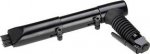
I would suggest to use a tool like this: 89-produktbild-entroster-druckluft_nadel_entroster.343266.0.jpg. You may get it, if not available in UK in Germany from Westfalia ww.westfalia.eu. All you need in addition is to rent an air compressor with constant delivery of 170 liters air per minute. The result is closest to sandblasting. Steel brushes have the disadvantage on rusted cast iron to "work rust into the iron". But, as a previous answer suggests, any method depends on the value of your boat.

Have success and don't forget your personal potection like glasses and hearing protection.

Southerly
 
I've had a go at this on Rampage. I spent a happy couple of days closely resembling Papa Smurf as I ground off the paint and rust to produce a shiny cast iron surface, which was the treated with rust converter, followed by 3 coats of epoxy primer, 3 coats of epoxy paint, 2 coats of anti foul primer and 4 coats of anti foul. Result? A hand sized patch of thie elaborate paint work detached itself within 3 weeks of going back in the water but there has been no recurrence of the chicken pox effect that there was before. When she was out this March, I found a hole in the casting leading to small void in the keel which was the cause of the problem, so I ground that out and we'll see if that sorts it.

Now, an angle grinder is a fearsome beast but if you got a small one, say 500 watt it would be easy enough to control, especially if us use the screw in handle that most of them come with. Don't be tempted by a 1200 watt one, you'll struggle to control it. I used a sanding pad and coarse grit disks. You could use a flap wheel or cup brush, both of which are available for grinders but the flap discs are expensive for what they are and clog quickly and the cup brushes shed wires which fly off in all directions.

If you go to somewhere like B&Q and ask one of their people to explain how to set up the grinder, it'll take the mystery away. They really are simple bits of kit once you understand what they do and how to set them up. A final point on grinders, do wear gloves, eye protection, heavy clothes and a dust mask. They produce sparks, bits of debris and no end of dust!

Should have said I did this in Greece so the brand names of the paints are irrelevant as I used what was available locally. I've also been told that treating the bare iron with acid and then cleaning it off with dilute solution of baking soda is as good as using a rust converter.
 
Last edited:
All of these are foul, filthy, exhausting industrial jobs, the sort you wish to heaven you'd paid someone else to do as soon as you've got a quarter of the way through.

If you feel you can't manage a grinder (!) I'd suggest a diy fix on this sort of thing is worth avoiding.
A rotating wire brush is nigh on useless on anything more than very localised and light rust. If you've got heavy, loose or flaking rust it is blasting or that needle gun (choose blasting, far less effort). The cost of the epoxy, primer and antifoul is likely to add up to at least as much as the blasting I imagine.

And for your personal protection remember not to drink the paint.
 
Main thing is don't worry too much about it. Grind it down as much as you can with Wire bush attchment on a drill or grinder, or if that scares you just scrape of as much as you can with a flat scraper, rust treat it with something like kurust , prime and then antifoul and then go sailing. Next year you will be doing it gain.
If you are into racing and want an extra 10th of a knot go down the blasting, filling, fairing and epoxy road.
 
Things to consider with cast iron keels are:-

Cast iron is porous, full of contaminants and even trapped sand, so no matter what treatment you select it's doomed to fail if the moisture content in too high.

You only 3 things to get rust. Moisture, Oxygen and Iron. Remove any one of the three and you will have no rust at all.

Rotating blades or brushes will carry contamination with each revolution as the dirty disk or brush returns to it's starting point.

Needle guns will chip away loose rust but then drive smaller particles and contaminants back into the exposed surface.

Grit blasting on the other hand presents only clean abrasive and the rubbish is carried away with it. However Keel blasting should be done to Class two and a half. That's a silver grey with no shadows or spots.

Finally, Cast Iron will 'flash rust' so that silver grey will start to turn brownish within minutes, so it's important to get some form of protection on it as soon a possible, even if it means a brush a brush on a stick a few inches behind the blasting nozzle.

Good luck and fair winds. :)
 
I just did mine. I was reluctant, but just had a go!
Bought a Silverline angle grinder from Toolstation - about £24 - and some flap discs. I got through about 5. Dusty job - you'll definitelt need goggles and dust mask!
After the first few seconds you'll realise how easy it is - just needs patience. It took me about 4-5 hours to take the keel to bare metal.
Filled some blemishes with epoxy filler (the International 2 part stuff) - hardly used any.
Then I applied 5 coats of Primocon (3 hours at least between coats), then antifoul.
I'm not the most practical, but I'm glad I did it!
 
Hi Alessandra,

Doing nothing at all is an option. It'll take decades for the rust to have an impact on the viability of your keels.

But rust is unsightly and of course you will want to tidy it up: Give the affected areas a good scrub with a wire brush (sanding only abrades the surface and doesn't reach below to where the rust is active). If you have a drill, get a wire wheel for it, the work will be ten times faster AND more effective - but wear goggles. When all the loose material has been brushed away, paint the area with epoxy resin such as West or SP Resin (£30/litre (kg) approx). The resin will deny the rust both the oxygen and water it needs to progress ... and, once cured, it is as hard as iron. Then paint over with antifouling.

You'll never get rid of rust, it's part of nature, but that treatment will last many years.

Justin
http://amzn.to/xc4qn3
 
I can recommend KBS Rust seal as a de-greaser / phosphate etch/ & coating system. I had my keel grit blasted first, and the coating has held up well over the past 3 years. I faired the keel with epoxy filler over the top of the KBS.

If you can't do the grit blasting, doing the best you can with an angle grinder would have to substitute.
 
You must get back to bare steel so grinding or sandblasting, the primer coat should be zinc rich epoxy, as applied on our steel boat.

This is fine on new steel boat but on a pitted old possibly cast keel you are never going to get a good enough finish to get all the rust. IMHO it will start again, from somewhere.

One rust primer type thing I have used: http://www.fertan.co.uk/how_to_use_fertan.htm
seemed to work and was not to expensive.

Allot comes down to what you want to achieve?
A perfect smooth racing keels? Sand Blast coat with latest exotics, fillers & latest exotic teflon antifoul.
A reasonable cruising boat? Take your pic from the differing levels above..
A cheap ass sailing boat to have fun on? Slap some anti-fouling on and be done with it, the rust will take a whilst to become significant.
 
Last weekend I have scrapped away the apint from my keels and discovered that they are quite rusted.

Reading around I have identified 4 options:

1 sandblasting (too expensive)
2 use a grinder then primer and antifouling (I don't have a grinder and I'm not sure how to use one)
3 use a sander then primer and antifouling (but is sanding good as grind? what type of sander? )
4 use an anti rust then primer and antifouling (but what antirust? how long does it needs to dry?)

Please consider that I'm a girl and this is mi first boat, therefore I'm not competent at all
Help please!!!
A

No1 works IF the rest of the treatment follows on correctly.............

The rest don't work for long....................... so you are back in a year or two's time asking the same question again or "where did I go wrong"...........

In the meantime you have missed off
5. Hand scraper to remove the worst of the loose stuff, slap on some primer, then some (cheap, 'cos it will fall off) AF, the GO SAILING.........until you can afford No1. which is the right way to do it. :)
 
4 use an anti rust then primer and antifouling (but what antirust? how long does it needs to dry?)
Hi Alessandra,

Welcome to the madhouse!

Some top advice above if you are going for a perfect finish, but probably not what you need; your option 4 is fine.

I suggest using a scraper then a wire brush by hand or in a drill to get any blisters or loose patches off. The aim here is get back to firm, but still rusted metal. Then get a rust converter/primer such as the one below, and follow the instructions. This will stop the rust from getting worse, but should be covered by another protective layer before applying anti-fouling. Any two-part metal primer would be OK. Apply it by brush or roller, it will smooth out the surface a lot. Finally, apply two coats of anti fouling paint over the entire keel.

As for drying times, just follow the instructions on the tin.

Rust converter: http://www.amazon.co.uk/exec/obidos/ASIN/B003QZ4K2U/dolcetto-21
 
>This is fine on new steel boat but on a pitted old possibly cast keel you are never going to get a good enough finish to get all the rust.

I thought the whole point of grinding it to get the rust and pitting out to get a smooth finish.
 
Top