Rust on keel - cosmetic or a serious problem?

AldisBlack

New Member
Joined
1 Oct 2020
Messages
13
Visit site
Hello fellow sailors,
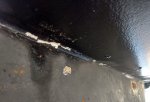
I am viewing a boat this weekend and the current owner sent me some pictures of the rust spots on the cast iron keel. I tried searching the internet for more information on how to tell if the corrosion is deep and affecting the keel joint and bolts or just a surface problem that could be easily treated but could not find any similar pictures to the ones i have. What puzzles me the most is the keel joint area that the current owner claims to be free from rust. The is some stripping antifouling there and the wet spots on one side of the keel seem to be a traces of moisture coming out of the joint. I know that hiring a surveyor would be the best option but for many reasons this is not feasible at the moment. I am attaching the pictures - please let me know your thoughts. Cheers!
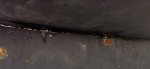
 
The spots looks cosmetic to me. Wirebrush out, treat with Fertan, and reprime.

If you have doubts about the keelbolts, specially if you think there are weeps, the only way to tell is to pull out a couple and inspect. It would be best to ask an experienced yard to do this.

Having the keel rebedded if necessary is a large but not impossible job.
 
Last edited:
Re the water apparently eminating from the joint, it could just be that there is some sealant or filler that has been externally applied to smooth the joint, and has locally failed.

If it were my boat I'd be digging that out and having a look.
 
Doesn’t look bad at all to me. Our keel was way worse, with some areas covered in large blisters. These opened up to reveal deep-ish ‘pock marks’. We’ve since had it blasted and it’s now primed with a zinc phosphate based epoxy.

I’m not sure I’d even bother going down this route again (and we only did it while the antifoul was being blasted). The surface was a pain to paint due to its pumice-like consistency and porousity in places. I’m not that convinced it’ll hold up long-term, but here’s hoping... I’d likely opt for just grinding/treating the blisters ‘locally’ next time.

I wouldn’t be worrying about the keel bolts just from that. I guess it depends how long it’s been out of the water...? Ours has been out nearly 7 years(!) and still there were some ‘rivulets’ of moisture from the join after the blasting opened up the sealant. These stopped after a few days. Keel bolts look ok from visual inspection. The surveyor suggested drawing them only before ‘attempting any serious ocean passages’. We’re inclined to agree and plan to re-seal the joint and splash her in the spring.
 
Doesnt look like anything to worry about looking at pictures but what boat is it,does that class of boat have a history of keel problems would be what I would look at.
 
IMG-4721.jpg

...she'd just had a wash so ignore the moisture here - but this shows the state of the casting after a couple of coats of primer. So we'll now be putting our faith in this new coating (Jotun Penguard Express ZP) and can only hope it holds up a fraction of the 25 years which the original one (mostly) managed. You could always argue that this is the 'proper' fix and negotiate with the seller accordingly (maybe £2-300 for blasting and the same again for paints/fairing compound), but as suggested I'm not convinced it's actually worth doing if you can avoid it - even with a keel that was quite badly affected by rust, as can be seen with the 'pock marks' here.
 
IMG-4721.jpg

...even with a keel that was quite badly affected by rust, as can be seen with the 'pock marks' here.

Pock marks can be filled and smoothed successfully with epoxy filler. The problem then is remembering where they are so you don't mess up the surface next time you take the old antifouling off back to metal.

Whether to fill them before or after priming is another issue...
 
Pock marks can be filled and smoothed successfully with epoxy filler. The problem then is remembering where they are so you don't mess up the surface next time you take the old antifouling off back to metal.

Whether to fill them before or after priming is another issue...
Indeed! Our plan of attack is 3 coats of zinc epoxy primer first (as seen here), then fill/fair the pock marks and 'pumice', then maybe another coat of zinc primer for luck, then several coats of epoxy as a moisture barrier. The hope being that we'll never need to see the metal again! But I think that's doubtful... Even at this stage there are some pinholes in the primer that I haven't been able to tackle adequately (they might need drilling out and filling with some of the primer from a syringe, so some such...).

Overall, this = a lot of faff for a lump of metal that can theoretically rust as much as it wants, if you believe some opinions online! Certainly for the OP I'd be thinking "that's nothing" (although perhaps strategically going in a bit harder in negotiation the seller, as they deemed it bad enough to warrant sending the photos across in the first place!).
 
It looks like minor surface rust on the keel so very easy to address.

Providing that there is no evidence of rust, I would not try to remove any of the beading at the hull-keel joint. The bead is created from the excess out of the joint as the hull is lowered on to the keel. Trying to replace a small length of triangular section bead ends in tears more often than not, in my experience.
 
It looks like minor surface rust on the keel so very easy to address.

Providing that there is no evidence of rust, I would not try to remove any of the beading at the hull-keel joint. The bead is created from the excess out of the joint as the hull is lowered on to the keel. Trying to replace a small length of triangular section bead ends in tears more often than not, in my experience.
Not contradicting your advice, which in essence is to leave well alone, but out of interest what have you attempted to replace or repair this bead with and with what adverse results?
 
Not contradicting your advice, which in essence is to leave well alone, but out of interest what have you attempted to replace or repair this bead with and with what adverse results?

I had an annoying, tiny, tiny rust stain oozing from between the hull to keel joint. The boat was bought new and was first noticed at haul-out.

During its dealer “inspection service” I asked for it to be fixed. I was advised to leave it alone or cover it with a few coats of Primocol. It’s location was less than a couple of inches away from the trailing edge. I wanted it investigating and fixing.

A U-shaped piece of bead was removed from around the trailing edge. The joint was cleaned with acetone and all traces of rust removed. It was then primed and a thick vee bead of Sika was applied. Next season haul-out it was missing. The following season I repeated the process with another forum of sealant. Same result. Two seasons later and I managed to find a sealer with the right balance between adhesion and flexibility. I wish I’d taken the advice and left it alone ?
 
I had an annoying, tiny, tiny rust stain oozing from between the hull to keel joint. The boat was bought new and was first noticed at haul-out.

During its dealer “inspection service” I asked for it to be fixed. I was advised to leave it alone or cover it with a few coats of Primocol. It’s location was less than a couple of inches away from the trailing edge. I wanted it investigating and fixing.

A U-shaped piece of bead was removed from around the trailing edge. The joint was cleaned with acetone and all traces of rust removed. It was then primed and a thick vee bead of Sika was applied. Next season haul-out it was missing. The following season I repeated the process with another forum of sealant. Same result. Two seasons later and I managed to find a sealer with the right balance between adhesion and flexibility. I wish I’d taken the advice and left it alone ?
Fair enough.

The junction between my keel and hull was a bit rough from the start, indeed I'd describe the finish of the mastic as an untrimmed squelch rather than a bead. I tidied this up myself. This was back in the 80s.

I've used sikaflex or ct1 over the years to seal it and improve its profile, essentially to get a smooth surface for antifouling. I find it seems to adhere better if you build it up with thin layers. I just wipe it on with a finger.
 
My thoughts on the OPs pictures is that there is no big deal.

It's a keel that spends its' life underwater, so a few bits of rust are inevitable.

I had an experience where the company "looking after my boat" told me that the keel was rusting away, deflected, the hull/keel joint defective, and the keel bolts were suspect. I was a long way from the boat, and recovering from a serious illness, so couldn't get to see it at short notice.

I organised a survey which told me the the keel was not deflected, that the rust was surface rust and there was nothing wrong with the joint, although it would look nicer if it was scraped out and refilled before painting. He suggested changing the keel bolts as the top nuts were rusty.

I had the bolts replaced but, on drawing the old ones, they were as good as the day they were fitted 15 years previously. Whilst not necessary, it wasnt a bad thing to do as it removed any doubt about the condition of the keel bolts during a subsequent sale.

I sacked the company who had tried to rip me off, got myself out there, (Malta), as soon as I could, and sorted things out with a mixture of DIY and yard.
 
Fair enough.

The junction between my keel and hull was a bit rough from the start, indeed I'd describe the finish of the mastic as an untrimmed squelch rather than a bead. I tidied this up myself. This was back in the 80s.

I've used sikaflex or ct1 over the years to seal it and improve its profile, essentially to get a smooth surface for antifouling. I find it seems to adhere better if you build it up with thin layers. I just wipe it on with a finger.
...I also did a bit of research about sealing over existing sealant (admittedly it was a less 'demanding' application - temporarily re-bodging some bodged windows) and it seemed that this was possible. Here, perhaps the antifoul could be removed, the area thoroughly cleaned (degreaser/acetone), keyed, and then 'over sealed' with a bead of Sika/CT1/etc.?
 
........ Two seasons later and I managed to find a sealer with the right balance between adhesion and flexibility.
Out of interest, which sealant did you have success with in the end as I’m looking to do the same on my keel join but I’m not sure what to use or what the best preparation is?
 
Out of interest, which sealant did you have success with in the end as I’m looking to do the same on my keel join but I’m not sure what to use or what the best preparation is?
I used Arbokol 1000 and it's still in place several seasons later. At the time, I had email correspondence with Arbo (very helpful) and their recommendation was Arbomeric MP20. I'd bought the Arbokol 1000 by the time I received their recommendations so never got to try MP20.

Arbomeric MP20 - ARBO

Their advice on prep was to remove all traces of existing sealing from critical areas. It bonds to clean, dry, sound, fully cured paints. It should seal direct to cleaned cast iron but Arbo has a dedicated primer, if required.

Good luck.
 
Last edited:
Your question amounts to how superficial are the items in the pictures? The rust on the keel is, as others say, superficial and non consequential - clean out, fill and restore the surface. Much attention is paid to smoothing the keel (and underwater hull) to a polished finish but casual thought would show that this delivers nothing tangible in speed - other than perhaps if competing for the Americas Cup.

Small irregularities in the sealant between the keel / hull are unlikely to be of consequence. Clean it up and restore where showing its age. What we see is most unlikely to indicate a general breakdown in the bedding between keel and hull; this rarely happens such that the keel has to be dropped and the bonding remade.

BUT-

Keel bolts should be closely observed from within - any weeping and rusting of consequence is suggestive of water ingress / failure in the bonding. But if water has been allowed to slosh about in the bilges, much the same will appear. Small weeps are not fatal but would be of greater interest if they coincided with breakdown of the keel / hull bonding observable from outside.

Useful to examine the keel closely for signs of impact / heavy grounding - weakening the keel / hull seal could result.

PWG
 
looks tidy compared to mine, I treat and seal every year. no issues. Just part of regular jobs in the winter......!
Same with mine. Just part of the maint on haul out day.
Spent ages sand blasting and treating a few years back. Didnt even last a year. Now just a quick clean up with a Terco wheel and antifoul. Looks the same when it comes out each year as the time I put some effort into trying to sort it properly!
 
Top