Rogue Waves

A rogue waves . . .

543800250.0.jpg
 
I read this a few years back and remember liking it.

The Wave: In Pursuit of the Rogues, Freaks, and Giants of the Ocean -- by Susan Casey

What it lacks in scientific rigur it makes up for in enjoyability/readibility (at least that's my recollection of it...)
 
I read this a few years back and remember liking it.

The Wave: In Pursuit of the Rogues, Freaks, and Giants of the Ocean -- by Susan Casey

What it lacks in scientific rigur it makes up for in enjoyability/readibility (at least that's my recollection of it...)
Thanks. Just ordered a copy off ebay for £2.99
 
I think that's off Durban South Africa, a feature of the ( Agulhas ? ) current is particularly nasty troughs rather than especially high waves - this is mentioned in some editions of Heavy Weather Sailing when the WWII cruiser HMS Edinburgh discovered such a trough the hard way , also thought maybe responsible for the loss of the liner Warratah and various disappearances, and featured in some fanciful novels.

Yes its not called the wild coast for no reason.

Sailed several times but always pick the weather window.
 
Fell into a hole in 1972 offshore from Port Shepstone.... out near the 100 fathom line.. front didn't fall off but it was 'interesting' enough.
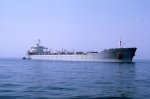
Loaded 100k dwt tanker so about 120,000 tonnes of oil and steel. Reduced speed - about 12knots... into a SW gale... nothing extreme... bit of spray coming over the bow.
On watch... 12 to 4.. nice and sunny .... regular wave train... nothing standing proud against the horizon.

And then there was at least one wave... maybe more.... missing.... and this great big hole where the peaks(s) should have been .
And down went the bow.... and down and down.... into the next wave... and the entire front half ( nautical speak) - right back to the cargo manifold - of the ship disappeared into the next wave face.

And the ship gave a great big shudder and the ship - all 120,000 tonnes of her.. went from 12 knots to 4 knots on the instant ( as measured by SAL log... ).

Not a huge amount of damage... bent the foremast back out of true by about 5º and big crack in the deck just forward of it. Clear view screen in the lookout cab on foremast... gone. It was 70 feet above the waterline in flat water.
Photo of ship in loaded condition attached... have a photo somewhere showing sea state just before event.. will post when I find it..
 

Attachments

  • img220.jpg
    img220.jpg
    97.7 KB · Views: 0
I was happily hauling gear in my ten metre crabber in waves of max 47ft, as shown on the echo sounder....but it was otherwise flat glassy calm. Big ships were having a hard time of it though. Interesting thing I didn’t realise for a long time: when big swells come ashore, if the wave period goes up from about 12secs to 18 secs we get inundations like the storms of 2014, and a big ship of the right length would suffer. Long period waves hold a lot more water. Also combined with low pressure on that occasion.

When I say happily hauling, I had one hand on the winch control all the time, hitching in the bottom while on the rise could be a problem.
 
47' sounds a bit much, but I've been out in 10'+ swells in the western Channel and it was as smooth as you like. It was a bit like a road I drove down once, dead straight, up a hill, over the top, down the other side and up the next one. Repeat for several miles. A world of difference from a 10' chop in the Solent - that's one big chunk of no thanks.

What makes the difference is the Solent chop, even when it's only a few feet, has a wavelength of maybe 3 times the height, the swells had a wavelength of 100 yards or more
 
47' sounds a bit much, but I've been out in 10'+ swells in the western Channel and it was as smooth as you like. It was a bit like a road I drove down once, dead straight, up a hill, over the top, down the other side and up the next one. Repeat for several miles. A world of difference from a 10' chop in the Solent - that's one big chunk of no thanks.

What makes the difference is the Solent chop, even when it's only a few feet, has a wavelength of maybe 3 times the height, the swells had a wavelength of 100 yards or more

The first time I went round the Mull of Kintyre in my 21' Jouster the swells were so bit that we regularly lost site of the land although we were probably only a hundred yards off. A bigger yacht which overtook us kept disappearing too. Most disconcerting. As in your case it was completely smooth otherwise - and a good thing too, as we were using a Seagull 40 to get round.

I suspect that pig swells like that are quite common in exposed places (south of Mull, for example) but they are only really noticeable when you're near land or other boats.
 
This is why even the 130' J Class had high set ' Solent Jibs ' - the short frequency tall, square fronted short waves of the ' Solent Chop ' are infamous - only 6' or so high, stop most boats dead - then clobber and poop them...

This happened to us in an unforecast F7 gusting 11, we got through by playing the sheets like a racing dinghy and simply hanging on
 
Last edited:
Yes, it was very calm, no wind, but huge ground swell over a bit of shallow 15fm or so off the Lizard, the meter showed the max at 47ft. Peak to trough.
What was the depth on the non shallow areas? Obviously as a big swell approaches a shallower area the period shortens and the height increases. That plus an offshore wind is what makes a perfect surfing wave. Interestingly. most of the surf spots in Cornwall and Devon are off the North Coast rather than South Coast . If you look at a map of the UK you can see why. There's only a very small angle for a long ocean swell to reach the South Coast.
 
Very true; it's also why the southern Cornish coast has all the nice expensive harbours with spiffing boats and crumpet, while the northern places and Rick Stein can get knotted, at least for seagoing travel :)
 
Top
