Replicating non-slip pattern following deck repair

JimC

Well-Known Member
Joined
30 Aug 2001
Messages
1,570
Location
Lancashire
Visit site
I've removed a couple of redundant deck fittings and filled the resulting holes leaving two areas of about 4 cms diameter. I've matched the ice white gelcoat colour OK but I'm struggling to match the non-slip pattern of the surrounding deck which consists of little raised pips. I tried sprinkling sugar onto the wet gelcoat and dissolving it with hot water after curing (which I'd read of on here) but this left a pattern of tiny craters rather than the raised pips of the surrounding deck. The little craters held the dirt making the repaired areas turn grey and stand out badly.

Any suggestions?
 
That's a tricky one.

The only thing I can think of would be to take an impression from a good part of the deck with something like plaster of paris. You could then, presumably, push the plaster cast into the soft gelcoat and allow it to set. Once it's set you should be able to remove most of the plaster with gently chipping away as it's quite brittle, and then dissolve what is left trapped in the gelcoat pattern with brick cleaner/HCL/vinegar/oxalic acid/whatever.

There might be something better that plaster of paris which can be used in the same way. The problem will be that the pattern will not match exactly at the edges but that's probably not such a big deal.

Richard
 
I’ve seen a similar repair done invisibly exactly by taking and matching a good bit - in this case by using something flexible out of a tube as a mould - looked like bathroom sealant which was then pressed into wet gel coat and instantly removed
 
I’ve seen a similar repair done invisibly exactly by taking and matching a good bit - in this case by using something flexible out of a tube as a mould - looked like bathroom sealant which was then pressed into wet gel coat and instantly removed

Ah yes .... that would be even better than plaster of paris. It's a silicon rubber which comes out of a tube and sets and has a funny name which I can't remember either. That's the stuff and would be perfect.

Richard
 
I have taken an impression using Siligum. I haven’t made a successful repair yet as I haven’t yet matched the colour. But the impression works ok.
 
I’ve seen a similar repair done invisibly exactly by taking and matching a good bit - in this case by using something flexible out of a tube as a mould - looked like bathroom sealant which was then pressed into wet gel coat and instantly removed

When a well known and "quality" boatyard/boatbuilder did this to two areas of my diamond-patterned deck (after a pair of their half-witted teenage workers damaged it) another grown-up worker at the yard did similar, but with release agent and resin as the mould pattern - got a perfect diamond pattern match except for the joints between original and new gelcoat - the joints are fairly obvious as dark lines.

Another very good GRP repair contractor later looked at it and said he could do better in avoiding edge lines, but it was too much hassle.
 
Have a look on youtube for Boatworks Today. Video on both making a mould from current dect pattern, then using to make gelcoat repair!
 
I have taken an impression using Siligum. I haven’t made a successful repair yet as I haven’t yet matched the colour. But the impression works ok.

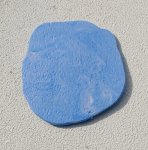
I followed this suggestion, here is the mould I took from another part of the deck:Mould.jpg

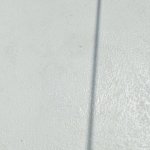
and here is the finished repair (in the centre of the picture) not perfect but you have to look closely to detect it
deck repair.jpg

Thanks tjbrace & all.
 
Top